Lower back pain is one of the most common reasons people seek medical care. However, many patients are surprised to learn that their pain may not actually be coming from the spine itself.
At Kansas Pain Management, we frequently diagnose sacroiliac (SI) joint dysfunction in patients throughout Kansas City, Overland Park, and Lawrence who have persistent lower back, hip, or buttock pain.
Because SI joint pain can closely mimic sciatica, disc problems, or hip conditions, it is often overlooked or misdiagnosed.
What Is the SI Joint?
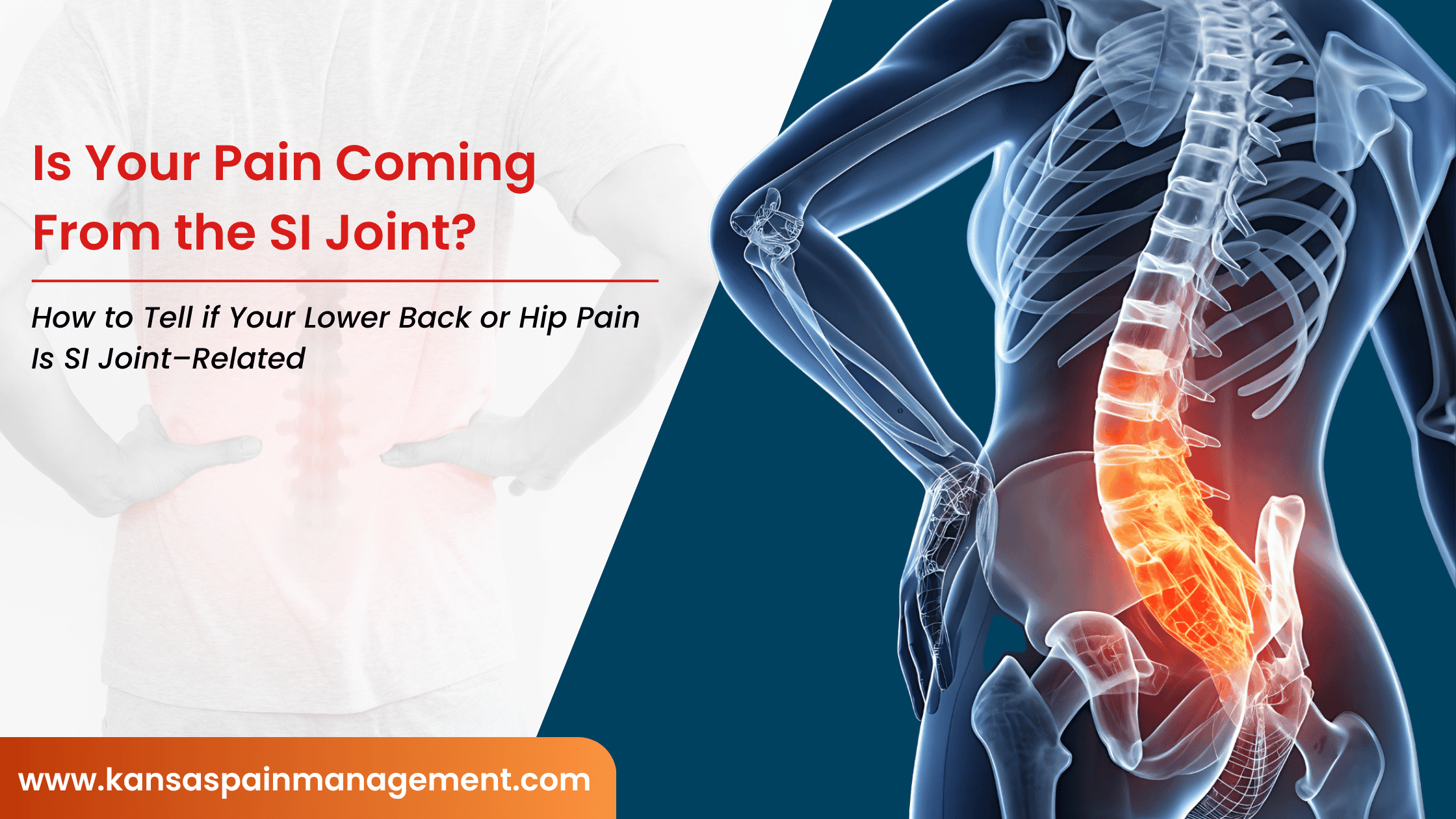
The sacroiliac (SI) joints connect the sacrum — the triangular bone at the base of the spine — to the pelvis on both sides of the body.
These joints help:
- Transfer weight between the upper body and legs
- Stabilize the pelvis
- Absorb shock during movement
- Support walking and standing
Although the SI joints move only slightly, irritation or inflammation within the joint can cause significant pain.
Where Is SI Joint Pain Usually Felt?
SI joint pain most commonly affects:
- Lower back
- Buttocks
- Hips
- Groin
- Upper legs
Some patients experience pain on one side, while others feel discomfort on both sides of the lower back.
Pain may worsen during:
- Standing
- Walking
- Climbing stairs
- Rolling over in bed
- Sitting for long periods
- Transitioning from sitting to standing
SI Joint Pain vs Sciatica
SI joint dysfunction is frequently mistaken for sciatica because symptoms can overlap.
However, there are important differences.
SI Joint Pain Often Causes:
- Deep aching pain in the lower back or buttock
- Pain near the dimples of the lower back
- Hip discomfort
- Pain when standing after sitting
- Pain during walking or climbing stairs
Sciatica Often Causes:
- Sharp radiating pain down the leg
- Tingling or numbness
- Burning nerve pain
- Symptoms extending below the knee
In some cases, patients may have both SI joint dysfunction and nerve irritation at the same time.
Common Causes of SI Joint Dysfunction
Several factors may contribute to SI joint pain.
Arthritis and Degeneration
Wear-and-tear changes may irritate the SI joint over time.
Injury or Trauma
Falls, car accidents, or sports injuries may damage the joint or surrounding ligaments.
Pregnancy
Hormonal and pelvic changes during pregnancy can increase SI joint stress.
Poor Posture and Biomechanics
Abnormal walking patterns, leg length differences, or prolonged sitting may place uneven pressure on the SI joint.
Previous Spine Surgery
Some patients develop SI joint pain after lumbar fusion or other spinal procedures.
Symptoms of SI Joint Dysfunction
Patients with SI joint dysfunction may experience:
- Lower back pain
- Buttock pain
- Hip pain
- Stiffness when standing
- Pain after prolonged sitting
- Difficulty walking
- Pain with twisting movements
- Tenderness over the SI joint area
Symptoms may become chronic if inflammation persists.
How SI Joint Pain Is Diagnosed
Diagnosing SI joint dysfunction can sometimes be challenging because symptoms overlap with other spinal conditions.
At Kansas Pain Management, diagnosis may involve:
- Physical examination
- Movement testing
- Medical history review
- Imaging studies
- Diagnostic SI joint injections
A diagnostic injection may help confirm whether the SI joint is the true source of pain.
Treatment Options for SI Joint Pain
Treatment depends on symptom severity and the underlying cause.
Strengthening and stabilizing muscles around the pelvis and core may improve SI joint support.
Anti-Inflammatory Treatments
Reducing inflammation can help improve movement and decrease irritation.
Targeted injections may help reduce inflammation and confirm the pain source.
For chronic SI joint pain, RFA may provide longer-lasting relief by interrupting pain signals from irritated nerves.
Lifestyle and Posture Modifications
Improving body mechanics and reducing repetitive strain may help prevent flare-ups.
When to See a Pain Management Specialist
You should consider evaluation if you experience:
- Chronic lower back or buttock pain
- Pain worsening when standing or walking
- Persistent pain despite therapy or medications
- Pain after spine surgery
- Difficulty with daily activities
- Symptoms lasting several weeks or longer
Early treatment may help prevent worsening inflammation and chronic pain.
Minimally Invasive SI Joint Pain Treatment in Kansas
At Kansas Pain Management, our board-certified specialists provide advanced diagnosis and minimally invasive treatment options for SI joint dysfunction and chronic lower back pain.
We proudly serve patients throughout Kansas City, Overland Park, Lawrence, and surrounding Kansas communities with personalized treatment plans designed to improve mobility and quality of life.