
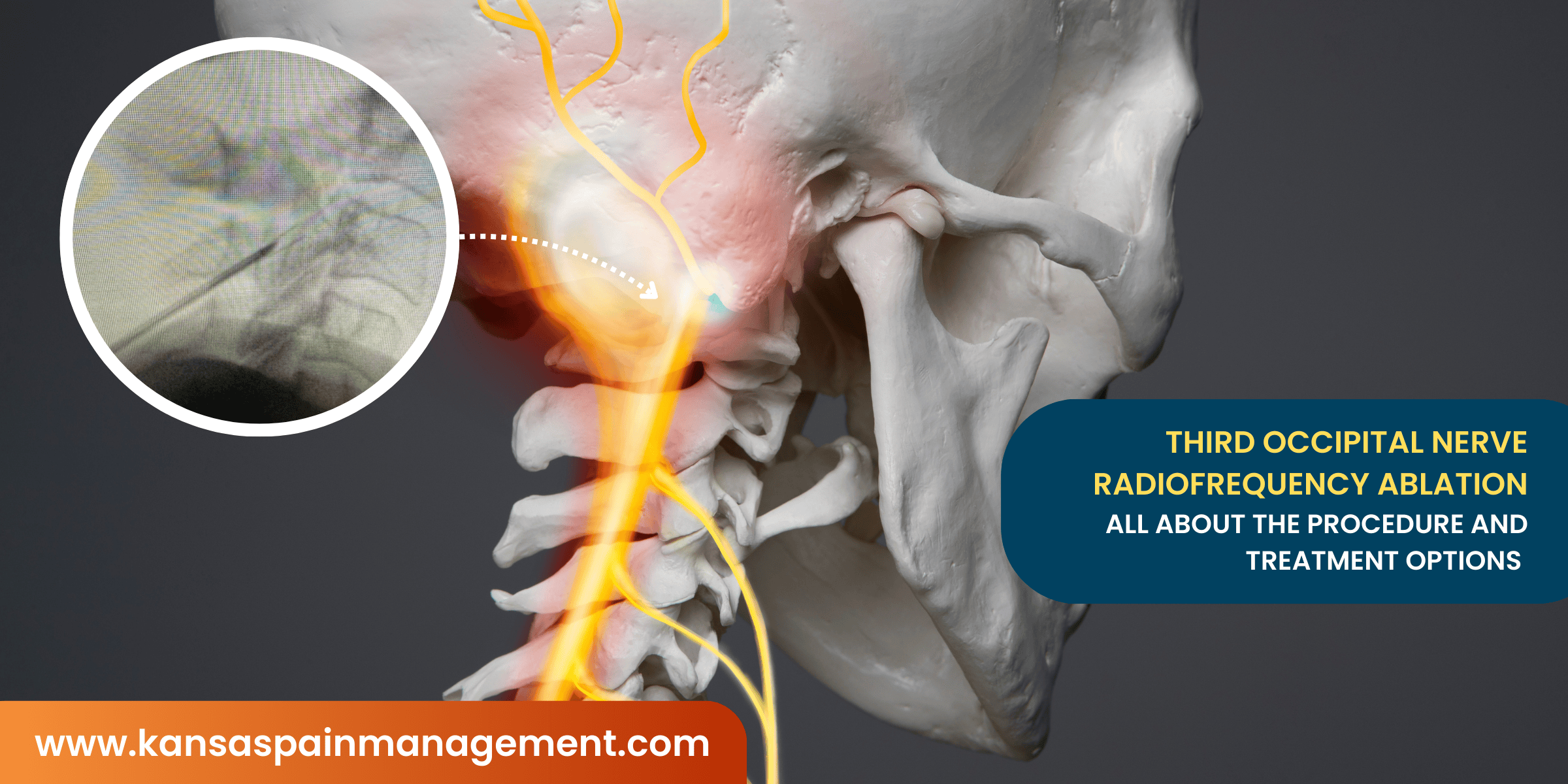
Third Occipital Nerve Radiofrequency Ablation
Third occipital nerve radiofrequency ablation (RFA) is a minimally invasive procedure used to treat chronic headaches and upper neck pain caused by irritation of the third occipital nerve.
This nerve carries pain signals from the C2–C3 facet joint in the upper spine to the head. When irritated, it can lead to cervicogenic headaches and occipital pain.
RFA uses controlled heat to interrupt these pain signals, providing longer-lasting relief compared to injections.

What Conditions Does This Treatment Help?
- Cervicogenic headaches
- Occipital neuralgia
- Chronic upper neck pain
- Pain originating from the C2–C3 facet joint
How Does Third Occipital Nerve RFA Work?
- A specialized needle is placed near the nerve
- Radiofrequency energy generates controlled heat
- The heat creates a small lesion on the nerve
- This blocks pain signals from reaching the brain
What to Expect During the Procedure
Before the Procedure
- Diagnostic nerve blocks are usually performed first
- If you experience significant relief, RFA is recommended
During the Procedure
- Performed under fluoroscopy (X-ray guidance)
- Local anesthesia with or without sedation
- Needle placed precisely near the third occipital nerve
- Heat applied for a short duration
- Procedure takes about 30–60 minutes
After the Procedure
- Same-day discharge
- Mild soreness in the neck for a few days
- Gradual improvement in pain over 1–3 weeks
Benefits of Third Occipital Nerve RFA
✔ Minimally invasive, no major surgery
✔ Provides longer-lasting relief than injections
✔ Targets a specific source of headache pain
✔ Improves daily function and quality of life
✔ Can reduce need for medications
👉 Some studies report 50–80% or greater pain relief in many patients.
Who Is a Good Candidate?
You may be a candidate if you:
- Have chronic headaches starting from the neck
- Have been diagnosed with cervicogenic headache or occipital neuralgia
- Experienced relief from a diagnostic nerve block
- Have not improved with medications or therapy
👉 Proper diagnosis is key—this treatment works best when the C2–C3 joint is the pain source
Risks & Side Effects
- Temporary neck soreness or stiffness
- Numbness or tingling in the scalp
- Temporary increase in pain
- Rare nerve irritation or neuralgia
When Is This Treatment Recommended?
Third occipital nerve RFA is typically recommended when:
- Conservative treatments have failed
- Diagnostic nerve blocks confirm the source of pain
- Headaches are chronic and impacting daily life
👉 It is positioned as a next step after nerve blocks and before more invasive procedures
Recovery & Results
- Mild discomfort for a few days
- Pain relief typically begins within 1–3 weeks
- Relief may last 6–12 months or longer
- Procedure can be repeated if pain returns
👉 Studies show many patients experience months of meaningful pain relief and improved function.
FAQs
Schedule a Consultation
If neck pain or cervicogenic headaches are interfering with your life, we’re here to help. Contact Kansas Pain Management today to see if Third Occipital Nerve Radiofrequency Ablation is right for you.
📞 Call us at [913-339-9437]
📍 Visit our locations across Kansas
📅 Book your appointment online
Third Occipital Nerve Radiofrequency Ablation at Kansas Pain Management
Kansas Pain Management provides comprehensive interventional pain management services for patients. Third Occipital Nerve Radiofrequency Ablation Treatment Process at Kansas Pain Management is carried out by the award-winning physicians.
Kansas Pain Management also offers a range of minimally invasive procedures, to help alleviate pain and restore function. With board-certified and fellowship-trained physicians, Kansas Pain Management is committed to providing the highest quality care for patients suffering from pain. You can book an appointment with us at Overland Park, Lawrence, Leavenworth/Lansing, Roeland Park, etc. We also serve nearby locations like Ottawa, Missouri, Topeka, Belton, Manhattan, Lee’s Summit, Johnson County & Kansas areas.
FAQs
When the nerve becomes irritated or inflamed due to arthritis or injury in the cervical spine, it can lead to chronic neck pain and headaches.
Patients with chronic upper neck pain or headaches, those who had relief from a diagnostic third occipital nerve block, and patients who did not improve with conservative treatments.
Long-lasting pain relief, reduced medication use, improved neck mobility, and minimal downtime.
Typically 6–12 months or more.