
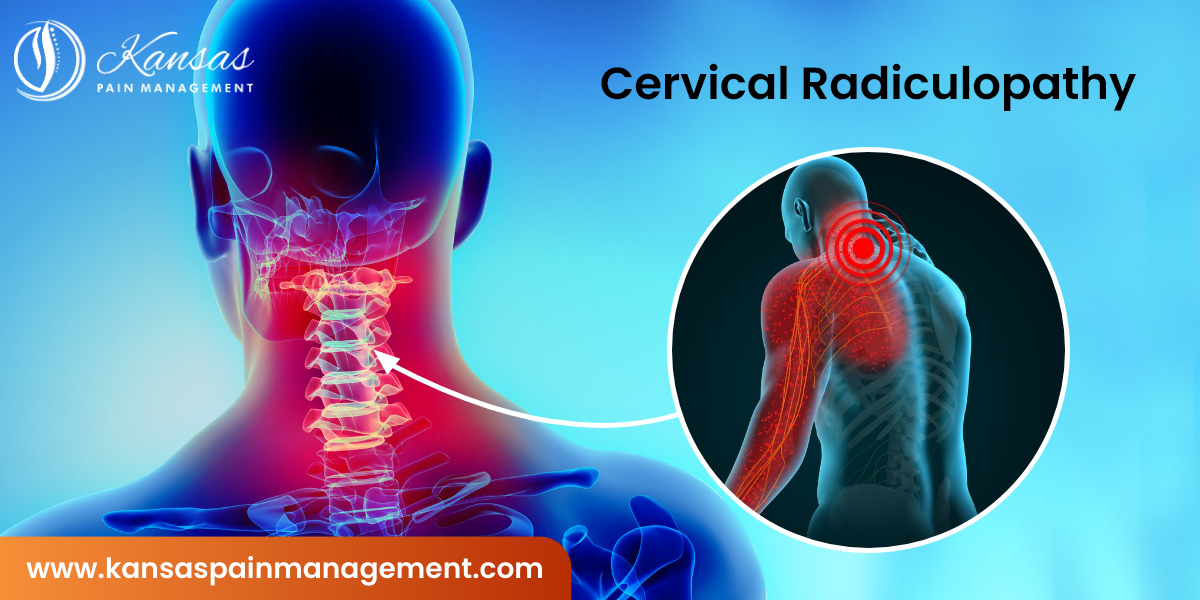
Cervical Radiculopathy

Causes & Risk Factors
- Degenerative spinal changes: Age-related disc wear and osteoarthritis (cervical spondylosis) that narrow the nerve exit passages.
- Herniated or bulging discs: Disk material presses on nearby nerves.
- Trauma or injury: Sudden impacts or strain can injure cervical discs.
- Foraminal stenosis: Narrowing of the openings where nerves pass through.
Symptoms
Symptoms depend on which nerve root is affected and may include:
- Neck pain that may radiate to the shoulder, arm, or hand.
- Sharp, burning or shooting pain along the nerve pathway.
- Tingling or “pins and needles” sensations in the arm, hand, or fingers.
- Numbness or loss of sensation.
- Muscle weakness or decreased reflexes in the affected limb.
These symptoms usually occur on one side of the body.
How Is Cervical Radiculopathy Diagnosed?
Diagnosis begins with a medical history and physical exam, during which your provider evaluates your symptoms, range of motion, reflexes, strength, and sensation.
Imaging and tests may include:
- X-rays: Show bone and alignment changes.
- MRI (Magnetic Resonance Imaging): Detects nerve compression and soft tissue issues.
- CT Scan or CT Myelography: Provides detailed bone and nerve information.
EMG (Electromyography) / Nerve Studies: Help distinguish nerve root problems from muscle or peripheral nerve conditions.
Treatment Options
Conservative (Non-Surgical) Management
Most patients improve with non-surgical approaches:
Activity modification & rest
Temporary reduction of activities that aggravate symptoms can help nerve irritation calm down.
Physical therapy
Tailored exercises and stretches improve neck strength, mobility, and posture.
Medications
Anti-inflammatory drugs (NSAIDs) and muscle relaxants may ease pain and swelling.
Steroid injections
Cervical epidural or selective nerve root injections can reduce inflammation and provide pain relief.
Short-term neck bracing
A soft cervical collar may be used briefly to limit motion and reduce nerve irritation.
Most patients experience meaningful improvement within weeks to months using these therapies.
Surgical Treatment
Surgery may be recommended when:- Severe pain persists despite conservative care (typically ≥ 6–12 weeks).
- Progressive weakness or significant neurological deficit develops.
Prognosis — What to Expect
When to Seek Immediate Care
- Sudden loss of bowel or bladder control.
- Rapidly worsening neurological symptoms.
- Severe weakness or inability to move an limb.
FAQs
It can be — some causes are benign, while others require treatment. Accurate diagnosis helps determine severity and strategy.
In many cases, symptoms can be effectively managed, and underlying causes treated. Some functional pain conditions may require ongoing symptom management.
Yes — diet adjustments often play a key role in reducing symptoms, particularly for IBS and dyspepsia.
Yes, in some patients, normal physiological processes like digesting food may be perceived as painful due to visceral hyperalgesia.
Treatments include intrathecal pain pumps, celiac plexus blocks, splanchnic nerve blocks, and spinal cord stimulator implants.
It is categorized into non-cancer-related abdominal pain and cancer-related abdominal pain.
Referred pain occurs when pain originating in an organ is felt in a distant area, often in dermatomes related to the organ’s spinal level.
FAQs
The most common causes are cervical spinal stenosis and pinched spinal nerves exiting the cervical spine.
Treatment begins with conservative management such as physical therapy and medication management.
If conservative care fails, cervical epidural steroid injections may help reduce pain.