
Vertiflex Procedure
The Vertiflex™ Procedure is a minimally invasive treatment designed to relieve pain caused by lumbar spinal stenosis.
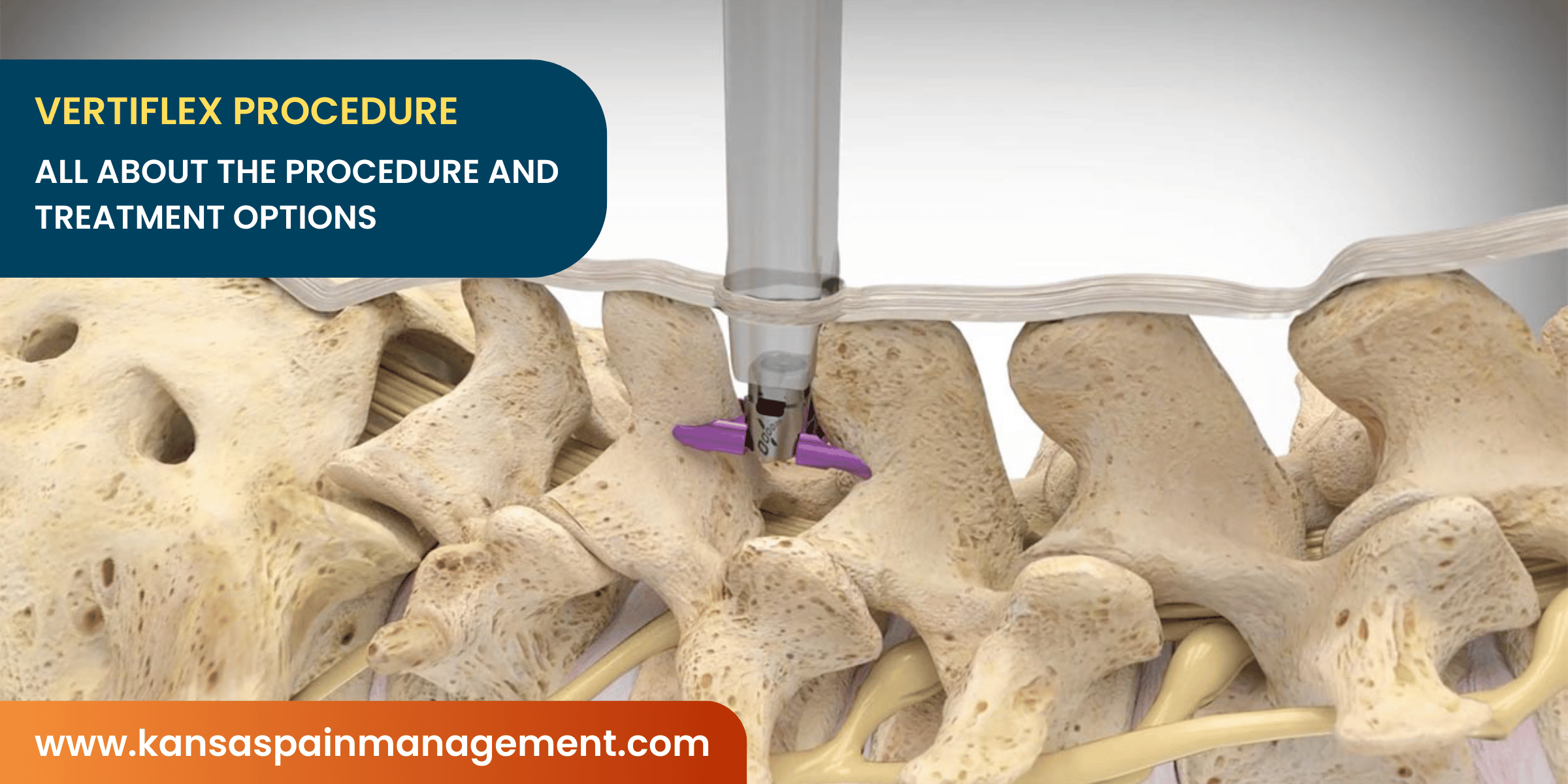
It involves placing a small implant called an interspinous spacer between the bones of the spine (vertebrae). This device helps create more space for compressed nerves, reducing pain and improving mobility.
👉 Think of it like a small “support wedge” that keeps the spine slightly open, relieving pressure on the nerves.

What Conditions Does This Treatment Help?
- Lumbar spinal stenosis
- Neurogenic claudication (leg pain with walking or standing)
- Chronic lower back pain
- Leg numbness, tingling, or weakness
How Does the Vertiflex Procedure Work?
Lumbar spinal stenosis occurs when the spinal canal narrows and compresses the nerves.
- A small implant is placed between two vertebrae
- The spacer gently separates the bones
- This increases space in the spinal canal
- Pressure on the nerves is reduced
👉 The device works like a “doorstop” for your spine, keeping it in a position that relieves nerve compression.
What to Expect During the Procedure
Before the Procedure
- Imaging (MRI/CT) to confirm spinal stenosis
- Review of symptoms and prior treatments
During the Procedure
- Performed under local anesthesia with mild sedation
- A small incision is made in the lower back
- A tube is used to guide placement of the spacer
- The implant is positioned between the vertebrae
- Procedure typically takes 20–30 minutes
After the Procedure
- Same-day discharge (outpatient procedure)
- Minimal tissue disruption
- Gradual return to activity
Benefits of the Vertiflex Procedure
✔ Minimally invasive (no major surgery)
✔ Preserves natural spinal motion
✔ Reduces nerve compression
✔ Short recovery time
✔ May help avoid or delay spine surgery
👉 Many patients experience long-term relief from leg and back pain after treatment.
Who Is a Good Candidate?
You may be a candidate if you:
- Have lumbar spinal stenosis
- Experience leg pain when walking or standing
- Feel relief when sitting or bending forward
- Have not improved with medications or injections
- Want to avoid major spine surgery
👉 This procedure is ideal for patients with moderate spinal stenosis who are not ready for surgery.
Risks & Side Effects
- Temporary soreness at the implant site
- Infection or bleeding (rare)
- Implant movement or need for adjustment
- Persistent symptoms in some cases
When Is This Treatment Recommended?
The Vertiflex procedure is typically recommended when:
- Conservative treatments have failed
- Pain is caused by lumbar spinal stenosis
- Symptoms limit walking or standing
- Patients want a less invasive alternative to surgery
👉 It is positioned as a bridge treatment between injections and open spine surgery
Recovery & Results
- Mild soreness for a few days
- Gradual improvement over weeks
- Most patients return to normal activity within a short period
- Full recovery may take 4–6 weeks
FAQs
FAQs
Straightening or extending the back increases pressure on compressed nerves, which worsens pain in patients with stenosis.
It can help relieve back and leg pain caused by lumbar spinal stenosis.
Patients with spinal stenosis who have not improved with conservative treatments and medications.
Conditions include scoliosis, spinal tumors, injuries, chronic micro-trauma, Paget’s disease of bone, and ligament calcium deposits.