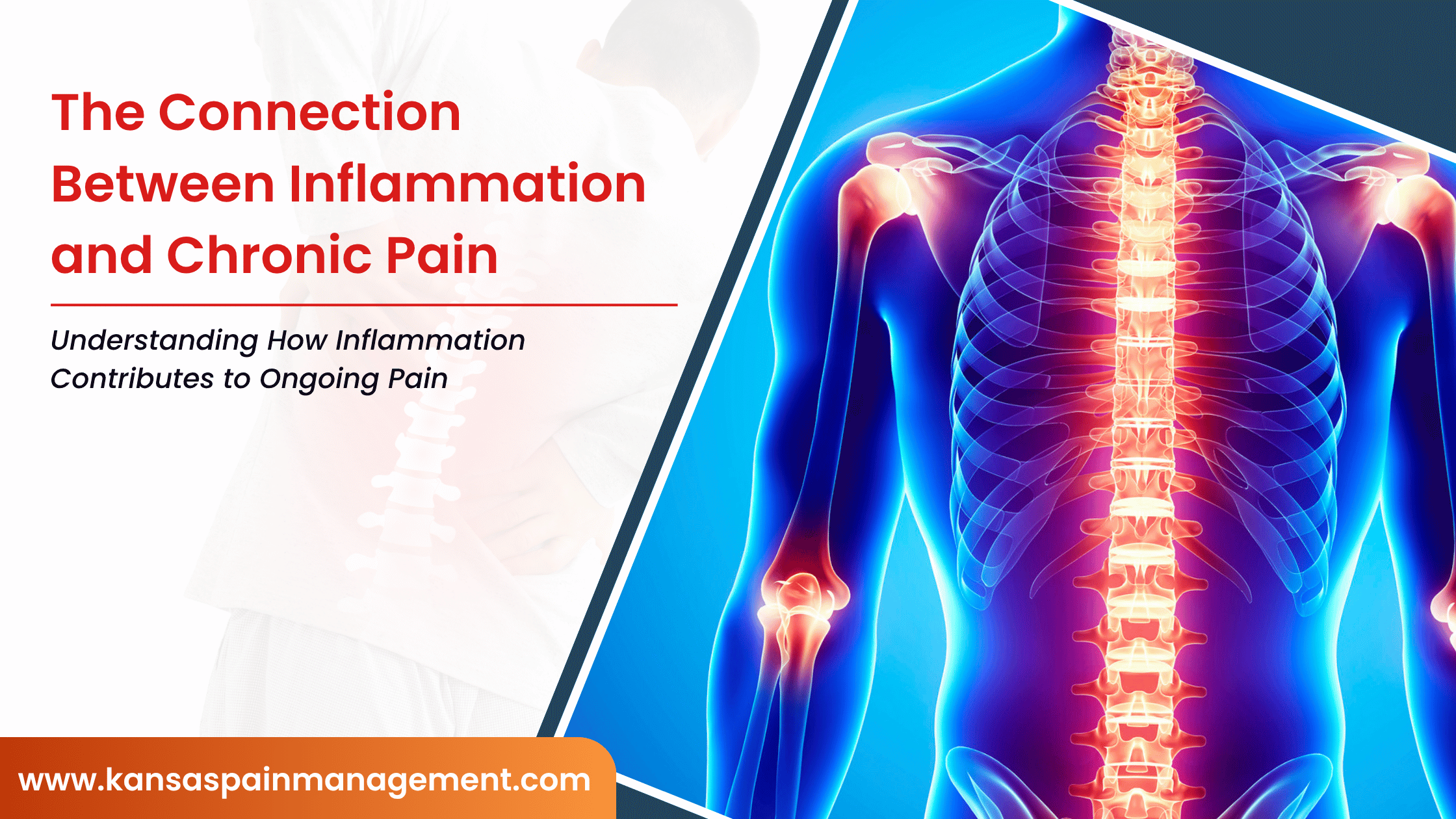
Inflammation is one of the body’s natural defense mechanisms. In the short term, it helps the body heal after injury or illness. However, when inflammation persists for weeks, months, or even years, it can become a major contributor to chronic pain.
At Kansas Pain Management, we help patients throughout Kansas City, Overland Park, and Lawrence manage chronic pain conditions often linked to ongoing inflammation affecting the spine, joints, muscles, and nerves.
Understanding how inflammation contributes to chronic pain may help patients recognize symptoms earlier and seek appropriate treatment before pain becomes more severe.
What Is Inflammation?
Inflammation is the body’s response to injury, irritation, infection, or stress.
When tissues become damaged, the immune system releases chemicals designed to:
- Protect the affected area
- Promote healing
- Increase blood flow
- Remove damaged cells
Short-term inflammation is normal and necessary for recovery.
Common signs of inflammation include:
- Swelling
- Redness
- Warmth
- Pain
- Stiffness
The problem occurs when inflammation becomes chronic and continues even after healing should have occurred.
Acute Inflammation vs Chronic Inflammation
Acute Inflammation
Acute inflammation is temporary and usually occurs after:
- Injury
- Surgery
- Muscle strain
- Infection
- Tissue damage
This type of inflammation typically improves as the body heals.
Chronic Inflammation
Chronic inflammation develops when the inflammatory process continues for long periods.
Over time, persistent inflammation may:
- Irritate nerves
- Damage tissues
- Increase pain sensitivity
- Reduce mobility
- Contribute to degenerative changes
Chronic inflammation is commonly involved in many ongoing pain conditions.
How Inflammation Causes Pain
Inflammation affects pain by sensitizing nerves and surrounding tissues.
Inflammatory chemicals may:
- Increase nerve sensitivity
- Trigger swelling
- Irritate joints
- Tighten muscles
- Reduce movement
- Amplify pain signals
As inflammation continues, the nervous system may become increasingly reactive, causing pain to feel more intense over time.
Conditions Commonly Linked to Inflammation
Many chronic pain conditions involve ongoing inflammation.
These include:
- Arthritis
- Degenerative disc disease
- Herniated discs
- Sciatica
- Facet joint syndrome
- Sacroiliac (SI) joint dysfunction
- Tendonitis
- Neuropathic pain
- Chronic neck pain
- Chronic lower back pain
Patients across Kansas City, Overland Park, and Lawrence frequently experience pain flare-ups associated with inflammatory changes.
Inflammation and Nerve Pain
Inflammation is a major contributor to nerve-related pain conditions.
When inflamed tissues place pressure on nerves, patients may experience:
- Burning pain
- Tingling
- Numbness
- Electric shock sensations
- Radiating arm or leg pain
Conditions such as sciatica and cervical radiculopathy commonly involve nerve irritation caused by inflammation.
Why Chronic Inflammation Can Worsen Over Time
Several lifestyle and health factors may increase inflammation throughout the body.
These include:
- Poor posture
- Lack of exercise
- Stress
- Poor sleep
- Obesity
- Smoking
- Repetitive strain
- Chronic stress on joints and muscles
Without proper treatment, ongoing inflammation may contribute to worsening pain and reduced physical function.
The Connection Between Stress and Inflammation
Stress and inflammation are closely connected.
Chronic stress may increase:
- Muscle tension
- Inflammatory responses
- Nervous system sensitivity
- Pain flare-ups
This is one reason many patients notice worsening pain during stressful periods.
The brain and nervous system play an important role in how inflammation and pain are processed.
How Chronic Inflammation Affects Daily Life
Persistent inflammation may interfere with:
- Sleep quality
- Exercise
- Work activities
- Walking and mobility
- Daily movement
- Energy levels
Many patients with chronic inflammation report fatigue, stiffness, and pain that gradually worsens without treatment.
How Kansas Pain Management Treats Inflammatory Pain
At Kansas Pain Management, our board-certified specialists focus on identifying the source of pain and developing personalized treatment plans.
Treatment options may include:
Improves mobility, strength, posture, and muscle support around painful joints and the spine.
May help reduce inflammation around irritated spinal nerves.
Joint and Spine Injections
Targeted injections may relieve inflammation within painful joints.
Can provide longer-lasting relief for chronic facet joint-related pain.
Lifestyle and Functional Guidance
Exercise, posture correction, weight management, sleep improvement, and movement strategies may help reduce inflammation naturally.
When to Seek Medical Evaluation
You should seek medical evaluation if you experience:
- Persistent joint or back pain
- Swelling or stiffness
- Pain lasting several weeks
- Tingling or numbness
- Reduced mobility
- Recurring pain flare-ups
- Symptoms interfering with sleep or daily activities
Early treatment may help reduce long-term complications associated with chronic inflammation.
Chronic Inflammation and Pain Are Treatable
Although inflammation is a normal part of the body’s healing process, persistent inflammation can significantly affect quality of life if left untreated.
If chronic pain, stiffness, or nerve symptoms are interfering with your daily activities, the specialists at Kansas Pain Management can help identify the cause and create a personalized treatment plan focused on long-term relief.
We proudly serve patients throughout Kansas City, Overland Park, Lawrence, and surrounding Kansas communities.