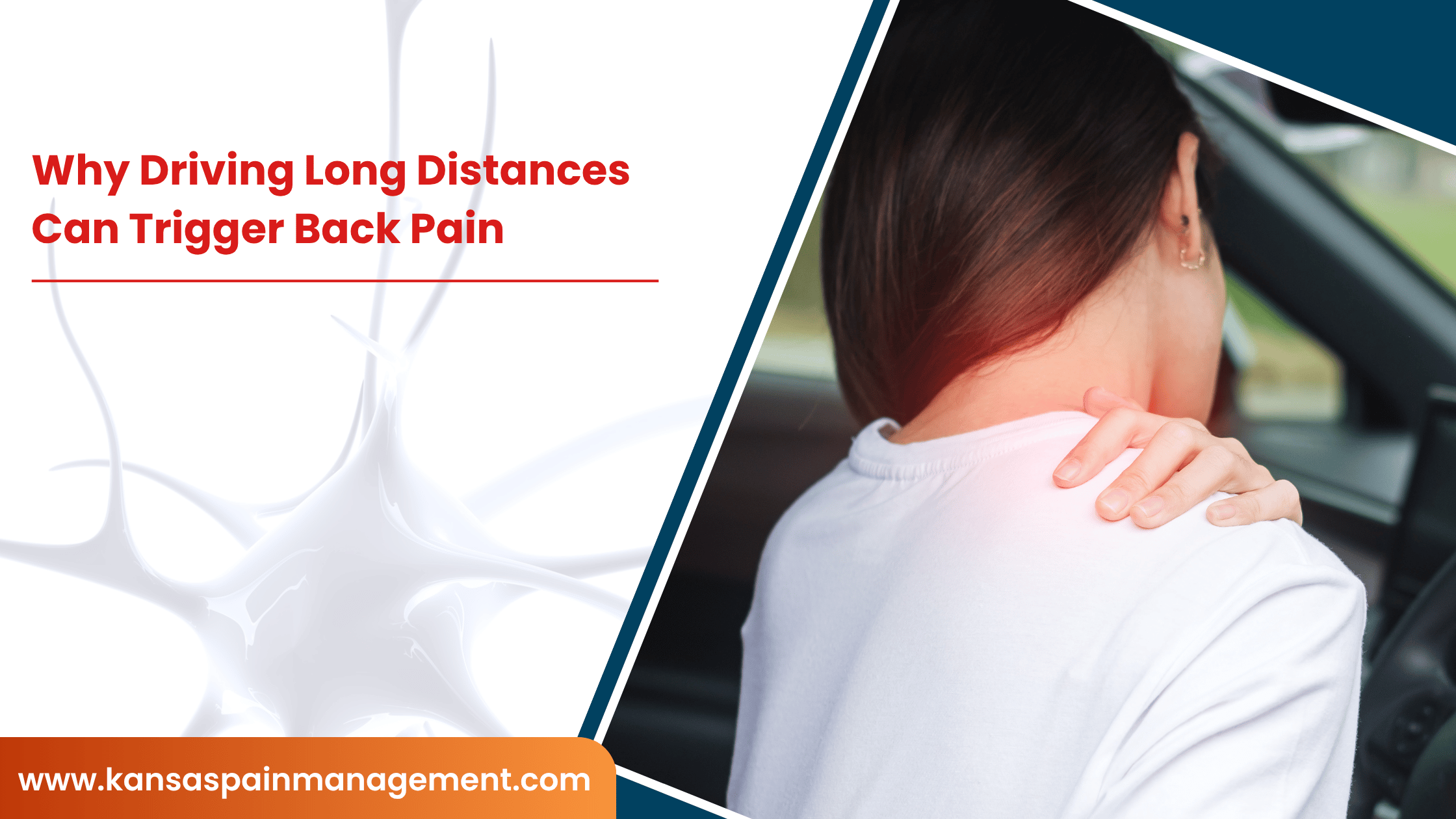
Whether you’re commuting across Kansas City, traveling between Overland Park and Lawrence, or heading out on a road trip, spending hours behind the wheel can take a toll on your spine. Many people notice increased stiffness, lower back pain, or even sciatica after a long drive—and there’s a reason for it.
At Kansas Pain Management, we frequently treat patients whose back pain is aggravated by prolonged sitting, poor posture, and repetitive strain associated with driving.
Understanding why long drives can trigger back pain may help you prevent discomfort and protect your spine during future travel.
Why Does Driving Cause Back Pain?
Driving may seem like a low-impact activity, but your body remains in a fixed position for extended periods of time.
During long drives:
- The spine experiences continuous pressure
- Core muscles become less active
- Hip muscles tighten
- Blood circulation decreases
- Posture often deteriorates
Over time, these factors can contribute to back pain, stiffness, and nerve irritation.
Prolonged Sitting Increases Pressure on the Spine
One of the biggest reasons driving causes discomfort is prolonged sitting.
Research has shown that sitting places more pressure on spinal discs than standing or walking.
When sitting for hours:
- The lower back remains compressed
- Disc pressure increases
- Supporting muscles fatigue
- Flexibility decreases
For people with existing back conditions, even a few hours in the car may trigger symptoms.
Poor Driving Posture Can Strain Your Back
Many drivers unknowingly adopt poor posture.
Common habits include:
- Slouching
- Leaning forward toward the steering wheel
- Sitting too far from the pedals
- Rounding the shoulders
- Tilting the head forward
These positions place additional stress on the:
Over time, poor posture can contribute to chronic pain and muscle tension.
Tight Hip Muscles Can Affect the Lower Back
When you sit for long periods, your hip flexor muscles remain shortened.
Tight hip muscles may:
- Pull on the pelvis
- Alter spinal alignment
- Increase lower back strain
- Reduce mobility
Many patients are surprised to learn that their back pain may actually be linked to tight hips rather than a direct spinal problem.
Long Drives Can Trigger Sciatica
For patients with sciatica, driving may be particularly uncomfortable.
The seated position can place pressure on:
- The sciatic nerve
- Lower spinal discs
- Surrounding muscles
As a result, patients may experience:
- Buttock pain
- Leg pain
- Tingling
- Numbness
- Burning sensations
Symptoms often worsen during long drives and improve once movement resumes.
Vibration and Road Impact Matter Too
Driving exposes the spine to constant low-level vibration.
Over time, vibration from:
- Highways
- Rough roads
- Construction zones
can contribute to muscle fatigue and spinal stress.
Commercial drivers and individuals who spend many hours on the road may be especially susceptible.
Why Back Pain Often Feels Worse After the Drive
Many people don’t notice significant discomfort while driving but feel much worse afterward.
This happens because:
- Muscles stiffen during prolonged sitting
- Joints lose mobility
- Blood flow decreases
- Nerves become irritated
When you finally stand up, the body must readjust, often leading to stiffness and pain.
Tips to Reduce Back Pain During Long Drives
Fortunately, several simple strategies can help protect your spine.
Adjust Your Seat Properly
Your seat should support the natural curve of your lower back.
Try to:
- Sit upright
- Keep your knees slightly bent
- Position the steering wheel within comfortable reach
Use Lumbar Support
A lumbar cushion or rolled towel can help maintain proper spinal alignment.
Take Frequent Breaks
During long trips, aim to stop every 1–2 hours.
Walking and stretching for just a few minutes can help:
- Improve circulation
- Reduce stiffness
- Relax muscles
Stretch Before and After Driving
Gentle stretching may help reduce tension in the:
- Lower back
- Hips
- Hamstrings
Stay Hydrated
Proper hydration supports spinal disc health and overall muscle function.
When Driving Pain May Signal a Bigger Problem
Occasional stiffness after a long drive is common.
However, persistent symptoms may indicate an underlying condition such as:
- Herniated disc
- Sciatica
- Spinal stenosis
- Degenerative disc disease
- Sacroiliac (SI) joint dysfunction
- Facet joint syndrome
You should seek medical evaluation if pain:
- Persists for several weeks
- Radiates into the legs
- Causes numbness or tingling
- Interferes with daily activities
- Continues worsening over time
Treatment Options for Chronic Back Pain
At Kansas Pain Management, treatment plans are tailored to the cause of your pain.
Depending on your condition, options may include:
Improves strength, flexibility, posture, and movement patterns.
May help reduce inflammation around irritated nerves.
Can relieve muscle tension contributing to pain.
May provide longer-lasting relief for chronic facet joint-related back pain.
Minimally Invasive Pain Procedures
Advanced treatments may help patients manage pain and avoid more invasive interventions.
Keep Your Spine Healthy on the Road
Driving is a part of everyday life for many Kansas residents, but long hours behind the wheel don’t have to lead to chronic pain.
By improving posture, taking regular breaks, and addressing symptoms early, many patients can reduce discomfort and protect their spinal health.
At Kansas Pain Management, our board-certified specialists help patients throughout Kansas City, Overland Park, Lawrence, and surrounding Kansas communities find effective solutions for chronic back pain, sciatica, and spine-related conditions.