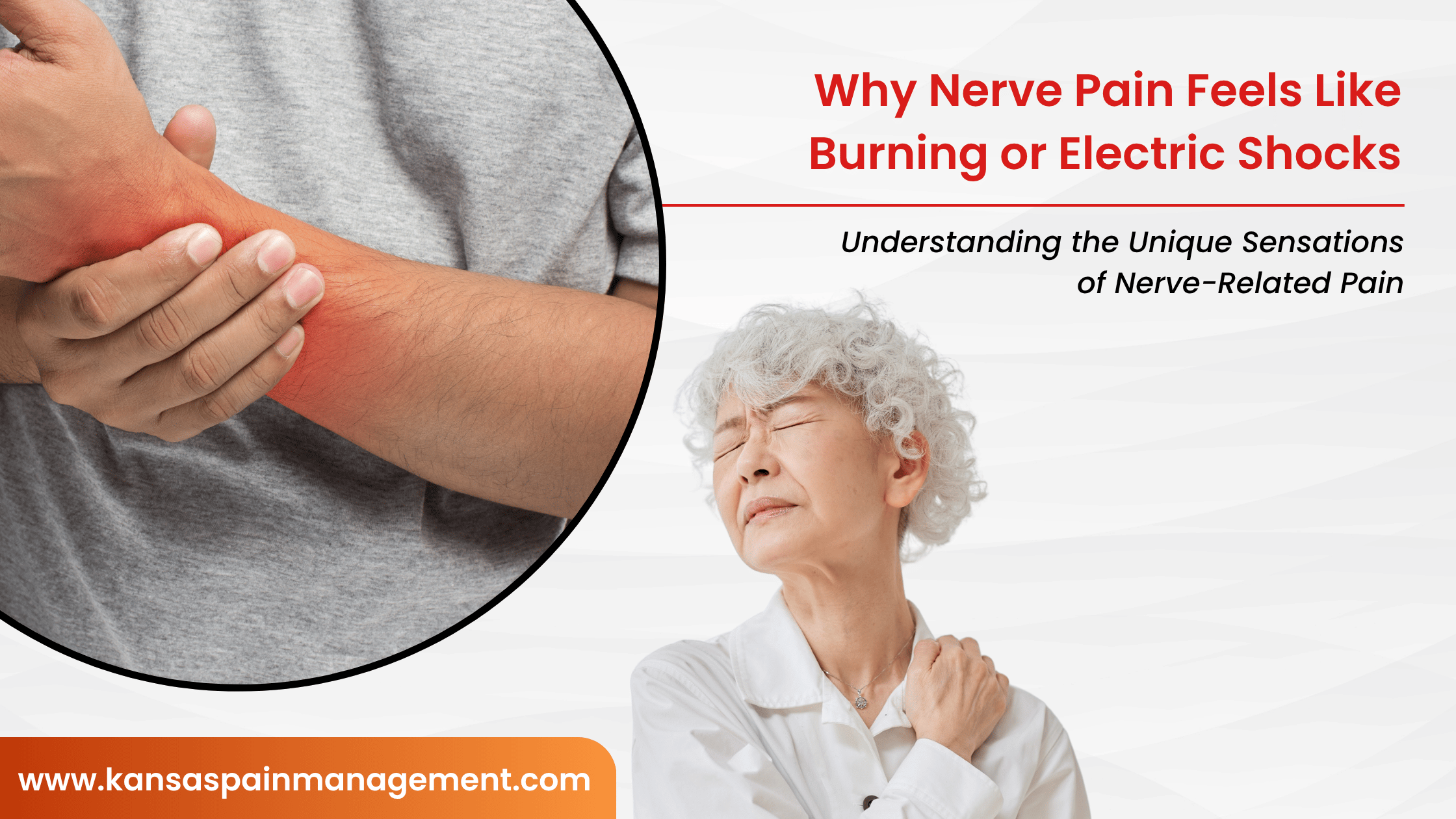
Not all pain feels the same. While muscle pain may feel sore or achy, nerve pain often feels sharp, burning, tingling, or similar to electric shocks.
At Kansas Pain Management, many patients throughout Kansas City, Overland Park, and Lawrence seek treatment for nerve-related pain conditions affecting the neck, back, arms, legs, and feet.
Because nerve pain behaves differently than other types of pain, understanding its symptoms and causes is important for proper diagnosis and treatment.
What Is Nerve Pain?
Nerve pain, also called neuropathic pain, occurs when nerves become irritated, damaged, inflamed, or compressed.
Unlike muscle or joint pain, nerve pain originates from the nervous system itself.
When nerves are disrupted, they may send abnormal pain signals to the brain, even without a major injury occurring at that moment.
This can cause sensations such as:
- Burning pain
- Electric shock feelings
- Tingling
- Pins and needles
- Numbness
- Sharp shooting pain
- Hypersensitivity
Nerve pain may occur constantly or come in sudden episodes.
Why Nerve Pain Feels Different
Nerves act like electrical pathways that carry signals between the brain and body.
When nerves become irritated or compressed, those signals may become distorted or overactive.
This is why neuropathic pain often feels:
- Electrical
- Burning
- Stabbing
- Sharp
- Tingling
- Radiating
Some patients describe the pain as:
- “Lightning-like”
- “Zapping”
- “Hot burning”
- “Pins and needles”
These sensations are very different from the dull ache usually associated with muscle soreness.
Common Causes of Nerve Pain
Several conditions may irritate or damage nerves.
Bulging or herniated spinal discs may place pressure on nearby nerves.
This commonly causes:
- Sciatica
- Arm pain
- Tingling
- Burning sensations
- Shooting pain
Sciatica
Sciatica occurs when the sciatic nerve becomes irritated in the lower back.
Symptoms often include:
- Burning leg pain
- Electric shock sensations
- Tingling down the leg
- Numbness
- Pain radiating below the knee
A pinched nerve in the neck may cause symptoms radiating into:
- The shoulder
- Arm
- Hand
- Fingers
Patients may feel burning or tingling sensations traveling down the arm.
Peripheral Neuropathy
Peripheral neuropathy affects nerves outside the brain and spinal cord.
This condition often causes:
- Burning feet
- Tingling hands
- Numbness
- Sensitivity to touch
Diabetes is one common cause, but neuropathy may also develop from injuries, medications, or other medical conditions.
Narrowing of the spinal canal may compress nerves and contribute to:
- Leg pain
- Burning sensations
- Weakness
- Numbness
- Difficulty walking
Why Nerve Pain Often Gets Worse at Night
Many patients notice neuropathic pain becomes more severe during nighttime hours.
Possible reasons include:
- Reduced distractions
- Increased nerve sensitivity
- Position-related nerve compression
- Inflammation
- Reduced movement and circulation
Sleep problems may further increase pain sensitivity and fatigue.
Symptoms That Suggest Nerve Pain
Nerve pain symptoms often include:
- Burning sensations
- Electric shock feelings
- Tingling
- Numbness
- Shooting pain
- Pain radiating into the arms or legs
- Muscle weakness
- Sensitivity to touch
- Pins and needles sensations
Symptoms may worsen with certain movements, positions, or prolonged sitting.
How Nerve Pain Is Diagnosed
At Kansas Pain Management, diagnosis begins with identifying the underlying source of nerve irritation.
Evaluation may include:
- Physical examination
- Neurological testing
- Imaging studies
- Symptom review
- Assessment of posture and movement
Proper diagnosis is important because nerve pain can sometimes mimic joint, muscle, or circulation problems.
Treatment Options for Nerve Pain
Treatment depends on the location and cause of nerve irritation.
Therapy may help improve:
- Posture
- Strength
- Flexibility
- Spinal support
- Movement patterns
These injections may help reduce inflammation around compressed spinal nerves.
For chronic facet joint-related pain, RFA may help interrupt pain-signaling nerves and provide longer-lasting relief.
Spinal cord stimulation may help certain patients with chronic nerve-related pain conditions that do not respond to conservative treatments.
Lifestyle and Ergonomic Changes
Improving posture, movement habits, and workstation setup may reduce nerve irritation over time.
When to See a Pain Management Specialist
You should seek medical evaluation if you experience:
- Burning pain
- Electric shock sensations
- Persistent tingling or numbness
- Radiating arm or leg pain
- Weakness
- Difficulty walking
- Symptoms lasting several weeks
- Chronic pain interfering with daily life
Early treatment may help prevent worsening nerve damage and long-term complications.
Advanced Nerve Pain Treatment in Kansas
At Kansas Pain Management, our board-certified specialists provide advanced diagnosis and minimally invasive treatment options for chronic nerve pain, sciatica, neck pain, and spine-related conditions.
We proudly serve patients throughout Kansas City, Overland Park, Lawrence, and surrounding Kansas communities with personalized treatment plans focused on improving comfort, mobility, and quality of life.