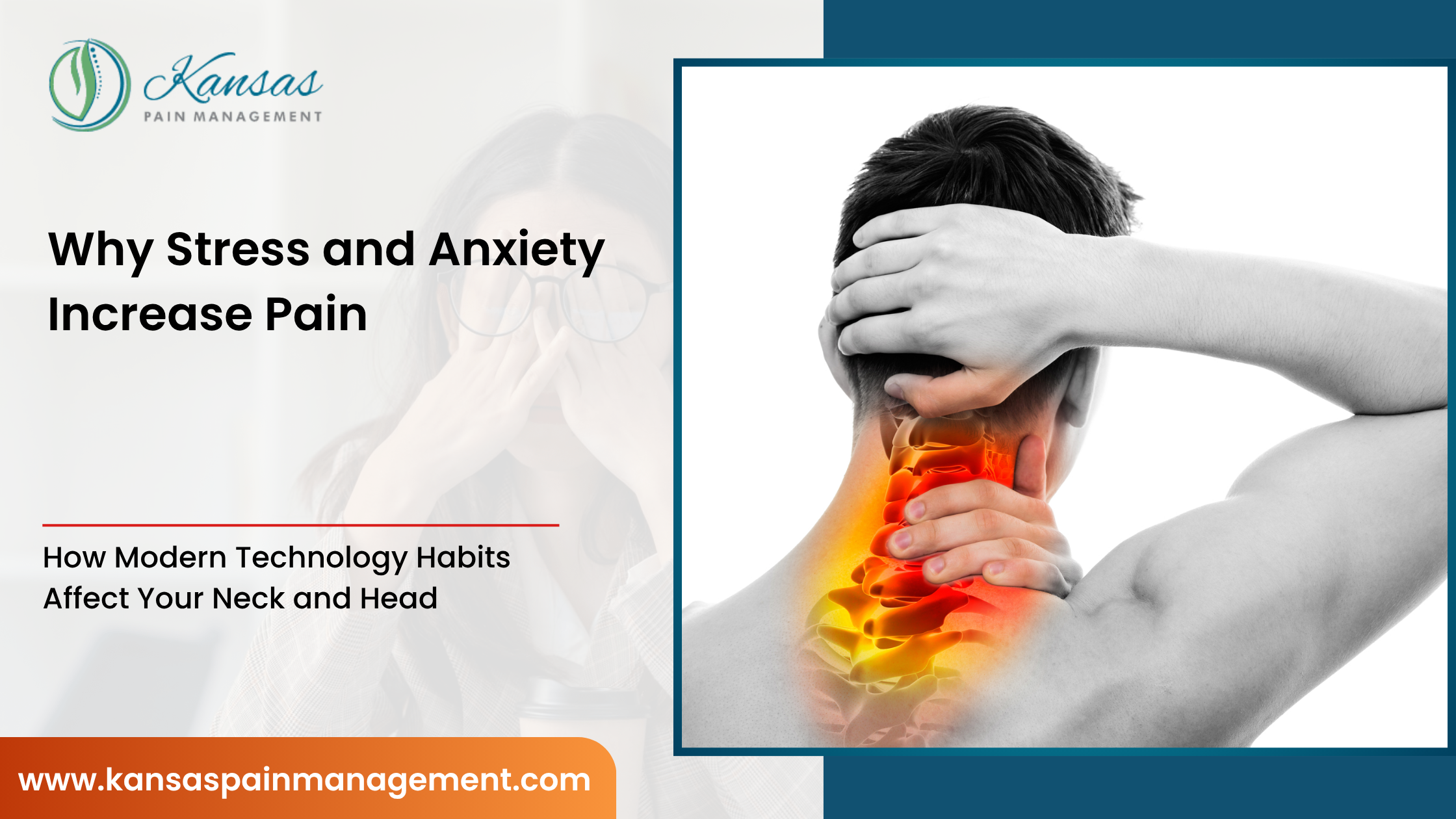
Many people notice their pain feels worse during stressful periods. Back pain may flare up before an important event, headaches may become more frequent during anxiety, or chronic pain may intensify after weeks of poor sleep and emotional stress.
This is not “just in your head.”
At Kansas Pain Management, we often help patients throughout Kansas City, Overland Park, and Lawrence understand how stress, anxiety, and the nervous system can directly affect chronic pain conditions.
The connection between emotional stress and physical pain is real — and it plays a major role in how the body processes pain.
How Stress Affects the Body
When the body experiences stress, it activates the nervous system’s “fight-or-flight” response.
Stress hormones such as cortisol and adrenaline increase in order to prepare the body for danger.
Short-term stress responses are normal. However, when stress becomes ongoing, the body may remain in a prolonged state of tension and nervous system activation.
Over time, this can affect:
- Muscles
- Nerves
- Sleep
- Inflammation
- Pain sensitivity
- Energy levels
This is one reason chronic stress can make chronic pain feel more intense.
Why Stress Makes Pain Worse
Stress affects how the brain and nervous system process pain signals.
When the nervous system stays overstimulated:
- Muscles become tighter
- Inflammation may increase
- Pain sensitivity rises
- Sleep quality worsens
- The body becomes more reactive to discomfort
Patients often describe feeling:
- More stiff
- More tense
- More fatigued
- More sensitive to pain during stressful periods
Even mild pain can begin feeling more severe when the nervous system is under constant stress.
The Connection Between Anxiety and Chronic Pain
Anxiety and chronic pain frequently occur together.
Living with ongoing pain can increase stress and anxiety, while anxiety itself may increase muscle tension and pain sensitivity.
This cycle can become difficult to break:
- Pain increases stress
- Stress increases pain
- Poor sleep worsens both
- Fatigue reduces recovery
Over time, the nervous system may become more sensitive and reactive.
This is one reason some patients feel pain even when imaging tests show only mild physical changes.
Stress Often Increases Muscle Tension
One of the most common physical effects of stress is muscle tightness.
Patients under stress often unconsciously tighten muscles in the:
- Neck
- Shoulders
- Upper back
- Jaw
- Lower back
Over time, this tension may contribute to:
- Tension headaches
- Neck pain
- Back pain
- Muscle spasms
- Trigger points
- Reduced mobility
Many office workers and patients with “tech neck” symptoms notice stress significantly worsens muscle tightness.
Poor Sleep Can Increase Pain Sensitivity
Stress and anxiety often interfere with sleep quality.
Unfortunately, poor sleep may:
- Increase inflammation
- Slow muscle recovery
- Heighten nerve sensitivity
- Lower pain tolerance
- Worsen fatigue
Many patients notice pain feels much worse after nights of poor sleep.
This creates another cycle where pain disrupts sleep and poor sleep increases pain.
Chronic Stress and the Nervous System
When stress continues for long periods, the nervous system may remain in a heightened state of sensitivity.
This may contribute to:
- Chronic headaches
- Widespread pain
- Increased nerve sensitivity
- Central sensitization
- Pain flare-ups without new injury
Patients sometimes feel frustrated because their pain seems disproportionate to imaging findings. However, the nervous system itself can become overly reactive over time.
Common Conditions Affected by Stress
Stress and anxiety may worsen symptoms associated with:
- Chronic back pain
- Neck pain
- Sciatica
- Fibromyalgia
- Arthritis
- Migraines
- Tension headaches
- Neuropathic pain
- Myofascial pain syndrome
Patients across Kansas City, Overland Park, and Lawrence commonly notice symptom flare-ups during stressful life events.
How to Reduce Stress-Related Pain
Managing stress does not mean pain is “psychological.” It means calming the nervous system may help reduce physical pain responses.
Helpful strategies may include:
- Regular movement and exercise
- Improved sleep habits
- Physical therapy
- Relaxation techniques
- Better posture and ergonomics
- Stretching and mobility work
- Stress management support
- Limiting prolonged sitting
Even small daily changes may help reduce nervous system overload.
Treatment Options for Chronic Pain
At Kansas Pain Management, treatment plans focus on identifying both physical and neurological contributors to chronic pain.
Treatment options may include:
Improves mobility, posture, and muscle balance.
May help relieve painful muscle tension.
Can reduce inflammation around irritated nerves.
May provide longer-lasting relief for chronic facet joint-related pain.
Lifestyle and Functional Guidance
Sleep, movement, posture, and stress management all play important roles in long-term recovery.
When to Seek Medical Evaluation
You should seek evaluation if:
- Stress consistently worsens pain
- Muscle tension becomes chronic
- Pain interferes with sleep or work
- Symptoms continue worsening
- Headaches or neck pain become frequent
- Pain affects daily activities
Early treatment may help prevent chronic pain cycles from becoming more severe.
The Mind-Body Connection in Pain Is Real
Stress and anxiety do not “cause” all chronic pain, but they can significantly influence how pain is experienced by the body and nervous system.
Understanding this connection may help patients take a more comprehensive approach to long-term pain relief.
If chronic pain, muscle tension, headaches, or nerve symptoms are affecting your quality of life, the specialists at Kansas Pain Management can help create a personalized treatment plan designed to improve function and reduce pain.
We proudly serve patients throughout Kansas City, Overland Park, Lawrence, and surrounding Kansas communities.