
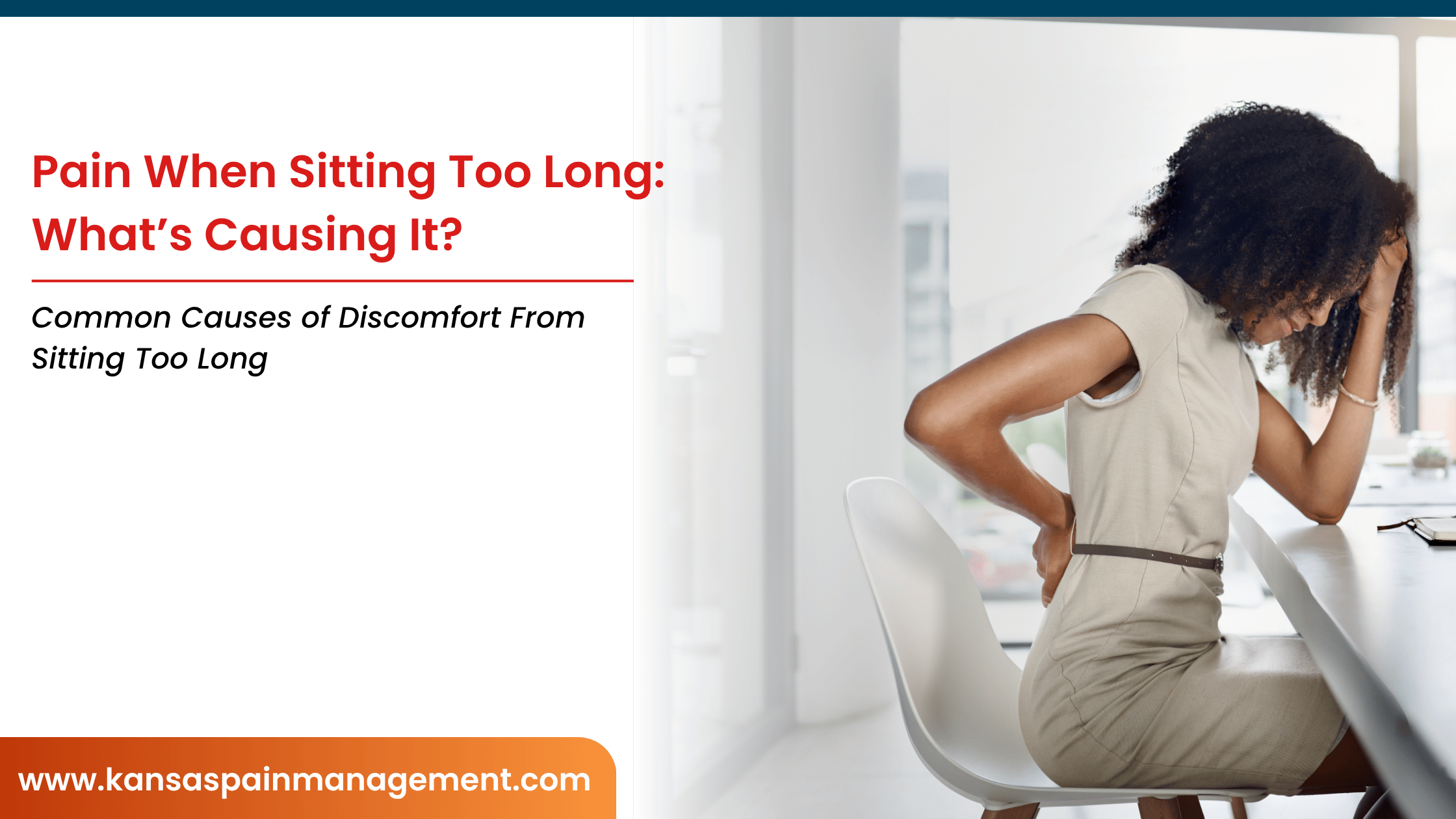
If you notice pain after sitting for long periods—whether at a desk, in the car, or on the couch—you’re not alone. This is one of the most common complaints among patients with back, neck, and nerve-related conditions.
While it may seem like a minor issue, pain with prolonged sitting often points to an underlying problem in the spine, joints, or nerves.
At Kansas Pain Management, identifying the exact cause is key to providing effective, long-term relief.
Why Sitting Can Trigger Pain
Sitting places increased pressure on the spine—especially the lower back.
- Disc pressure increases compared to standing
- Muscles can become tight and fatigued
- Posture often worsens over time
- Blood flow and movement decrease
👉 Over time, this can lead to pain, stiffness, and inflammation.
Common Causes of Pain When Sitting
1. Herniated or Bulging Disc
One of the most common causes.
- Sitting increases pressure on spinal discs
- Disc bulges can press on nearby nerves
- Pain may worsen when bending forward
👉 May also cause radiating leg pain (sciatica).
2. Sciatica (Nerve Compression)
Sitting can aggravate nerve irritation.
- Shooting pain down the leg
- Burning or tingling sensation
- Numbness in the leg or foot
3. Poor Posture
Slouching or leaning forward can strain the spine.
- Increased stress on discs and muscles
- Neck and lower back pain
- Symptoms worsen over time
4. Sacroiliac (SI) Joint Dysfunction
The SI joint can become irritated with prolonged sitting.
- Pain in the lower back or buttock
- Often one-sided
- Pain when standing up after sitting
5. Muscle Imbalance or Weak Core
Weak support muscles can lead to strain.
- Back muscles overwork
- Increased fatigue and discomfort
- Pain improves with movement
6. Tight Hip Flexors and Hamstrings
Prolonged sitting shortens certain muscles.
- Pulls on the lower back
- Contributes to stiffness and pain
7. Facet Joint Irritation
Although facet pain is often worse with standing, it can still contribute to discomfort after prolonged sitting in certain cases.
Signs You Shouldn’t Ignore
Pain when sitting may need evaluation if:
- Pain persists or worsens over time
- Pain radiates into the leg or arm
- Numbness or tingling is present
- Pain interferes with work or daily activities
- You feel stiff or unable to stand up straight
How Doctors Identify the Cause
At Kansas Pain Management, diagnosis includes:
- Detailed symptom history
- Physical examination
- Imaging (if needed)
- Diagnostic injections to confirm the pain source
👉 Identifying the exact cause is essential for effective treatment.
Treatment Options
Treatment depends on the underlying cause.
Conservative Treatments
- Physical therapy (strength and posture correction)
- Ergonomic adjustments
- Stretching and movement breaks
- Anti-inflammatory strategies
Minimally Invasive Treatments
- Epidural steroid injections (for nerve pain)
- SI joint injections
- Facet joint injections
- Nerve blocks
Long-Term Relief Options
For certain conditions:
- Radiofrequency ablation (RFA) may provide longer-lasting pain relief
Tips to Reduce Pain While Sitting
- Use a chair with proper lumbar support
- Keep feet flat on the floor
- Avoid slouching
- Take breaks every 30–45 minutes
- Stretch regularly
👉 Small changes can make a big difference.
When to See a Pain Specialist
You should consider evaluation if:
- Pain is frequent or worsening
- Sitting is difficult for long periods
- Symptoms are affecting your work
- Home remedies are not helping
Don’t Ignore Sitting Pain
Pain when sitting too long is often your body’s way of signaling an underlying issue that needs attention.
With proper diagnosis and targeted treatment, you can reduce pain, improve posture, and return to daily activities comfortably.
Schedule a Consultation
If sitting is causing persistent discomfort, Kansas Pain Management can help identify the cause and provide effective, non-surgical treatment options.