
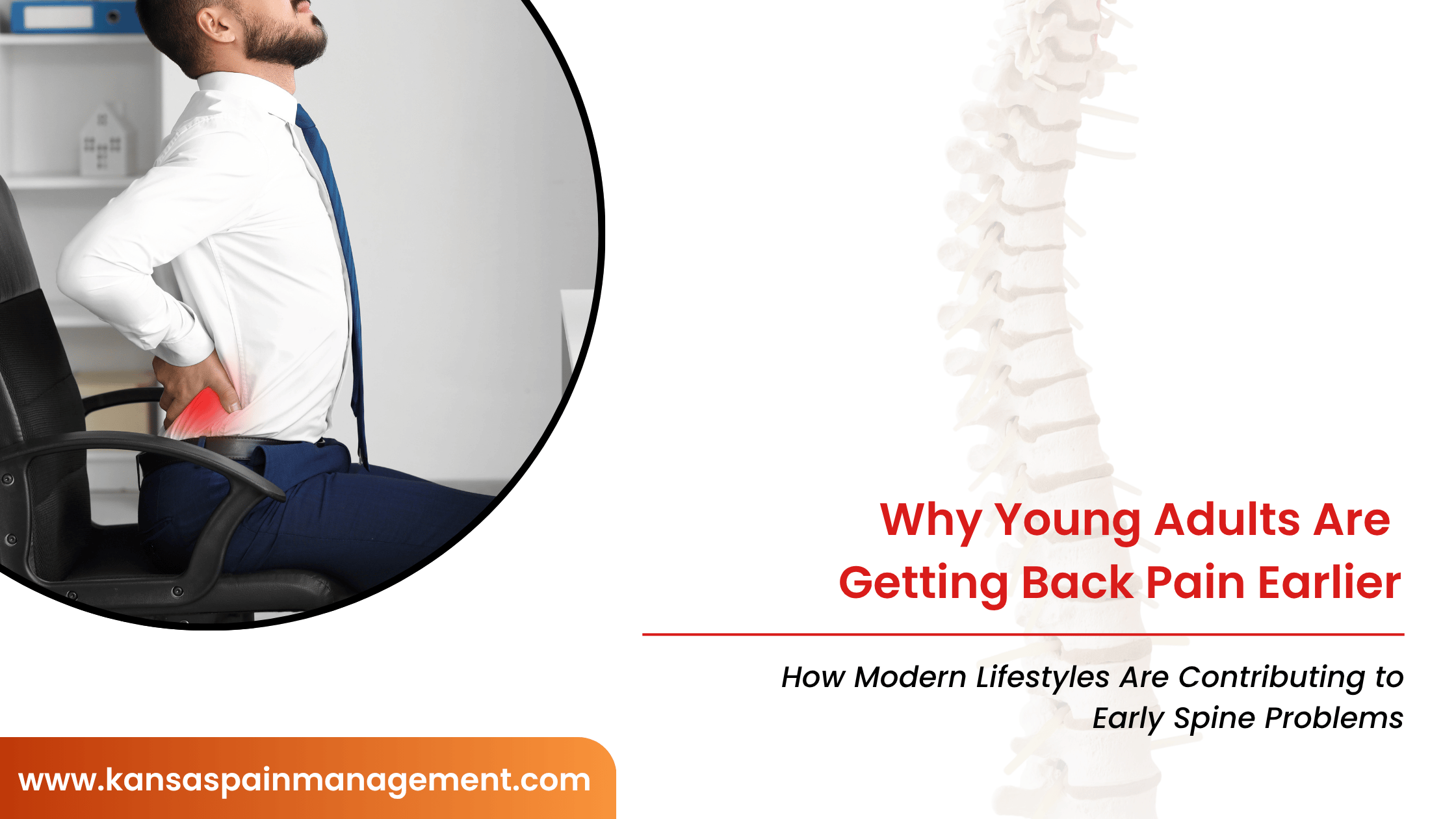
Back pain was once considered a problem mainly affecting older adults. Today, however, more young adults in their 20s and 30s are experiencing chronic back pain much earlier in life.
At Kansas Pain Management, we are seeing a growing number of younger patients across Kansas City, Overland Park, and Lawrence seeking treatment for persistent neck pain, lower back pain, sciatica, and spinal discomfort.
Modern lifestyles, prolonged sitting, poor posture, stress, and reduced physical activity are all contributing to earlier spinal problems in younger generations.
Why Back Pain Is Increasing Among Young Adults
Several lifestyle and health factors are causing back pain to appear earlier than ever before.
Prolonged Sitting and Desk Work
One of the biggest causes is extended sitting.
Many young adults spend:
- Hours working at computers
- Sitting during long commutes
- Using phones and tablets
- Gaming for extended periods
- Watching screens with poor posture
Sitting for long periods places increased pressure on the lumbar spine and weakens important core muscles that support the back.
Over time, this can lead to:
- Muscle strain
- Disc irritation
- Poor spinal alignment
- Chronic stiffness
- Sciatica symptoms
Poor Posture and “Tech Neck”
Modern technology habits are dramatically affecting spinal health.
Constantly looking down at phones or leaning toward screens may contribute to:
- Forward head posture
- Rounded shoulders
- Upper back tension
- Neck pain
- Mid-back strain
- Lower back stress
Poor posture repeated daily can gradually place excessive strain on the spine and surrounding muscles.
Reduced Physical Activity Weakens the Spine
Many young adults are less physically active than previous generations.
Lack of movement may lead to:
- Weak core muscles
- Reduced flexibility
- Tight hip muscles
- Poor spinal support
- Increased risk of injury
When supporting muscles weaken, the spine absorbs more stress during daily activities.
Obesity and Weight Gain Increase Spinal Pressure
Excess body weight places additional strain on the spine, discs, and joints.
Even moderate weight gain may contribute to:
- Lower back pain
- Joint inflammation
- Disc degeneration
- Reduced mobility
- Chronic pain flare-ups
This problem is becoming increasingly common among younger adults.
Stress and Mental Health Affect Pain
Stress plays a major role in chronic pain development.
Anxiety, poor sleep, and emotional stress can increase:
- Muscle tension
- Pain sensitivity
- Inflammation
- Fatigue
- Chronic pain flare-ups
Young adults dealing with demanding schedules, work stress, and sleep disruption may experience worsening pain even without a major injury.
Exercise Injuries and Overtraining
While physical activity is important, improper exercise techniques may also contribute to early back problems.
Common causes include:
- Poor lifting form
- Heavy weightlifting
- Sudden increases in activity
- Repetitive gym strain
- Sports injuries
Without proper recovery and conditioning, repetitive strain may lead to chronic spinal irritation.
Common Back Pain Conditions in Young Adults
At Kansas Pain Management, younger patients commonly present with:
- Herniated or bulging discs
- Sciatica
- Muscle strain
- Facet joint pain
- Sacroiliac (SI) joint dysfunction
- Myofascial pain syndrome
- Degenerative disc changes
- Postural pain syndromes
Many patients in Kansas City, Overland Park, and Lawrence experience symptoms that gradually worsen over time if left untreated.
Warning Signs You Should Not Ignore
While occasional soreness is common, persistent symptoms may indicate a more serious spinal issue.
You should seek medical evaluation if you experience:
- Pain lasting more than several weeks
- Numbness or tingling
- Pain radiating into the legs
- Weakness
- Difficulty sitting or standing
- Pain disrupting sleep
- Reduced mobility
- Recurring back pain episodes
Early treatment may help prevent chronic long-term problems.
How Kansas Pain Management Helps Younger Patients
At Kansas Pain Management, our board-certified specialists focus on non-surgical, minimally invasive treatments designed to reduce pain and improve function.
Treatment options may include:
Strengthening core muscles and improving posture often plays a major role in recovery.
Epidural Steroid Injections
May help reduce inflammation around irritated spinal nerves.
Can relieve muscle tightness and chronic tension patterns.
Provides longer-lasting relief for chronic facet joint-related pain.
Lifestyle and Ergonomic Modifications
Daily habit changes can significantly reduce spinal stress.
How Young Adults Can Protect Their Spine
Preventing chronic back pain often starts with small daily habits.
Helpful strategies include:
- Taking breaks from sitting
- Improving posture
- Staying physically active
- Strengthening core muscles
- Using proper lifting techniques
- Maintaining a healthy weight
- Stretching regularly
- Getting adequate sleep
Long-term spinal health depends heavily on consistency and movement.
Don’t Ignore Back Pain Because of Your Age
Many younger adults assume they are “too young” to develop chronic spinal problems. Unfortunately, untreated pain can gradually worsen and interfere with work, sleep, exercise, and daily life.
If you are experiencing ongoing back pain, neck pain, or sciatica, the specialists at Kansas Pain Management can help identify the cause and recommend personalized treatment options.
Our clinics proudly serve patients throughout Kansas City, Overland Park, Lawrence, and surrounding Kansas communities.


