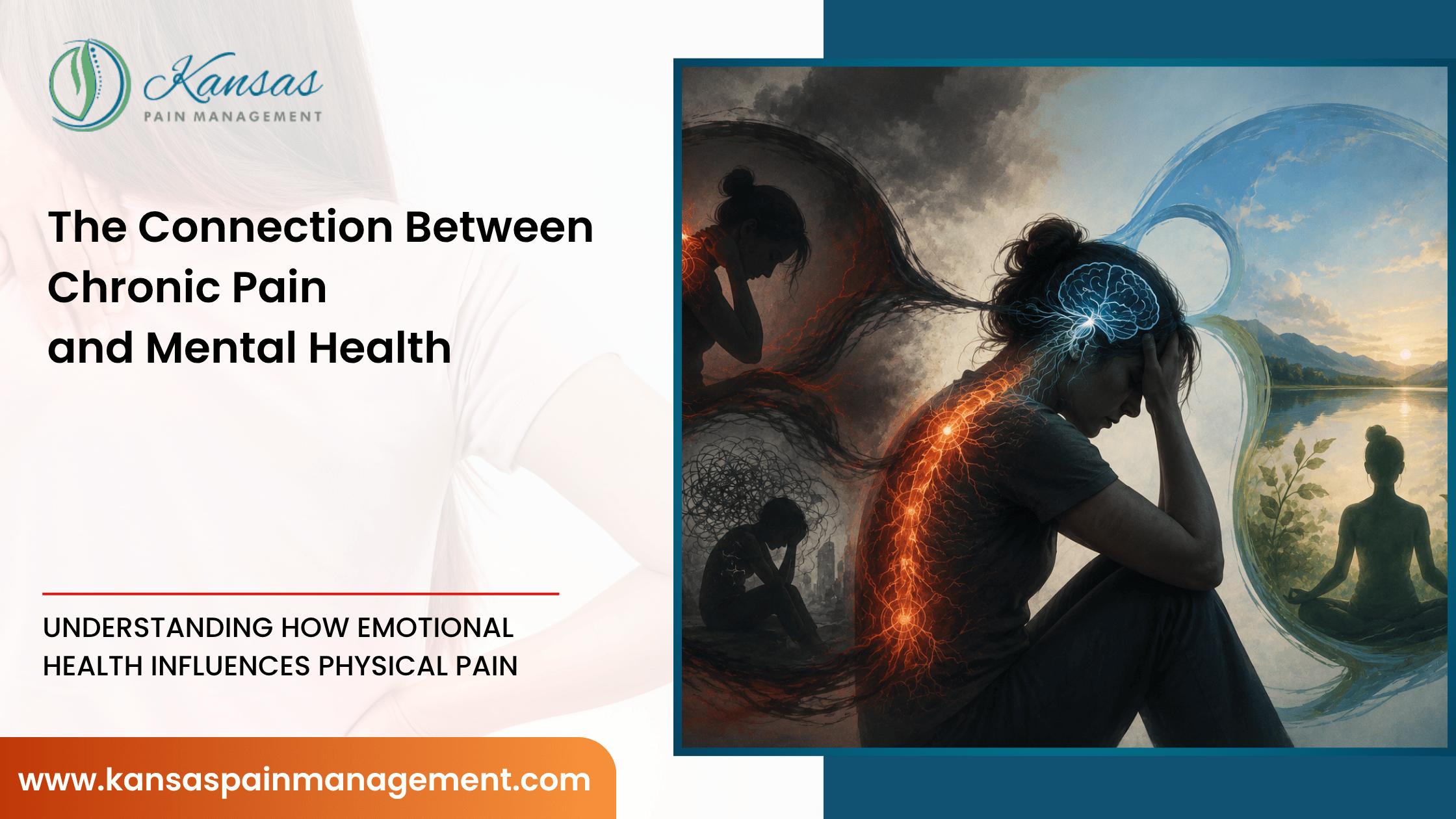
Chronic pain affects more than just the body. It can also have a significant impact on emotional and mental well-being.
At Kansas Pain Management, many patients across Kansas City, Overland Park, and Lawrence struggle not only with physical discomfort, but also with stress, anxiety, poor sleep, fatigue, and emotional exhaustion caused by persistent pain.
Understanding the connection between pain and mental health is an important part of long-term recovery and overall wellness.
How Chronic Pain Affects Mental Health
Living with ongoing pain can be physically and emotionally draining.
When pain continues for weeks, months, or years, it may affect:
- Mood
- Sleep quality
- Energy levels
- Concentration
- Relationships
- Daily functioning
Many patients with chronic pain begin feeling frustrated, isolated, or overwhelmed because symptoms interfere with work, exercise, hobbies, and everyday activities.
The Brain and Nervous System Are Closely Connected
Pain is not controlled only by injured tissues or joints. The brain and nervous system also play a major role in how pain is experienced.
Stress, anxiety, and emotional strain can increase pain sensitivity throughout the body.
This happens because chronic stress activates the nervous system and may lead to:
- Increased muscle tension
- Heightened inflammation
- Poor sleep
- Fatigue
- Greater nerve sensitivity
- More intense pain flare-ups
Over time, the body may remain in a constant “fight-or-flight” stress response, making chronic pain harder to manage.
Anxiety and Chronic Pain Often Occur Together
Many patients with chronic pain also experience anxiety symptoms.
Pain uncertainty may create fear about:
- Daily activities
- Work limitations
- Future mobility
- Financial stress
- Sleep problems
- Loss of independence
Unfortunately, anxiety can increase muscle tightness and nervous system sensitivity, which may further worsen pain symptoms.
This creates a cycle where pain increases stress, and stress increases pain.
Depression and Chronic Pain
Long-term pain can also contribute to depression.
Patients living with chronic pain may feel:
- Hopeless
- Fatigued
- Socially withdrawn
- Unmotivated
- Emotionally exhausted
Reduced physical activity and sleep disruption may further worsen emotional health over time.
Treating both physical symptoms and emotional well-being is often important for improving quality of life.
Poor Sleep Makes Pain Worse
Sleep and pain are strongly connected.
When people do not sleep well:
- Pain sensitivity often increases
- Muscles recover more slowly
- Inflammation may worsen
- Stress hormones rise
- Fatigue increases
Many patients across Kansas City, Overland Park, and Lawrence notice that poor sleep often leads to stronger pain flare-ups the following day.
Chronic Stress Can Trigger Physical Symptoms
Mental stress frequently produces real physical symptoms within the body.
Stress may contribute to:
- Neck pain
- Headaches
- Jaw tension
- Shoulder tightness
- Lower back pain
- Muscle spasms
- Digestive symptoms
- Increased nerve pain
This does not mean the pain is “imagined.” It means the nervous system and body are deeply interconnected.
Central Sensitization and Chronic Pain
Some patients develop something called central sensitization.
This occurs when the nervous system becomes overly sensitive and continues sending pain signals even after tissues have healed.
Symptoms may include:
- Widespread pain
- Burning sensations
- Increased sensitivity to touch
- Persistent discomfort without major injury
- Fatigue and sleep problems
Conditions commonly associated with central sensitization include:
- Fibromyalgia
- Chronic back pain
- Chronic neck pain
- Neuropathic pain
- Myofascial pain syndrome
Why a Comprehensive Pain Management Approach Matters
At Kansas Pain Management, we understand that chronic pain often involves both physical and neurological factors.
Our treatment approach focuses on improving:
- Pain control
- Function
- Mobility
- Sleep quality
- Overall quality of life
Every patient receives individualized care based on their symptoms and condition.
Treatment Options for Chronic Pain
Depending on the cause of pain, treatment may include:
Physical Therapy
Improves strength, mobility, posture, and muscle balance.
Minimally Invasive Procedures
Injections and advanced interventional treatments may help reduce inflammation and nerve irritation.
Lifestyle and Stress Management
Exercise, sleep improvement, movement, and stress reduction often support long-term pain relief.
Comprehensive Chronic Pain Care
Addressing both physical pain and nervous system health can improve outcomes for many patients.
You Are Not Alone in Your Pain Journey
Chronic pain can affect every aspect of life — physically, mentally, and emotionally. Seeking treatment early may help prevent symptoms from becoming more severe over time.
If chronic pain is affecting your daily activities, sleep, stress levels, or emotional well-being, the specialists at Kansas Pain Management can help create a personalized treatment plan focused on long-term relief and improved function.
Our clinics proudly serve patients throughout Kansas City, Overland Park, Lawrence, and surrounding Kansas communities.