
When chronic back pain or neck pain starts interfering with daily life, many patients wonder whether physical therapy alone is enough — or if they should consider more advanced treatments like radiofrequency ablation (RFA).
The truth is, these treatments serve very different purposes, and in many cases, they can actually work together.
At Kansas Pain Management, we help patients throughout Kansas City, Overland Park, and Lawrence find the right balance between rehabilitation, movement-based care, and minimally invasive pain procedures based on the source of their pain.
What Is Physical Therapy?
Physical therapy focuses on improving:
- Strength
- Flexibility
- Mobility
- Posture
- Muscle support
- Movement patterns
The goal is to reduce stress on painful areas and help the body function more efficiently.
Physical therapy is commonly recommended for:
- Back pain
- Neck pain
- Sciatica
- Muscle injuries
- Joint pain
- Post-surgical recovery
- Arthritis-related stiffness
For many patients, physical therapy is one of the first steps in conservative pain management.
How Physical Therapy Helps Chronic Pain
Chronic pain often changes how the body moves.
Over time, patients may:
- Favor one side of the body
- Develop poor posture
- Lose muscle strength
- Become less active
- Experience stiffness and reduced mobility
Physical therapy helps retrain movement and improve support around the spine and joints.
Many patients also notice improvements in:
- Balance
- Walking
- Core stability
- Daily function
- Overall mobility
What Is Radiofrequency Ablation (RFA)?
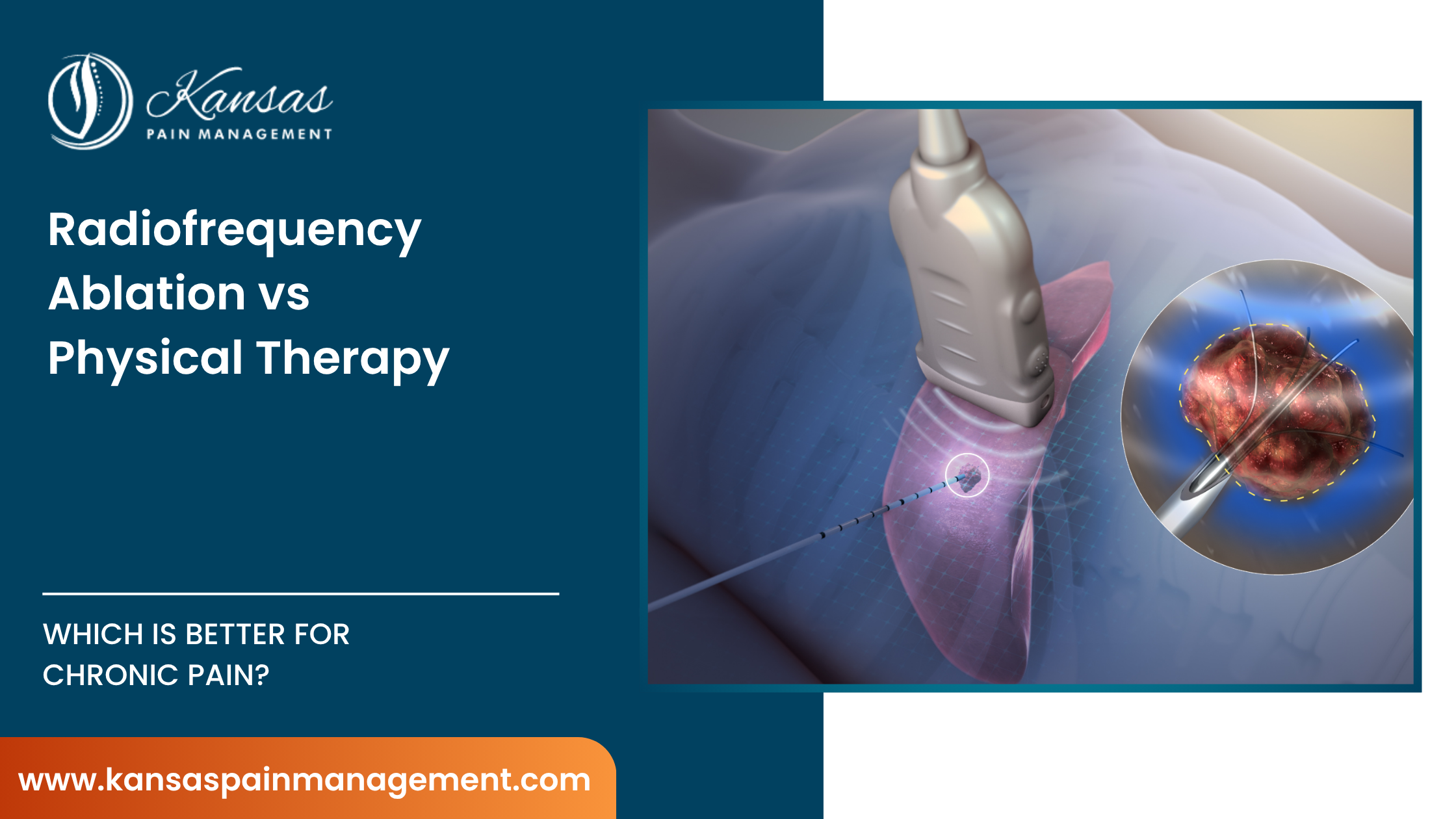
Radiofrequency ablation is a minimally invasive procedure used to treat chronic pain coming from irritated spinal joints.
During the procedure, heat generated by radiofrequency energy targets specific nerves responsible for transmitting pain signals.
The goal is to interrupt those pain signals before they reach the brain.
RFA is most commonly used for:
- Facet joint syndrome
- Chronic neck pain
- Chronic lower back pain
- Arthritis-related spine pain
- Sacroiliac (SI) joint pain
How RFA Works Differently Than Physical Therapy
Physical therapy focuses on improving movement and body mechanics.
RFA focuses on reducing pain coming from specific nerves.
This is an important distinction.
Physical Therapy Helps:
- Improve function
- Strengthen muscles
- Correct posture
- Increase flexibility
- Support long-term spinal health
RFA Helps:
- Reduce chronic pain signals
- Improve comfort during movement
- Decrease joint-related pain
- Provide longer-lasting relief
Because they target different aspects of pain, they are often used together rather than as direct replacements.
When Physical Therapy Alone May Not Be Enough
Some patients reach a point where pain limits their ability to fully participate in therapy.
This is especially common when:
- Pain becomes chronic
- Arthritis is advanced
- Facet joints are inflamed
- Movement triggers severe pain
- Progress in therapy stalls
Patients sometimes say:
- “Therapy helps temporarily, but the pain always comes back.”
- “I can’t tolerate the exercises because of the pain.”
- “I improved at first, then plateaued.”
In these cases, additional treatments may be considered.
When RFA May Be Recommended
RFA is often considered for patients who:
- Have chronic neck or back pain
- Experience facet joint-related pain
- Responded temporarily to diagnostic injections
- Have pain lasting several months or longer
- Want to reduce reliance on medications
- Have not improved enough with conservative treatments alone
Many patients experience pain relief lasting 6–18 months or longer after successful RFA treatment.
Can Physical Therapy and RFA Work Together?
Yes — and in many cases, they work best together.
Pain relief from RFA may allow patients to:
- Move more comfortably
- Participate more fully in therapy
- Improve strength and posture
- Restore mobility
- Become more active again
Meanwhile, physical therapy may help maintain improvements achieved through pain reduction.
This combination often supports better long-term outcomes than relying on either treatment alone.
Which Treatment Is Better?
There is no one-size-fits-all answer.
The “better” treatment depends on:
- The source of pain
- Severity of symptoms
- Duration of pain
- Joint involvement
- Nerve irritation
- Response to prior treatment
For some patients, physical therapy alone is highly effective.
For others, reducing chronic pain through interventional treatments like RFA may be necessary before rehabilitation becomes successful.
Conditions Commonly Treated With Both Approaches
Patients may benefit from a combination of therapy and RFA for:
- Chronic lower back pain
- Chronic neck pain
- Facet joint syndrome
- Arthritis-related spine pain
- SI joint dysfunction
- Postural pain conditions
Accurate diagnosis is important before deciding on treatment.
When to See a Pain Management Specialist
You should consider evaluation if:
- Pain persists despite therapy
- Pain limits daily activity
- Back or neck pain keeps returning
- Symptoms interfere with sleep or work
- You cannot tolerate movement because of pain
- Conservative treatments are no longer helping
Early evaluation may help prevent worsening chronic pain and mobility limitations.
Personalized Pain Treatment in Kansas
At Kansas Pain Management, our board-certified specialists create personalized treatment plans designed to improve mobility, reduce chronic pain, and restore quality of life.
We proudly serve patients throughout Kansas City, Overland Park, Lawrence, and surrounding Kansas communities with advanced interventional pain management and minimally invasive treatment options.