
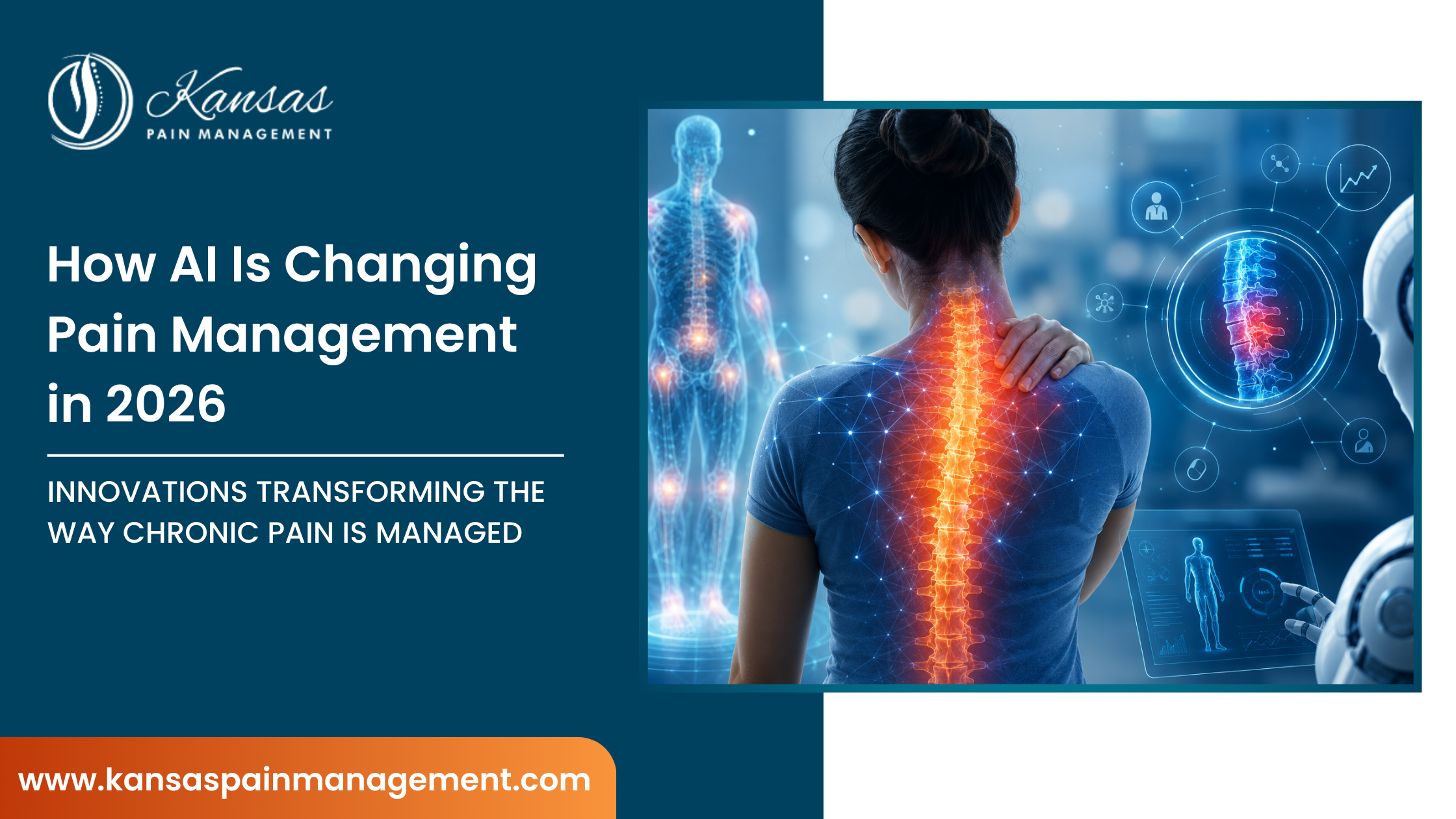
Artificial intelligence (AI) is transforming nearly every aspect of healthcare, and pain management is no exception. While AI cannot replace the expertise of physicians, it is helping healthcare providers analyze information faster, identify patterns more accurately, and create more personalized treatment plans for patients living with chronic pain.
At Kansas Pain Management, we closely follow advancements that have the potential to improve patient outcomes, enhance care coordination, and support better treatment decisions. As AI technology continues to evolve in 2026, patients are beginning to see its impact throughout the healthcare experience.
What Is Artificial Intelligence in Healthcare?
Artificial intelligence refers to computer systems that can analyze large amounts of information, identify patterns, and assist with decision-making.
In healthcare, AI is being used to:
-
Analyze medical data
-
Support diagnostic processes
-
Improve scheduling and communication
-
Enhance patient monitoring
-
Assist with treatment planning
-
Streamline administrative tasks
The goal is not to replace healthcare providers but to give them better tools to deliver high-quality patient care.
Why Chronic Pain Is Challenging to Treat
Unlike a broken bone or a visible injury, chronic pain is often complex.
Pain may be influenced by:
-
Physical injuries
-
Nerve irritation
-
Inflammation
-
Sleep quality
-
Stress levels
-
Activity patterns
-
Previous medical history
Because multiple factors can contribute to chronic pain, treatment often requires a personalized approach rather than a one-size-fits-all solution.
This is where AI may offer valuable support.
How AI Is Improving Personalized Pain Care
One of the most promising applications of AI is helping healthcare providers identify patterns that might otherwise be difficult to recognize.
By analyzing large amounts of patient information, AI may help physicians:
-
Identify risk factors
-
Track treatment outcomes
-
Recognize symptom trends
-
Support individualized care plans
-
Improve follow-up recommendations
As healthcare becomes more data-driven, personalized treatment strategies are becoming increasingly important.
AI and Early Identification of Chronic Pain Risks
Researchers are exploring ways AI can help identify patients who may be at greater risk for developing chronic pain after injuries, surgery, or medical conditions. This could allow healthcare teams to intervene earlier and potentially reduce the likelihood of long-term pain complications.
Early intervention remains one of the most important factors in successful pain management.
Wearable Technology and Pain Monitoring
Many patients now use wearable devices that track:
-
Physical activity
-
Sleep patterns
-
Heart rate
-
Movement levels
In the future, AI may help analyze this information to identify:
-
Pain flare-up patterns
-
Activity limitations
-
Recovery trends
-
Lifestyle factors affecting pain
This type of monitoring could help both patients and providers make more informed treatment decisions.
Improving the Patient Experience
AI is also helping improve the healthcare experience outside of direct treatment.
Patients may notice benefits such as:
-
Faster appointment scheduling
-
Improved communication tools
-
Easier access to information
-
Streamlined paperwork
-
Better coordination between healthcare providers
These improvements allow medical teams to spend more time focusing on patient care.
AI and Medical Imaging
Another area of growth involves assisting healthcare providers with imaging interpretation.
AI tools may help identify patterns within:
-
MRI scans
-
CT scans
-
X-rays
While physicians always make the final clinical decisions, AI-assisted technologies may help improve efficiency and support diagnostic accuracy.
It’s important to remember that imaging is only one part of evaluating chronic pain. Symptoms, physical examinations, and patient history remain equally important.
Can AI Predict Pain Flare-Ups?
Researchers are actively studying whether AI can help predict changes in pain levels by analyzing factors such as activity, sleep, movement patterns, and symptom reporting. Early studies suggest that predictive models may eventually help identify patients at risk for worsening pain or functional decline.
Although this technology is still developing, it represents an exciting area of innovation in pain medicine.
AI Cannot Replace Human Expertise
Despite these advances, AI cannot replace the experience, judgment, and clinical expertise of a trained physician.
Pain management often requires:
-
Physical examination
-
Patient communication
-
Understanding individual goals
-
Clinical decision-making
-
Personalized treatment planning
Technology is a tool that supports care—not a substitute for the patient-provider relationship.
The Future of Pain Management
Looking ahead, patients may benefit from:
-
More personalized treatment plans
-
Better symptom tracking
-
Earlier intervention strategies
-
Improved communication
-
Enhanced coordination of care
-
More efficient healthcare experiences
As research continues, AI may help healthcare providers better understand chronic pain and develop more targeted treatment approaches.
Advanced Pain Management in Kansas
At Kansas Pain Management, we combine evidence-based medicine, advanced interventional procedures, and patient-centered care to help individuals manage chronic pain and improve quality of life.
Our board-certified specialists proudly serve patients throughout Kansas City, Overland Park, Lawrence, and surrounding Kansas communities with personalized treatment plans designed around each patient’s unique needs.