
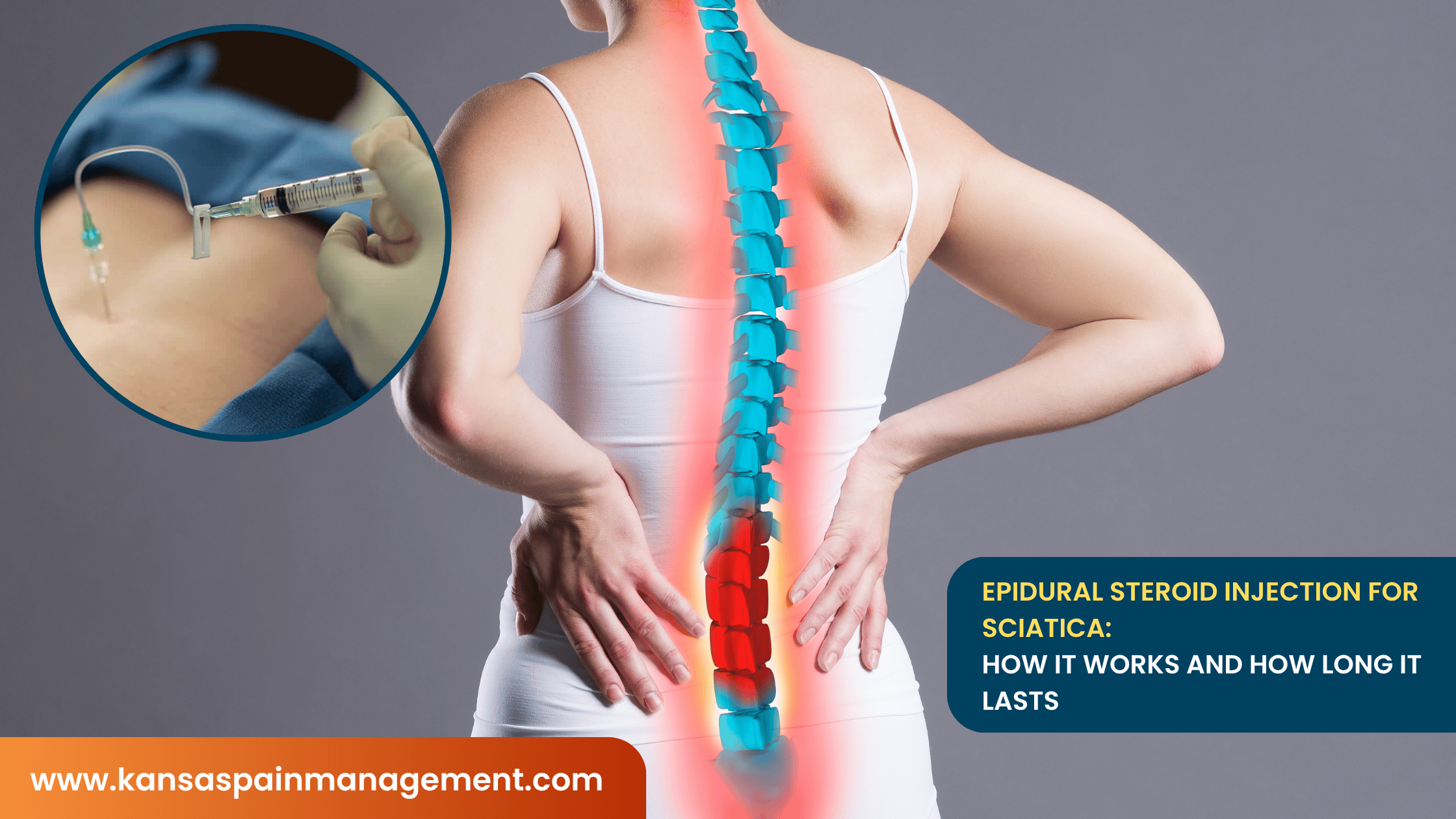
What Is an Epidural Steroid Injection for Sciatica?
Sciatica can cause pain that travels from the lower back into the buttock, hip, leg or foot. For some people, the pain can make walking, working, exercising and sleeping difficult.
An epidural steroid injection (ESI) is one treatment option that may help reduce inflammation around irritated spinal nerves and provide temporary relief from radiating pain.
Sciatica itself is not a medical diagnosis but a description of symptoms caused by irritation or compression of the sciatic nerve or its contributing nerve roots. Common causes include a herniated disc, spinal stenosis and other conditions affecting the lumbar spine.
An epidural injection delivers medication into the epidural space around the spinal nerves. The medication typically includes a corticosteroid, sometimes combined with a local anesthetic.
The goal is to reduce inflammation and pain so that patients may have an easier time participating in physical therapy, returning to normal activities and managing their underlying condition.
How Does an Epidural Steroid Injection Help Sciatica?
The nerves that contribute to the sciatic nerve originate in the lower spine.
When a spinal nerve becomes irritated or compressed, it can cause symptoms such as:
- Sharp or shooting pain
- Burning pain
- Tingling
- Numbness
- Pain traveling down the leg
- Weakness in some cases
An epidural steroid injection places an anti-inflammatory medication near the affected nerve structures.
The steroid may help reduce inflammation around the irritated nerve, potentially decreasing pain and improving function.
However, an epidural steroid injection does not necessarily correct the underlying structural cause of sciatica. For example, if a herniated disc is compressing a nerve, the injection may reduce inflammation and pain without physically removing the disc problem.
That’s why determining the cause of the symptoms is an important part of treatment planning.
Who May Benefit From an Epidural Steroid Injection?
An epidural steroid injection may be considered for patients experiencing persistent radiating pain associated with conditions such as:
- Lumbar disc herniation
- Lumbar radiculopathy
- Sciatica
- Spinal stenosis
- Certain degenerative conditions affecting the lumbar spine
Not everyone with sciatica needs an epidural injection.
Many people improve with conservative treatments such as activity modification, physical therapy, exercise and medications when appropriate.
An interventional pain specialist can evaluate your symptoms and medical history to determine whether an epidural injection may be appropriate.
What Happens During an Epidural Steroid Injection?
An epidural steroid injection is generally performed as an outpatient procedure.
The exact technique depends on the location and suspected source of the nerve irritation.
1. Evaluation and preparation
Before the procedure, your physician will review your symptoms, medical history, medications and relevant imaging or diagnostic information.
You may be asked about blood-thinning medications, allergies and other medical conditions that could affect the procedure.
2. Positioning
You will generally lie face down for a lumbar epidural injection.
The skin over the injection site is cleaned carefully.
3. Local anesthetic
A local anesthetic is typically used to numb the skin and tissues around the injection site.
4. Needle placement
The physician uses imaging guidance, commonly fluoroscopy, to help guide the needle to the appropriate location.
Using imaging guidance helps the physician accurately position the needle and confirm placement.
5. Medication injection
Once the needle is appropriately positioned, the medication is injected into the epidural space.
The procedure itself is generally relatively brief.
6. Observation and discharge
After the procedure, you may be monitored for a short period before going home.
Your physician will provide specific instructions regarding activity and recovery.
How Long Does an Epidural Steroid Injection Take to Work?
One of the most common questions patients ask is:
“How quickly will I feel better after an epidural steroid injection?”
The answer can vary.
Some patients may notice improvement relatively soon, particularly because a local anesthetic may provide short-term pain relief. The corticosteroid generally takes longer to have its anti-inflammatory effect.
Some people begin experiencing meaningful improvement within several days, while for others it may take longer.
It’s also possible to experience temporary soreness at the injection site or a short-term increase in pain after the procedure.
Your physician can provide more specific expectations based on the type of injection and your individual condition.
How Long Does an Epidural Steroid Injection Last?
Another common question is:
“How long will the pain relief last?”
There is no guaranteed duration.
Some patients experience relief for several weeks or months, while others may have shorter or limited benefit. The duration can depend on:
- The underlying cause of sciatica
- The severity of nerve irritation
- How long symptoms have been present
- The location of the nerve problem
- Overall health
- Activity level
- Response to physical therapy and other treatments
An epidural steroid injection is generally considered a temporary pain-relief treatment, rather than a permanent cure for the underlying cause of sciatica.
The purpose may be to reduce pain enough to help you participate in rehabilitation and other treatments aimed at improving function.
Can You Get More Than One Epidural Steroid Injection?
In some cases, a physician may recommend additional injections if the first injection provides meaningful but temporary relief.
However, epidural steroid injections are not something patients should receive indefinitely or without appropriate medical evaluation.
The number and frequency of injections should be individualized based on your diagnosis, response to previous treatment and overall health.
Your physician will determine whether another injection is appropriate.
What Can You Expect After an Epidural Steroid Injection?
Most patients can return home after the procedure.
Your physician may recommend limiting certain activities for a short period before gradually returning to normal activities.
You may experience:
- Temporary soreness at the injection site
- Temporary changes in pain
- Gradual improvement as the steroid takes effect
Follow your physician’s specific post-procedure instructions.
If you develop concerning symptoms after an injection, contact your healthcare provider promptly.
Epidural Steroid Injection vs. Surgery for Sciatica
An epidural steroid injection and surgery serve different purposes.
An injection is generally intended to reduce inflammation and pain around an irritated nerve.
Surgery may be considered in certain patients when there is significant nerve compression, persistent symptoms despite appropriate conservative treatment, progressive neurological problems or other specific indications.
The right treatment depends on the cause and severity of your symptoms.
An epidural injection may be one component of a broader treatment plan rather than a replacement for every other treatment option.
Are Epidural Steroid Injections Safe?
Epidural steroid injections are commonly performed procedures, but like any medical procedure, they carry potential risks.
Possible risks can include:
- Infection
- Bleeding
- Headache
- Temporary nerve irritation
- Temporary numbness or weakness
- Increased blood sugar in some patients
- Medication-related side effects
- Rare but serious neurological complications
Your physician will review the potential benefits and risks with you before the procedure.
It is especially important to tell your healthcare provider about blood-thinning medications, diabetes, allergies, infections and other relevant medical conditions.
When Should You See a Doctor for Sciatica?
Not every episode of sciatica requires an injection.
Consider seeking medical evaluation if your leg or lower-back pain:
- Persists or keeps returning
- Interferes with normal activities
- Makes it difficult to sleep or work
- Is accompanied by numbness or tingling
- Causes weakness in the leg or foot
- Does not improve with conservative treatment
Seek urgent medical attention if severe back or leg symptoms are accompanied by new bowel or bladder problems, numbness around the groin or inner thighs, or significant or progressive weakness.
These symptoms can indicate a potentially serious nerve-compression problem that requires prompt evaluation.
What Other Treatments Can Help Sciatica?
Treatment depends on the underlying cause and severity of your symptoms.
Depending on your condition, your treatment plan may include:
- Physical therapy
- Exercise and stretching
- Activity modification
- Medications when appropriate
- Epidural steroid injections
- Other interventional pain procedures
- Surgery in selected cases
The goal is not simply to reduce pain temporarily. A comprehensive treatment plan should also address the underlying condition and help you return to normal activities.
Find the Right Treatment for Your Sciatica
Sciatica can interfere with almost every part of daily life, but there are multiple treatment options available.
An epidural steroid injection may provide temporary relief from inflammation-related nerve pain and may help some patients participate more comfortably in rehabilitation and other treatments.
If you have persistent pain traveling from your lower back into your leg, don’t assume you simply have to live with it.
A pain management specialist can evaluate your symptoms, identify potential causes and discuss whether an epidural steroid injection or another treatment option may be appropriate for you.
Kansas Pain Management provides comprehensive evaluation and interventional treatment options for patients with back pain, sciatica and other spine-related conditions. Contact our team to learn more about your options.
Frequently Asked Questions
How long does an epidural steroid injection last for sciatica?
Pain relief varies from patient to patient. Some people experience relief for several weeks or months, while others may experience shorter or limited benefit. The duration depends on the underlying cause of the pain and individual response to treatment.
How long does it take for an epidural steroid injection to work?
Some patients notice improvement quickly, while the corticosteroid’s anti-inflammatory effect may take several days or longer. Your response depends on your individual condition and the type of injection performed.
Is an epidural steroid injection good for sciatica?
It may help certain patients with sciatica or lumbar radicular pain, particularly when inflammation around a spinal nerve is contributing to symptoms. An evaluation is necessary to determine whether an injection is appropriate.
Can an epidural steroid injection cure sciatica?
An epidural steroid injection generally does not cure the underlying cause of sciatica. It is intended primarily to reduce inflammation and pain. Additional treatment may be necessary depending on the cause.
Can you walk after an epidural steroid injection?
Many patients are able to walk after the procedure, although you may be advised to limit certain activities temporarily. Follow the specific instructions provided by your physician.
What should I avoid after an epidural steroid injection?
Your physician will provide individualized instructions. You may be advised to avoid strenuous activity for a short period before gradually returning to normal activities.
When should I consider an epidural injection for sciatica?
An epidural injection may be considered when sciatica or lumbar radicular pain persists despite conservative treatment or when inflammation around a spinal nerve is contributing significantly to symptoms. Your physician can determine whether it is appropriate for you.
Medical Disclaimer: This article is for educational purposes only and does not replace professional medical advice, diagnosis or treatment. Treatment recommendations vary by patient. If you are experiencing persistent, severe or worsening back or leg pain, consult a qualified healthcare professional.


