
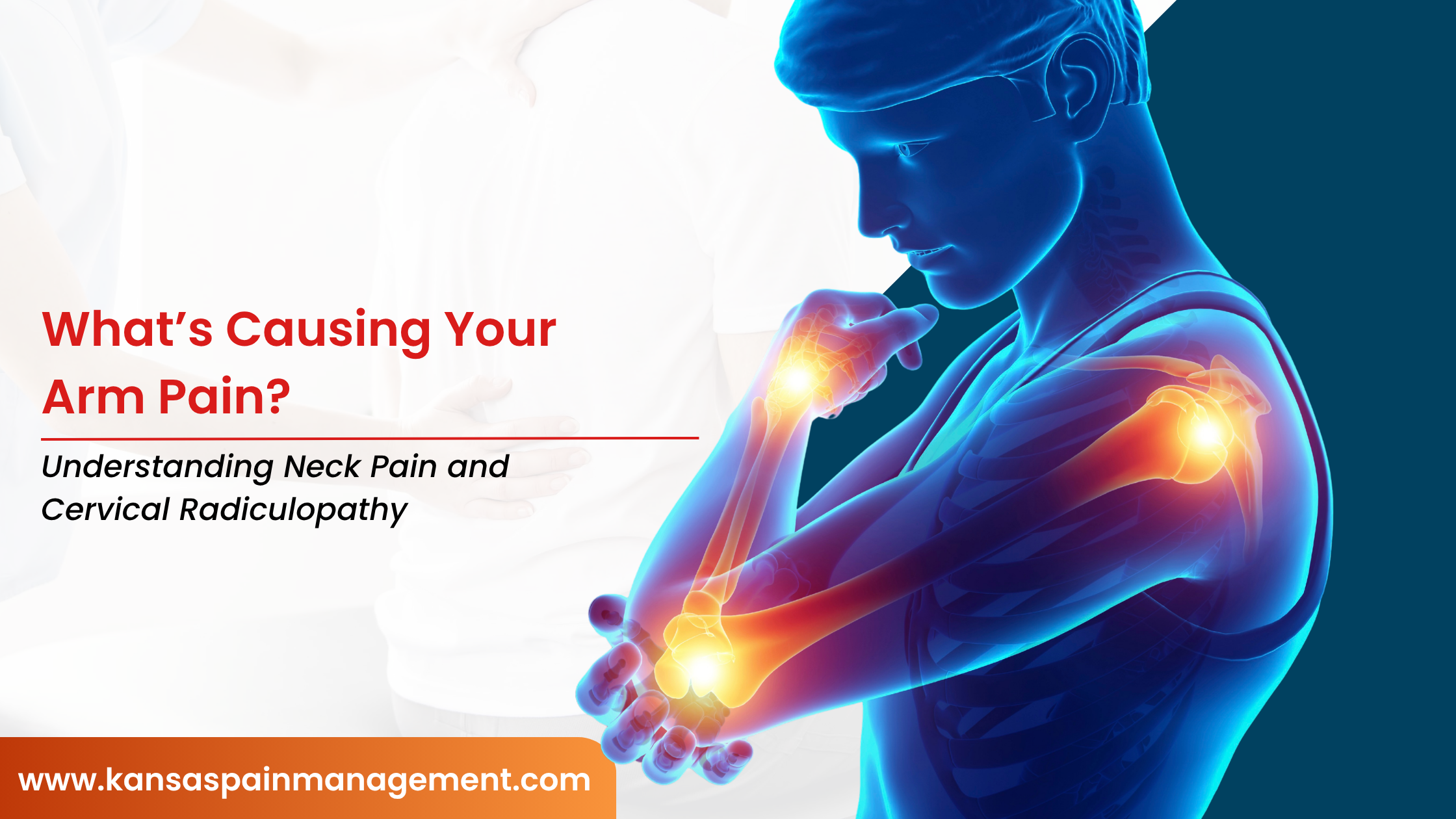
Arm pain is not always caused by a shoulder injury or muscle strain. In many cases, the problem may actually begin in the neck.
At Kansas Pain Management, we frequently see patients throughout Kansas City, Overland Park, and Lawrence experiencing neck pain that radiates into the shoulder, arm, or hand. One common cause of these symptoms is cervical radiculopathy — often referred to as a “pinched nerve” in the neck.
Understanding how the cervical spine affects the arms can help patients recognize symptoms early and seek proper treatment before the condition worsens.
What Is Cervical Radiculopathy?
Cervical radiculopathy occurs when a nerve in the neck becomes irritated, inflamed, or compressed.
The cervical spine contains seven vertebrae and multiple nerves that travel from the neck into the shoulders, arms, and hands. When one of these nerves becomes compressed, symptoms can radiate far beyond the neck itself.
Patients may experience:
- Arm pain
- Tingling
- Numbness
- Burning sensations
- Weakness
- Shooting pain down the arm
In some cases, arm symptoms are more noticeable than neck pain.
How Neck Problems Cause Arm Pain
The nerves exiting the cervical spine control sensation and muscle function throughout the upper extremities.
When these nerves become irritated, pain signals may travel into:
- The shoulder
- Upper arm
- Forearm
- Hands
- Fingers
This is why cervical radiculopathy can sometimes feel similar to:
- Shoulder injuries
- Carpal tunnel syndrome
- Muscle strain
- Elbow problems
The true source, however, may be located in the neck.
Common Causes of Cervical Radiculopathy
Several spinal conditions can place pressure on cervical nerves.
A cervical disc may bulge or rupture, irritating nearby nerves.
This commonly causes:
- Sharp neck pain
- Radiating arm pain
- Tingling or numbness
Degenerative Disc Disease
As discs naturally age, they may lose height and flexibility.
This can narrow spaces around spinal nerves and contribute to chronic nerve irritation.
Bone Spurs and Arthritis
Arthritis within the cervical spine may lead to bone spur formation, which can compress nerves and reduce spinal mobility.
This is especially common in older adults but can also affect younger patients with chronic posture strain.
Poor Posture and Tech Neck
Modern lifestyle habits play a major role in neck-related pain conditions.
Long hours spent:
- Looking down at phones
- Working at computers
- Sitting with poor posture
- Leaning toward screens
can place ongoing stress on the cervical spine.
Over time, poor posture may contribute to disc irritation, muscle tension, and nerve compression.
Symptoms of Cervical Radiculopathy
Symptoms vary depending on which cervical nerve is affected.
Common symptoms include:
- Neck pain
- Shoulder pain
- Arm pain
- Tingling in the hands or fingers
- Numbness
- Burning sensations
- Muscle weakness
- Reduced grip strength
- Pain worsening with certain neck movements
Some patients also experience headaches or pain between the shoulder blades.
When Arm Pain May Be Coming From the Neck
Arm pain is more likely related to cervical radiculopathy if symptoms:
- Travel down the arm
- Include numbness or tingling
- Worsen with neck movement
- Occur with neck stiffness
- Affect the fingers or hand
- Feel like burning or electric shocks
Pain that radiates below the shoulder often suggests nerve involvement rather than a simple muscle strain.
How Cervical Radiculopathy Is Diagnosed
At Kansas Pain Management, diagnosis begins with a comprehensive evaluation.
This may include:
- Physical examination
- Neurological testing
- Review of symptoms
- Imaging studies such as MRI
- Assessment of posture and mobility
Accurately identifying the pain source is important because shoulder, elbow, and nerve conditions can overlap.
Treatment Options for Cervical Radiculopathy
Treatment depends on symptom severity and the underlying cause.
Therapy may help improve:
- Posture
- Neck mobility
- Muscle strength
- Spinal stability
Lifestyle and Ergonomic Changes
Reducing strain on the cervical spine may help improve symptoms.
This may include:
- Better workstation setup
- Screen positioning adjustments
- Frequent movement breaks
- Improved posture habits
Cervical Epidural Steroid Injections
These injections may help reduce inflammation around irritated cervical nerves and relieve radiating arm pain.
For patients with chronic facet joint-related neck pain, RFA may provide longer-lasting relief by interrupting pain-signaling nerves.
When to See a Pain Management Specialist
You should seek medical evaluation if you experience:
- Persistent neck pain
- Arm pain with tingling or numbness
- Weakness in the hand or arm
- Symptoms interfering with sleep or work
- Pain lasting several weeks
- Worsening nerve symptoms
Early treatment may help prevent worsening nerve irritation and long-term complications.
Non-Surgical Neck Pain Treatment in Kansas
At Kansas Pain Management, our board-certified specialists provide advanced, minimally invasive treatments for chronic neck pain, cervical radiculopathy, nerve pain, and spinal conditions.
We proudly serve patients throughout Kansas City, Overland Park, Lawrence, and surrounding Kansas communities with personalized treatment plans designed to improve mobility, function, and quality of life.


