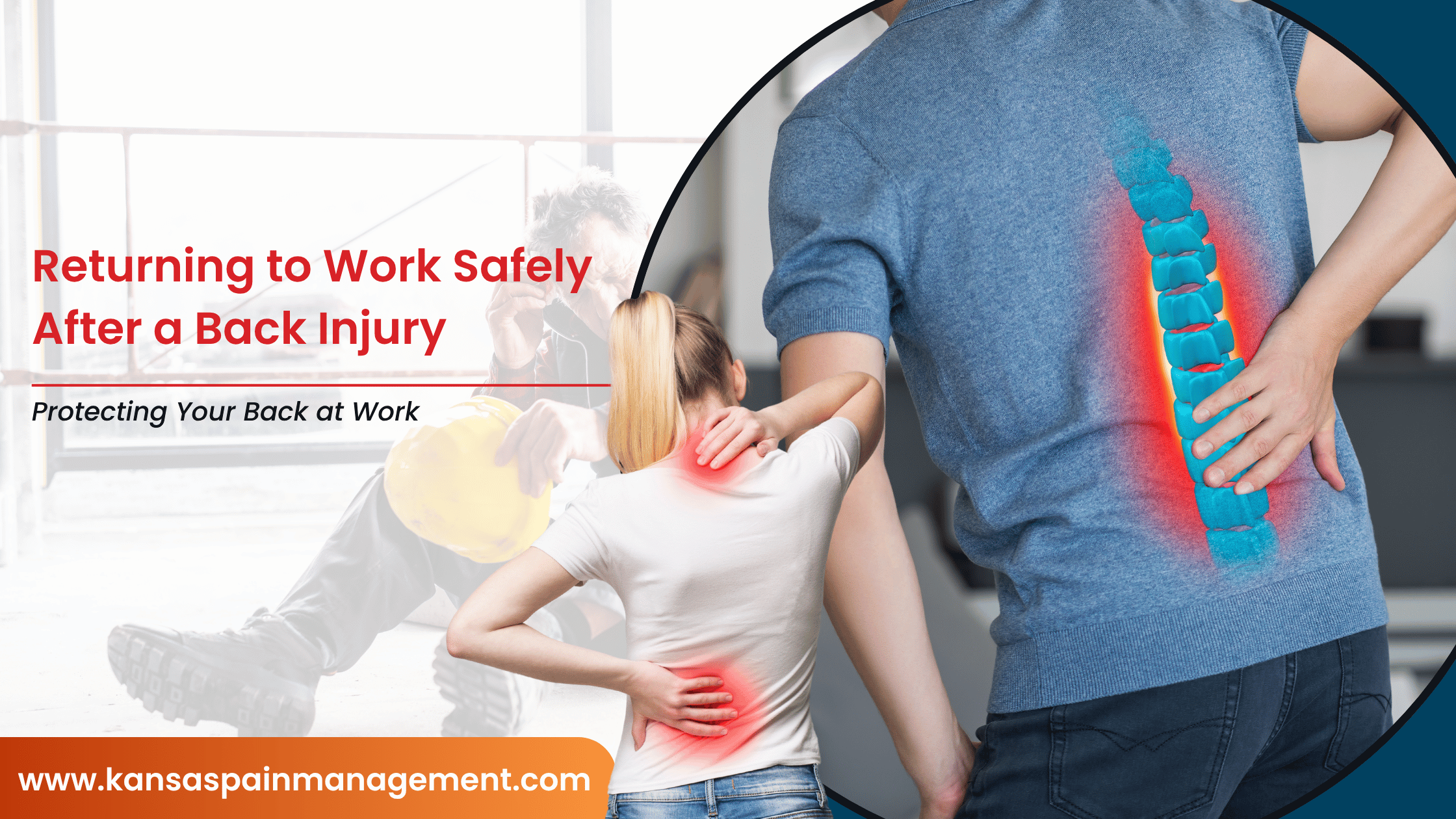
A back injury can disrupt every aspect of daily life, including your ability to work. Whether your injury occurred on the job, in a car accident, or during everyday activities, returning to work too soon—or without a proper recovery plan—can increase the risk of reinjury and prolonged pain.
At Kansas Pain Management, we help patients throughout Kansas City, Overland Park, and Lawrence recover from back injuries and safely return to work with personalized treatment plans focused on restoring function, mobility, and quality of life.
If you’re preparing to return to work after a back injury, here’s what you should know.
Why Returning to Work Can Feel Challenging
Even after initial healing, many patients worry about:
- Reinjuring their back
- Experiencing another pain flare-up
- Lifting heavy objects
- Sitting for long periods
- Standing all day
- Performing repetitive movements
These concerns are understandable. The goal is not simply returning to work as quickly as possible—it’s returning safely and sustainably.
Common Back Injuries That Affect Work
Back injuries can vary significantly in severity.
Common conditions include:
- Muscle strains
- Ligament sprains
- Herniated discs
- Sciatica
- Facet joint injuries
- Sacroiliac (SI) joint dysfunction
- Workplace lifting injuries
- Auto accident-related back pain
Recovery timelines depend on the type and severity of injury as well as the physical demands of the job.
Signs You May Be Ready to Return
Every patient heals differently, but some positive signs include:
- Reduced pain levels
- Improved mobility
- Better flexibility
- Increased strength
- Ability to perform daily activities comfortably
- Improved endurance
Returning to work should ideally occur when your symptoms are manageable and your body can tolerate job-related activities.
Start Gradually When Possible
For some patients, a gradual return-to-work plan may be beneficial.
This may include:
- Modified duties
- Reduced lifting requirements
- Shorter shifts
- Frequent movement breaks
- Temporary work restrictions
Gradually increasing activity allows the body to adapt while reducing the risk of setbacks.
Why Proper Body Mechanics Matter
Many workplace injuries occur because of poor lifting techniques and repetitive strain.
To protect your spine:
Lift With Your Legs
Avoid bending at the waist when lifting objects.
Keep Objects Close to Your Body
Holding weight away from the body increases strain on the spine.
Avoid Twisting While Lifting
Turn your entire body instead of twisting your back.
Use Assistance When Needed
Do not hesitate to ask for help with heavy objects.
These habits may significantly reduce stress on the back.
Sitting Jobs Can Be Challenging Too
Many people assume physically demanding jobs pose the greatest risk.
However, prolonged sitting can also aggravate back pain.
Office workers often experience:
- Lower back stiffness
- Tight hip muscles
- Poor posture
- Increased spinal pressure
Helpful strategies include:
- Standing every 30–60 minutes
- Using ergonomic workstations
- Maintaining proper posture
- Taking short walking breaks
Movement is often one of the best ways to prevent stiffness and discomfort.
Physical Therapy Can Help Prepare You
Physical therapy is often an important part of returning to work safely.
Treatment may focus on:
- Core strengthening
- Flexibility
- Balance
- Posture improvement
- Functional movement training
The goal is to improve your body’s ability to tolerate workplace demands while reducing the risk of future injuries.
Don’t Ignore Ongoing Pain
Some discomfort during recovery can be normal.
However, you should seek medical evaluation if you experience:
- Increasing pain
- New numbness or tingling
- Pain radiating into the legs
- Muscle weakness
- Difficulty walking
- Loss of mobility
Persistent symptoms may indicate ongoing nerve irritation or incomplete recovery.
Treatment Options for Persistent Back Pain
If pain continues to interfere with your ability to work, additional treatment options may be available.
At Kansas Pain Management, treatment plans may include:
To improve strength, mobility, and functional recovery.
May help reduce inflammation around irritated spinal nerves.
Can help relieve muscle tension and spasms.
May provide longer-lasting relief for chronic facet joint-related pain.
Minimally Invasive Pain Procedures
Advanced interventional treatments may help certain patients avoid more invasive procedures.
Preventing Future Back Injuries
Once you’ve returned to work, prevention becomes the next priority.
Helpful habits include:
- Staying physically active
- Maintaining a healthy weight
- Practicing good posture
- Strengthening core muscles
- Using proper lifting techniques
- Taking regular movement breaks
- Following workplace safety recommendations
Small daily habits can make a significant difference in long-term spinal health.
When to See a Pain Management Specialist
If your back injury continues to affect your ability to work, sleep, exercise, or perform daily activities, a comprehensive evaluation may help identify additional treatment options.
The earlier chronic pain is addressed, the better the chances of improving function and preventing long-term limitations.
Helping Kansas Patients Get Back to Work
At Kansas Pain Management, our board-certified specialists provide advanced diagnosis and minimally invasive treatment options for workplace injuries, back pain, sciatica, and chronic spine conditions.
We proudly serve patients throughout Kansas City, Overland Park, Lawrence, and surrounding Kansas communities with personalized treatment plans designed to help individuals recover, regain mobility, and return to work safely.