If you’ve ever noticed your sciatica worsening during a stressful week, you’re not imagining it.
Many patients associate sciatica solely with a pinched nerve or herniated disc. While structural issues can certainly contribute to sciatica, emotional stress may also play a significant role in how pain is experienced.
At Kansas Pain Management, we often see patients throughout Kansas City, Overland Park, and Lawrence whose back pain and sciatica symptoms become noticeably worse during periods of stress, anxiety, poor sleep, or increased life demands.
Understanding the connection between stress and sciatica can help patients better manage flare-ups and improve their overall quality of life.
What Is Sciatica?
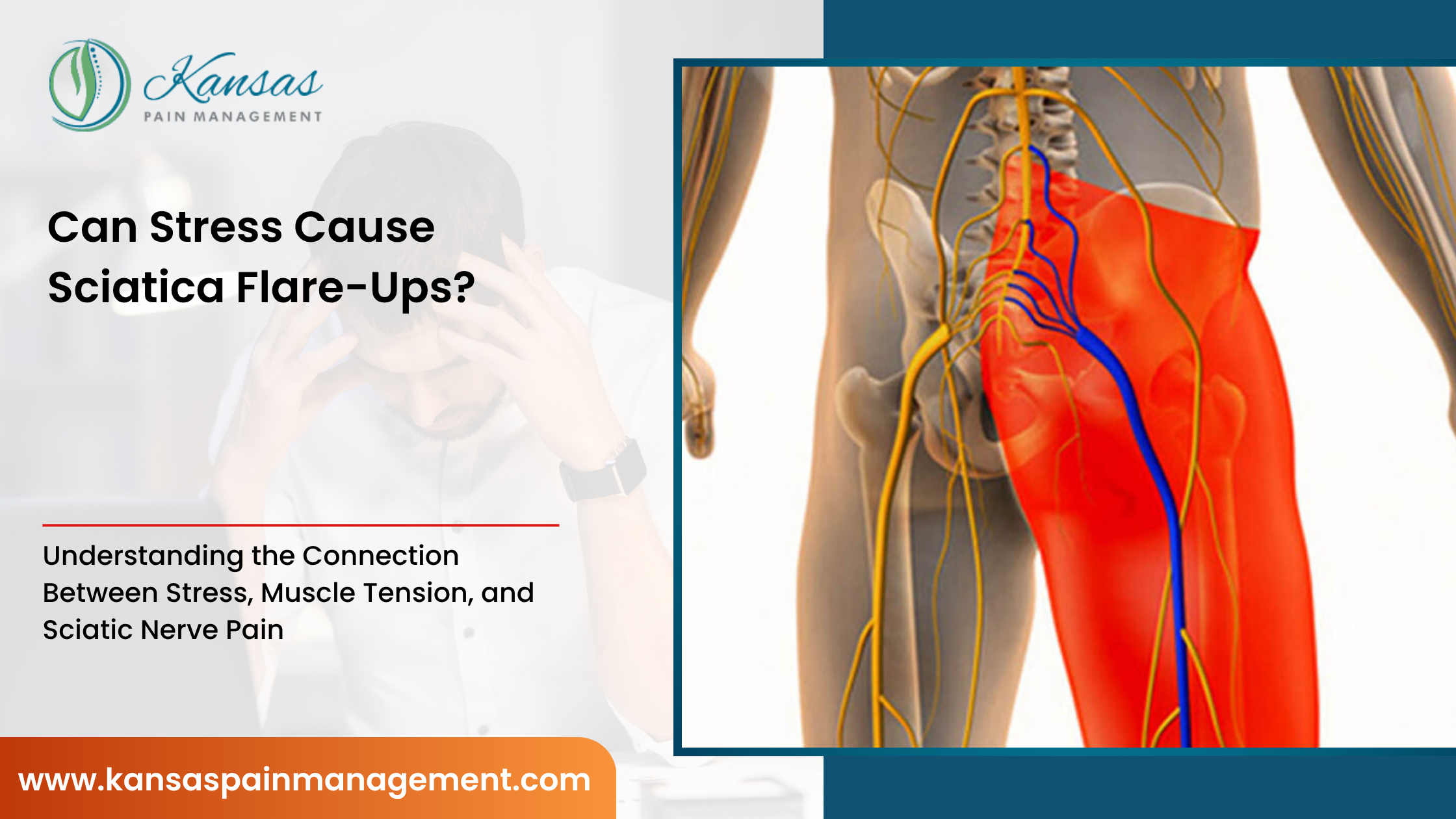
Sciatica occurs when the sciatic nerve becomes irritated or compressed.
The sciatic nerve is the largest nerve in the body, running from the lower back through the hips, buttocks, and down each leg.
Common symptoms include:
- Lower back pain
- Buttock pain
- Leg pain
- Tingling sensations
- Numbness
- Burning pain
- Electric shock-like sensations
- Muscle weakness
Symptoms may affect one or both legs, depending on the underlying cause.
Can Stress Actually Cause Sciatica?
Stress does not typically cause a herniated disc or physically compress the sciatic nerve.
However, stress can significantly influence how your body responds to pain and may contribute to sciatica flare-ups.
When stress levels rise, several things happen throughout the body:
- Muscles tighten
- Inflammation may increase
- Sleep quality often declines
- Pain sensitivity increases
- The nervous system becomes more reactive
These changes can make existing sciatic nerve irritation feel much worse.
Stress Causes Muscle Tension
One of the most common effects of stress is muscle tightening.
Many people unknowingly tense muscles in their:
- Lower back
- Hips
- Buttocks
- Neck
- Shoulders
This increased muscle tension may place additional pressure on already irritated nerves and surrounding tissues.
Patients frequently report:
- Increased stiffness
- More lower back discomfort
- Tight hips
- More frequent sciatica symptoms during stressful periods
The Nervous System and Pain Sensitivity
Chronic stress can keep the body’s nervous system in a heightened state of alertness.
This “fight-or-flight” response may increase sensitivity to pain signals.
As a result:
- Mild nerve irritation may feel more severe
- Existing symptoms may last longer
- Pain flare-ups may occur more frequently
- Recovery may take longer
This helps explain why some patients experience worsening sciatica even when imaging studies show no significant changes.
Poor Sleep Can Trigger Sciatica Flare-Ups
Stress and anxiety often interfere with sleep quality.
Unfortunately, poor sleep is closely linked to increased pain sensitivity.
Lack of restorative sleep may:
- Increase inflammation
- Reduce pain tolerance
- Slow recovery
- Increase muscle tension
- Intensify nerve-related symptoms
Many patients notice their sciatica feels significantly worse after several nights of poor sleep.
Common Stress-Related Sciatica Triggers
Several stress-related habits may contribute to symptom flare-ups:
Prolonged Sitting
Stressful workdays often involve sitting for extended periods.
Long periods of sitting can place pressure on the lower back and sciatic nerve.
Reduced Physical Activity
During stressful periods, many people become less active.
Reduced movement may increase stiffness and muscle tension.
Poor Posture
Stress can affect posture, causing increased strain on the spine and surrounding muscles.
Muscle Guarding
When the body perceives stress, muscles may remain constantly tightened, creating additional discomfort.
Signs Stress May Be Affecting Your Sciatica
Stress may be contributing to your symptoms if you notice:
- Sciatica worsening during stressful periods
- Increased pain despite no new injury
- Flare-ups during work deadlines
- More symptoms when feeling anxious
- Poor sleep before symptom increases
- Muscle tightness accompanying nerve pain
Recognizing these patterns can help patients better manage their condition.
How to Reduce Stress-Related Sciatica Flare-Ups
While stress cannot always be eliminated, several strategies may help reduce its impact on pain.
Stay Active
Gentle movement can help reduce muscle tension and improve circulation.
Prioritize Sleep
Quality sleep is essential for pain management and recovery.
Improve Posture
Proper sitting and standing posture can reduce strain on the lower back.
Take Movement Breaks
Avoid prolonged sitting by standing and stretching throughout the day.
Manage Stress Levels
Activities such as walking, exercise, relaxation techniques, and mindfulness practices may help calm the nervous system.
When to See a Pain Management Specialist
You should seek evaluation if:
- Sciatica persists for several weeks
- Pain is worsening
- Numbness or tingling develops
- Leg weakness occurs
- Symptoms interfere with work or daily activities
- Conservative treatments are no longer helping
Persistent sciatica may indicate underlying nerve irritation that requires medical evaluation.
Treatment Options for Sciatica
At Kansas Pain Management, treatment plans are tailored to the source and severity of symptoms.
Depending on the cause of your sciatica, treatment may include:
Improves flexibility, strength, posture, and spinal support.
May help reduce inflammation around irritated nerves.
Minimally Invasive Interventional Procedures
Can provide relief for certain chronic spine-related conditions.
Lifestyle and Functional Rehabilitation
Addressing sleep, posture, movement habits, and stress can play an important role in long-term recovery.
Managing Both the Physical and Emotional Side of Pain
Sciatica is often caused by physical nerve irritation, but stress can significantly influence how pain is experienced.
By addressing both the structural causes of sciatica and the factors that amplify pain—such as stress, poor sleep, and muscle tension—patients may experience better long-term outcomes.
At Kansas Pain Management, our board-certified specialists help patients throughout Kansas City, Overland Park, Lawrence, and surrounding Kansas communities find effective solutions for chronic back pain, nerve pain, and sciatica.