When most people think about pain, they think about an injury, damaged tissue, or a problem visible on an X-ray or MRI. While these factors can certainly contribute to pain, chronic pain is often much more complex than a physical injury alone.
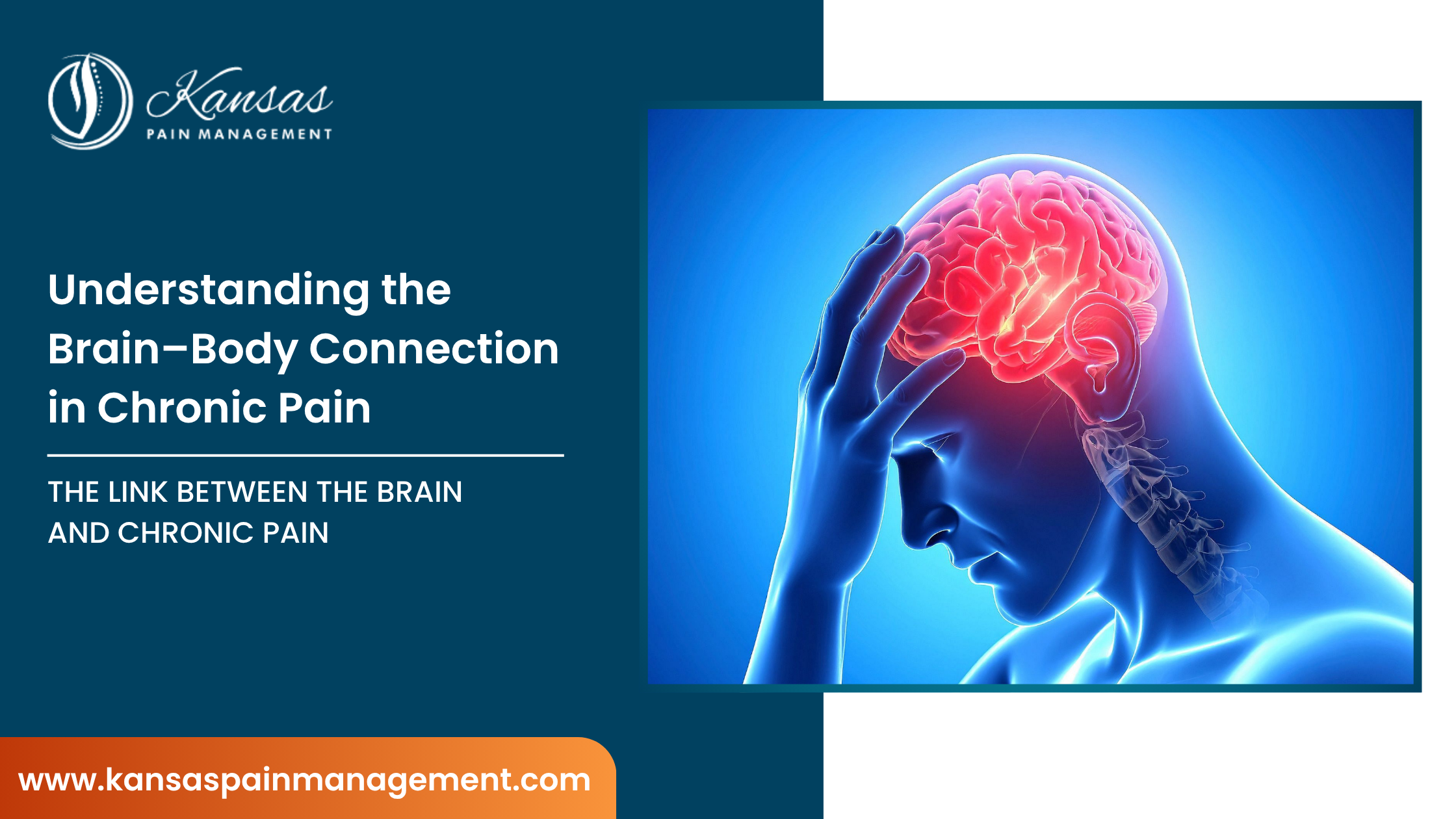
Pain is not just a body problem—it’s also a nervous system and brain process.
This is why some people continue experiencing pain long after an injury has healed, while others may have significant findings on imaging but very little discomfort.
At Kansas Pain Management, we help patients throughout Kansas City, Overland Park, and Lawrence understand the many factors that influence chronic pain. One of the most important concepts in modern pain medicine is the connection between the brain, nervous system, and body.
Pain Is Created by the Nervous System
Pain signals often begin in the body.
An injury, inflammation, or irritated nerve sends signals through the nervous system to the brain. The brain then interprets those signals and determines whether pain should be experienced.
This process is important because pain serves as a warning system that helps protect us from harm.
For example:
- Touching a hot stove triggers pain.
- Spraining an ankle causes discomfort to limit movement.
- A back injury encourages the body to rest and recover.
In acute situations, pain is helpful and protective.
What Happens When Pain Becomes Chronic?
Normally, pain decreases as tissues heal.
However, in some cases, the nervous system continues sending pain signals even after the original injury has improved.
This can happen because the nervous system becomes increasingly sensitive over time.
When pain persists for months or longer, it may no longer be driven solely by tissue damage.
Instead, the brain and nervous system can begin playing a larger role in how pain is experienced.
Understanding Central Sensitization
One concept that has gained significant attention in pain medicine is central sensitization.
Central sensitization occurs when the nervous system becomes more sensitive to pain signals.
As a result:
- Pain may feel more intense
- Symptoms may last longer
- Minor triggers may cause significant discomfort
- Pain can spread beyond the original injury site
Patients sometimes describe feeling pain even when medical tests show little ongoing tissue damage.
This does not mean the pain is imaginary.
It means the nervous system has become highly reactive.
Why Stress Can Influence Pain
The brain and body are closely connected.
When stress levels increase, the body responds by releasing hormones and activating the nervous system.
This response can lead to:
- Increased muscle tension
- Poor sleep quality
- Fatigue
- Increased pain sensitivity
- More frequent flare-ups
Many patients notice that their pain worsens during periods of stress, even when their physical condition has not changed.
This is one example of the brain-body connection at work.
The Role of Sleep in Chronic Pain
Sleep and pain have a powerful relationship.
Poor sleep may:
- Increase inflammation
- Lower pain tolerance
- Slow recovery
- Increase fatigue
- Heighten pain sensitivity
At the same time, chronic pain often makes it difficult to sleep.
This creates a cycle where pain disrupts sleep and poor sleep worsens pain.
Addressing sleep quality is often an important part of comprehensive pain management.
Why Emotions Can Affect Physical Symptoms
Many patients are surprised to learn that emotions can influence physical pain.
This doesn’t mean pain is “all in your head.”
Rather, the brain processes both emotional and physical experiences using interconnected pathways.
Feelings such as:
- Anxiety
- Stress
- Fear
- Frustration
may increase nervous system activity and amplify pain signals.
Similarly, positive experiences, relaxation, and improved coping strategies may help reduce pain intensity for some individuals.
Why MRI Findings Don’t Always Match Pain Levels
One reason the brain-body connection is important is because imaging studies don’t always explain symptoms.
Some people have:
- Herniated discs without pain
- Arthritis without symptoms
- Significant MRI findings with little discomfort
Others may have severe pain despite relatively mild imaging abnormalities.
Pain is influenced by much more than structural changes alone.
The nervous system, brain, emotions, sleep, and lifestyle factors all contribute to the overall pain experience.
How Modern Pain Management Addresses the Brain–Body Connection
Today’s pain management strategies often focus on more than simply treating injured tissues.
Comprehensive care may include:
Improves movement, strength, and function.
Interventional Pain Procedures
Treatments such as epidural steroid injections, radiofrequency ablation (RFA), and spinal cord stimulation may help reduce pain and improve quality of life.
Lifestyle Modifications
Addressing sleep, activity levels, and overall wellness can support recovery.
Stress Management
Reducing stress may help calm the nervous system and decrease symptom flare-ups.
Patient Education
Understanding pain often helps patients feel more confident and engaged in their recovery.
The Goal Is to Treat the Whole Person
Modern pain medicine recognizes that chronic pain is rarely caused by a single factor.
Instead, pain is often influenced by a combination of:
- Physical conditions
- Nervous system responses
- Emotional health
- Sleep quality
- Daily habits
- Lifestyle factors
The most effective treatment plans address all of these components rather than focusing on just one aspect of pain.
Comprehensive Chronic Pain Care in Kansas
At Kansas Pain Management, our board-certified specialists take a comprehensive, patient-centered approach to diagnosing and treating chronic pain.
We proudly serve patients throughout Kansas City, Overland Park, Lawrence, and surrounding Kansas communities with advanced treatment options for back pain, neck pain, nerve pain, sciatica, joint pain, and other chronic pain conditions.
By understanding the brain-body connection, patients can gain valuable insight into their symptoms and take an active role in improving their overall health and quality of life.