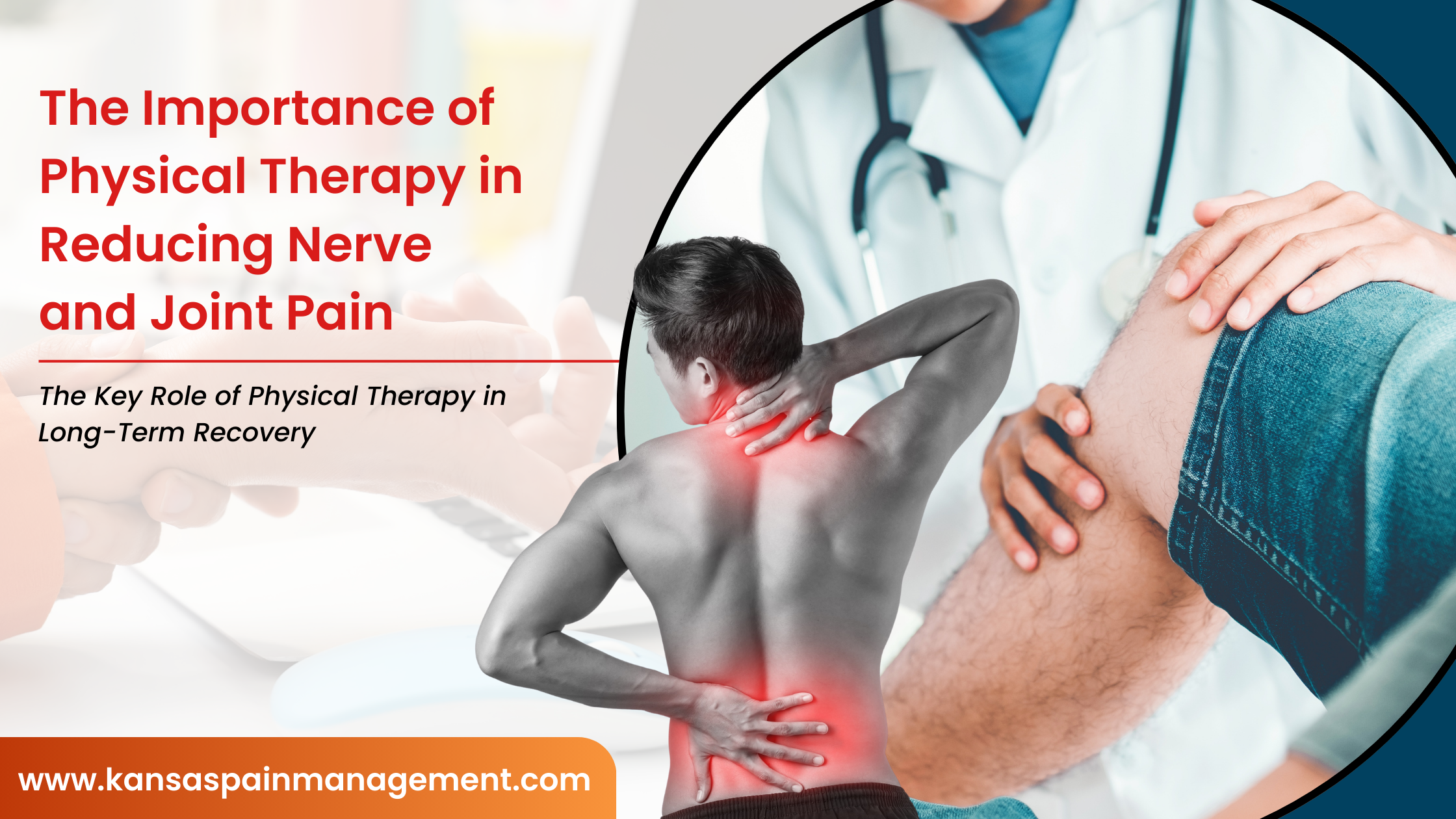
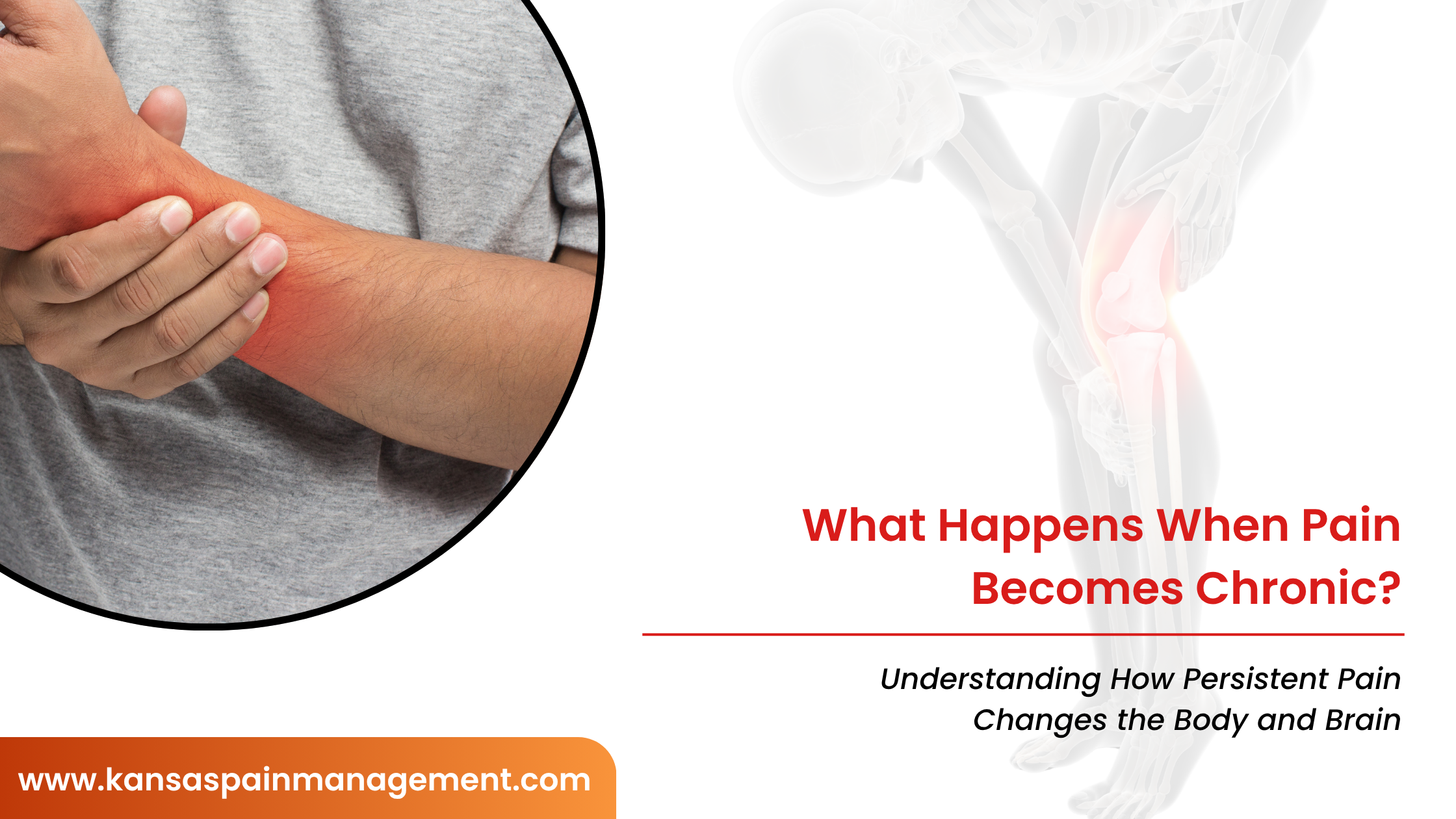
Pain is the body’s natural warning system. Normally, pain improves as an injury heals. However, for millions of people, pain continues long after the original problem should have resolved.
At Kansas Pain Management, we help patients throughout Kansas City, Overland Park, and Lawrence manage chronic pain conditions that interfere with work, sleep, mobility, and quality of life.
Understanding what happens when pain becomes chronic can help patients seek treatment earlier and avoid long-term complications.
What Is Chronic Pain?
Pain is generally considered chronic when it lasts longer than three months or continues beyond the normal healing period.
Unlike acute pain, which serves as a short-term warning sign after injury, chronic pain may persist even after tissues have healed.
Chronic pain can affect:
- The nervous system
- Muscles and joints
- Sleep quality
- Mental health
- Daily function
- Overall physical health
Over time, untreated chronic pain may become more difficult to manage.
Acute Pain vs Chronic Pain
Acute Pain
Acute pain usually develops suddenly after:
- Injury
- Surgery
- Illness
- Muscle strain
- Inflammation
This type of pain typically improves as the body heals.
Chronic Pain
Chronic pain continues for weeks, months, or even years and may persist because of:
- Ongoing inflammation
- Nerve irritation
- Degenerative conditions
- Nervous system sensitization
- Spine or joint disorders
In some cases, pain continues even when imaging studies show minimal structural damage.
How Chronic Pain Affects the Nervous System
One major difference between acute and chronic pain is how the nervous system responds over time.
When pain signals continue for long periods, the brain and spinal cord may become increasingly sensitive. This process is sometimes called central sensitization.
As a result:
- Pain signals become amplified
- The body becomes more sensitive to discomfort
- Minor movements may feel painful
- Symptoms may spread or worsen over time
This helps explain why some patients feel severe pain even after an injury appears healed.
Chronic Pain Can Affect the Entire Body
Long-term pain often impacts far more than the original injury area.
Patients may experience:
- Muscle tension
- Fatigue
- Sleep disruption
- Reduced mobility
- Weakness
- Increased stress
- Headaches
- Emotional exhaustion
Over time, chronic pain may begin affecting work performance, relationships, exercise, and overall quality of life.
Sleep Problems and Chronic Pain
Pain and sleep are closely connected.
When patients do not sleep well:
- Pain sensitivity often increases
- Muscles recover more slowly
- Stress levels rise
- Fatigue worsens
- Inflammation may increase
Many patients across Kansas City, Overland Park, and Lawrence notice that poor sleep and chronic pain often create a difficult cycle.
Mental Health and Chronic Pain
Chronic pain can also affect emotional health.
Living with ongoing pain may contribute to:
- Anxiety
- Stress
- Depression
- Irritability
- Social withdrawal
- Reduced motivation
At the same time, stress and emotional strain can increase pain sensitivity and muscle tension, worsening symptoms further.
This is why comprehensive pain management often involves both physical and neurological factors.
Common Conditions That May Lead to Chronic Pain
Many conditions can become chronic if left untreated.
These include:
- Chronic back pain
- Neck pain
- Sciatica
- Arthritis
- Herniated discs
- Facet joint syndrome
- Sacroiliac (SI) joint dysfunction
- Neuropathic pain
- Fibromyalgia
- Post-surgical pain
Early diagnosis and treatment may help reduce the risk of long-term complications.
Signs Pain May Be Becoming Chronic
You should seek evaluation if you experience:
- Pain lasting longer than several weeks
- Pain interfering with daily activities
- Pain disrupting sleep
- Numbness or tingling
- Reduced mobility
- Ongoing inflammation
- Frequent pain flare-ups
- Increased dependence on pain medications
The earlier chronic pain is addressed, the better the chances of improving long-term outcomes.
How Kansas Pain Management Treats Chronic Pain
At Kansas Pain Management, our board-certified specialists provide personalized treatment plans designed to reduce pain, improve function, and restore quality of life.
Treatment options may include:
Physical Therapy
Improves strength, posture, flexibility, and movement patterns.
Epidural Steroid Injections
Used to reduce spinal inflammation and nerve irritation.
Provides longer-lasting relief for chronic facet joint-related pain.
May help patients with chronic nerve-related pain conditions.
Lifestyle and Functional Rehabilitation
Movement, posture correction, sleep improvement, and stress management may support recovery.
Early Treatment Matters
Many patients wait too long before seeking help because they assume pain will eventually go away on its own. Unfortunately, chronic pain often becomes more complex over time if left untreated.
Early intervention may help:
- Prevent worsening symptoms
- Improve mobility
- Reduce nervous system sensitization
- Restore daily function
- Improve quality of life
Chronic Pain Is Treatable
Living with chronic pain does not mean you have to simply “learn to live with it.”
If persistent pain is affecting your daily life, the specialists at Kansas Pain Management can help identify the cause and develop a personalized treatment plan tailored to your needs.
Our clinics proudly serve patients throughout Kansas City, Overland Park, Lawrence, and surrounding Kansas communities.