
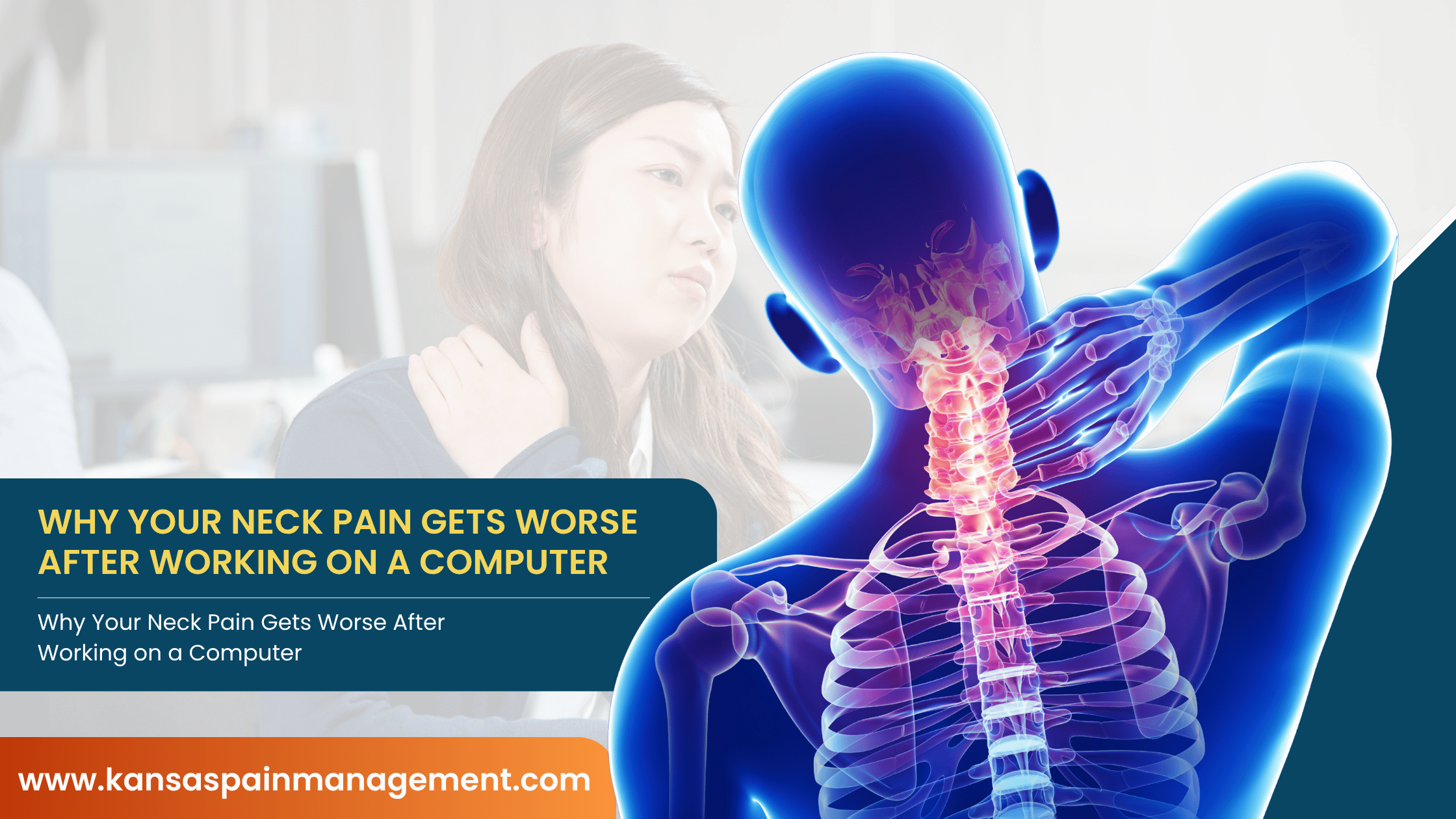
In today’s digital world, many people spend hours every day working at a computer. Whether you work from home, sit at a desk in an office, or spend long periods using a laptop, you may notice that your neck pain becomes worse by the end of the day.
At Kansas Pain Management, we frequently treat patients in Kansas City and Overland Park dealing with chronic neck pain caused or aggravated by prolonged computer use. Poor posture, muscle strain, and spinal stress can gradually lead to persistent discomfort that interferes with daily life.
If your neck pain worsens after working on a computer, understanding the causes and treatment options can help you find lasting relief.
Why Computer Work Causes Neck Pain
Your neck is designed to support the weight of your head while allowing flexibility and movement. However, long hours spent looking at a screen can place excessive stress on the muscles, joints, and nerves in the cervical spine.
When you lean your head forward to look at a monitor, the pressure on your neck increases significantly. Over time, this repeated strain may lead to inflammation, muscle tightness, joint irritation, and chronic pain.
Common problems associated with computer-related neck pain include:
- Muscle tension and stiffness
- Cervical strain
- Herniated or bulging discs
- Pinched nerves
- Facet joint irritation
- Tension headaches
- Poor posture-related spinal stress
Signs Your Neck Pain May Be Related to Computer Use
Many patients do not realize their daily work habits are contributing to their symptoms.
Common symptoms include:
- Neck stiffness after sitting at a desk
- Pain that worsens throughout the day
- Headaches starting from the neck
- Shoulder or upper back tightness
- Pain when turning the head
- Tingling or numbness in the arms or hands
- Burning pain between the shoulder blades
If these symptoms continue for weeks or months, it may indicate an underlying cervical spine condition requiring professional evaluation.
The Problem With “Tech Neck”
One of the most common causes of modern neck pain is something often called “tech neck.”
Tech neck occurs when the head constantly leans forward while looking at a screen. Even a small forward tilt dramatically increases the force placed on the cervical spine.
Over time, poor posture can lead to:
- Muscle fatigue
- Joint inflammation
- Disc degeneration
- Nerve compression
- Chronic neck and upper back pain
Many patients in Kansas City spend 8–10 hours daily at computers, which can gradually worsen spinal stress without realizing it.
Poor Ergonomics Can Make Pain Worse
Your workstation setup plays a major role in neck health.
Common ergonomic mistakes include:
- Monitor positioned too low
- Laptop use without external keyboard support
- Sitting without lumbar support
- Slouching forward
- Holding the phone between the shoulder and ear
- Sitting for long periods without breaks
Even small posture issues repeated daily can contribute to chronic pain over time.
When Neck Pain Becomes Serious
Occasional stiffness is common, but persistent or worsening pain should not be ignored.
You should consider seeing a pain management specialist if you experience:
- Neck pain lasting longer than several weeks
- Pain radiating into the shoulder or arm
- Weakness in the arms or hands
- Numbness or tingling
- Frequent headaches
- Pain interfering with sleep or work
- Reduced range of motion
These symptoms may indicate nerve irritation, disc problems, or chronic inflammation within the cervical spine.
How Kansas Pain Management Treats Chronic Neck Pain
At Kansas Pain Management, our board-certified pain specialists focus on identifying the root cause of neck pain and creating personalized treatment plans.
Depending on the condition, treatment options may include:
Targeted exercises can improve posture, strengthen neck muscles, and reduce strain on the cervical spine.
These injections may help relieve painful muscle knots and tension.
Cervical Epidural Steroid Injections
For patients with nerve inflammation or disc-related pain, epidural injections may help reduce irritation and improve mobility.
RFA can provide longer-lasting relief for chronic facet joint-related neck pain by interrupting pain signals from irritated nerves.
Lifestyle and Ergonomic Guidance
Improving desk posture and daily movement habits often plays an important role in long-term pain relief.
Tips to Reduce Neck Pain While Working on a Computer
Making small changes during the workday can help reduce stress on your neck.
Helpful strategies include:
- Keep your monitor at eye level
- Sit with proper back support
- Keep shoulders relaxed
- Avoid leaning forward
- Take stretching breaks every 30–60 minutes
- Use a headset instead of holding the phone
- Position the keyboard and mouse comfortably
- Stay physically active outside of work
Consistent posture correction can significantly reduce daily strain on the cervical spine.
Don’t Ignore Persistent Neck Pain
Many people assume neck pain from computer work is something they simply have to live with. However, untreated neck pain can gradually worsen and affect work performance, sleep quality, and overall well-being.
Early treatment may help prevent long-term complications and improve quality of life.
If your neck pain continues despite stretching, rest, or posture adjustments, the specialists at Kansas Pain Management can help evaluate your condition and recommend advanced non-surgical treatment options.
Schedule an Appointment With Kansas Pain Management
If you are experiencing chronic neck pain, headaches, or nerve-related symptoms after long hours at a computer, our team is here to help.
Kansas Pain Management – Contact Us
Our clinics proudly serve patients throughout Kansas City, Overland Park, and surrounding Kansas communities with advanced, minimally invasive pain management solutions.