
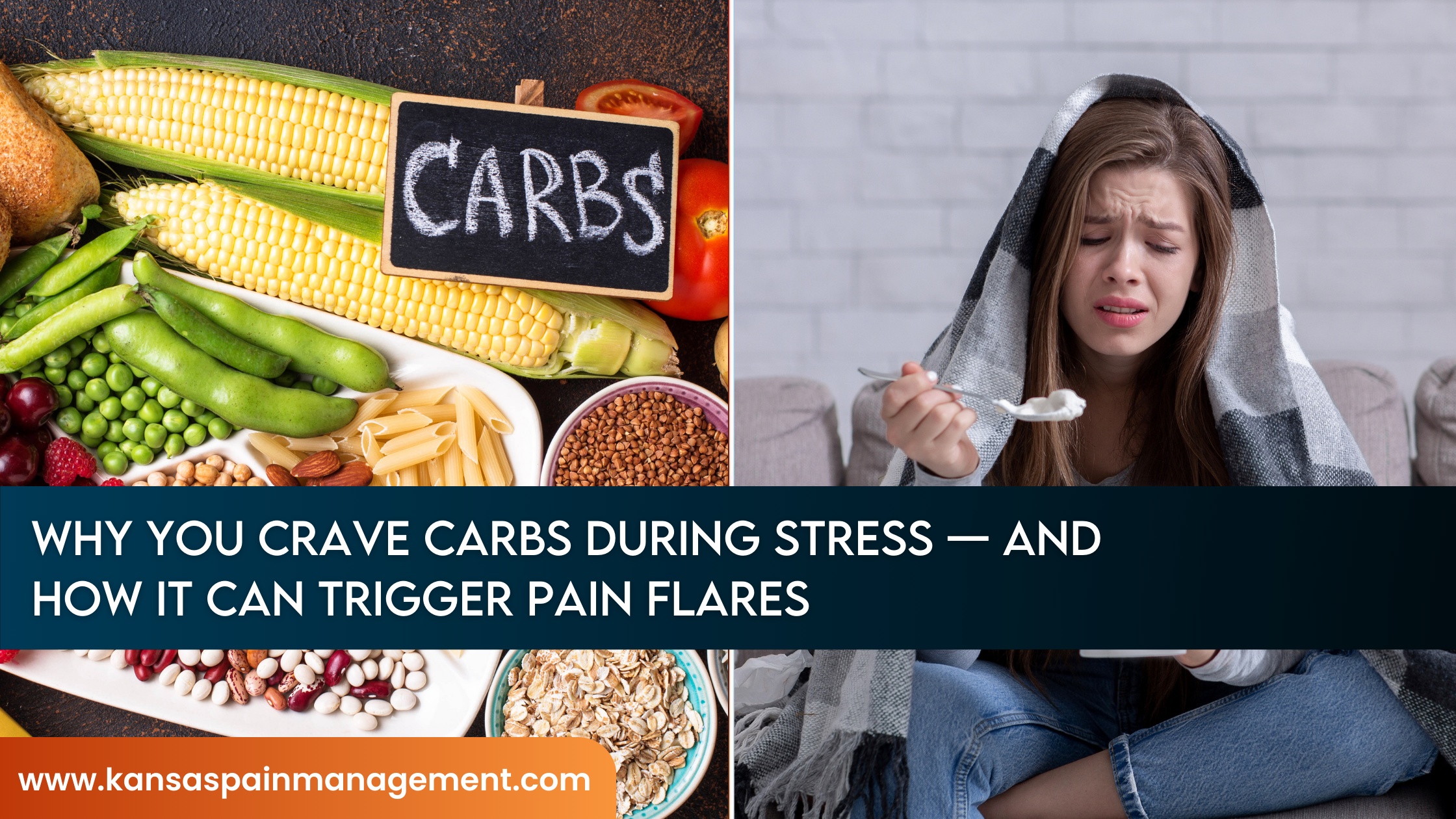
When you’re overwhelmed, tired, or dealing with day-to-day stress, it’s common to reach for comfort foods—especially carbs like bread, pasta, sweets, and snacks. While this response is normal, most people don’t realize that stress-related carb cravings can also worsen inflammation and trigger chronic pain flares.
At Kansas Pain Management, we help patients understand how diet, hormones, and stress influence pain levels—and what you can do to stay in control.
Why Stress Makes You Crave Carbs
Stress affects your brain, hormones, and energy levels. Here’s why carb cravings spike during stressful periods:
1. Your Body Wants Fast Energy
Carbs break down quickly into glucose, giving your body an immediate energy boost.
Under stress, your brain thinks you need “quick fuel,” even when you don’t.
2. Carbs Increase Serotonin (the Feel-Good Hormone)
Eating sugary or starchy foods boosts serotonin temporarily, helping you feel calmer.
This gives you a short sense of relief—but often leads to a crash later.
3. Elevated Cortisol Makes You Want Comfort Foods
Chronic stress raises cortisol levels, which increases appetite and triggers cravings for high-carb, high-sugar foods.
4. Emotional Eating for Relief
Many people eat carbs not out of hunger, but to cope with irritation, anxiety, or fatigue.
How Carb Cravings Can Trigger Pain Flares
While occasional treats are fine, consistently giving in to high-carb cravings can lead to:
1. Increased Inflammation
Excess sugar promotes inflammation throughout the body—worsening joint pain, muscle aches, and nerve pain.
2. Migraine & Headache Triggers
Blood sugar spikes followed by sudden drops can trigger migraines, tension headaches, and sinus pain.
3. Worsened Neuropathic Pain
Unstable blood sugar can aggravate nerve sensitivity, increasing burning, tingling, and electric shock-like pain.
4. More Back, Neck & Muscle Pain
High-carb diets can lead to fluid retention and muscle stiffness, worsening chronic musculoskeletal pain.
5. Fatigue and Poor Sleep
Sugar crashes can disrupt sleep cycles—making pain feel more intense the next day.
Healthy Ways to Manage Stress & Reduce Carb Cravings
You don’t need to eliminate carbs entirely! Instead, small lifestyle changes can help balance your energy and minimize pain triggers.
1. Choose Slow-Digesting Carbs
Opt for whole grains, fruits, oats, and vegetables instead of refined carbs to keep blood sugar stable.
2. Eat Balanced Meals
Pair carbs with protein and healthy fats to prevent spikes.
3. Stay Hydrated
Dehydration often feels like hunger—and increases cravings.
4. Manage Stress Proactively
Try:
- Deep breathing
- Gentle stretching
- Walking
- Meditation
- Good sleep habits
These techniques lower cortisol and reduce emotional cravings.
5. Limit Sugary Snacks
Keep healthier alternatives on hand so you’re not tempted during stressful moments.
6. Monitor Pain Patterns
If certain foods trigger migraines, joint pain, or nerve pain, a pain specialist can help identify patterns.
When to See a Pain Specialist
If stress, diet changes, or inflammation are causing frequent pain flares, you don’t have to manage it alone.
At Kansas Pain Management, our board-certified physicians offer solutions for:
- Migraine & chronic headaches
- Neuropathic pain
- Back & neck pain
- Joint pain
- Fibromyalgia
- Inflammation-related pain flares
With personalized treatment plans and minimally invasive options, we help you regain control of your daily life.
Find Relief and Take Control of Your Pain
Carb cravings during stress are normal—but they don’t have to worsen your pain. With mindful habits and expert guidance, you can protect your body and reduce flare-ups.
Schedule your appointment today