
Back pain is no longer a condition limited to older adults. In recent years, more young adults in their 20s and 30s are seeking medical care for persistent back pain that affects their work, sleep, and daily activities. Understanding why this trend is growing—and when to seek treatment—can help prevent long-term complications.
At Kansas Pain Management, we are seeing a rise in younger patients dealing with chronic or recurring back pain, often due to lifestyle and work-related factors.
Common Reasons Back Pain Is Increasing in Young Adults
1. Prolonged Sitting and Desk Jobs
Many young adults spend long hours sitting at desks, working on computers, or attending virtual meetings. Poor posture and lack of ergonomic support can place constant strain on the spine, leading to:
- Muscle imbalance and stiffness
- Disc stress and early degeneration
- Neck and lower back pain
Sitting for extended periods without movement is one of the most common contributors to early back pain.
2. Increased Screen Time and Smartphone Use
Frequent phone and laptop use encourages forward-head posture and slouching. Over time, this can cause:
- Muscle fatigue
- Spinal misalignment
- Chronic neck and upper back pain
This “tech posture” effect is increasingly seen in younger patients.
3. Lack of Physical Activity
Sedentary lifestyles can weaken the core and back muscles that support the spine. Without proper strength and flexibility:
- Minor injuries take longer to heal
- Pain episodes become more frequent
- The risk of chronic pain increases
Regular movement plays a critical role in spine health.
4. Improper Exercise and Overtraining
While staying active is important, improper form during workouts or sudden increases in training intensity can strain the back. Common issues include:
- Weightlifting without proper technique
- Inadequate warm-up or recovery
- Sports-related overuse injuries
These injuries often go untreated until pain becomes persistent.
5. Stress and Poor Sleep Habits
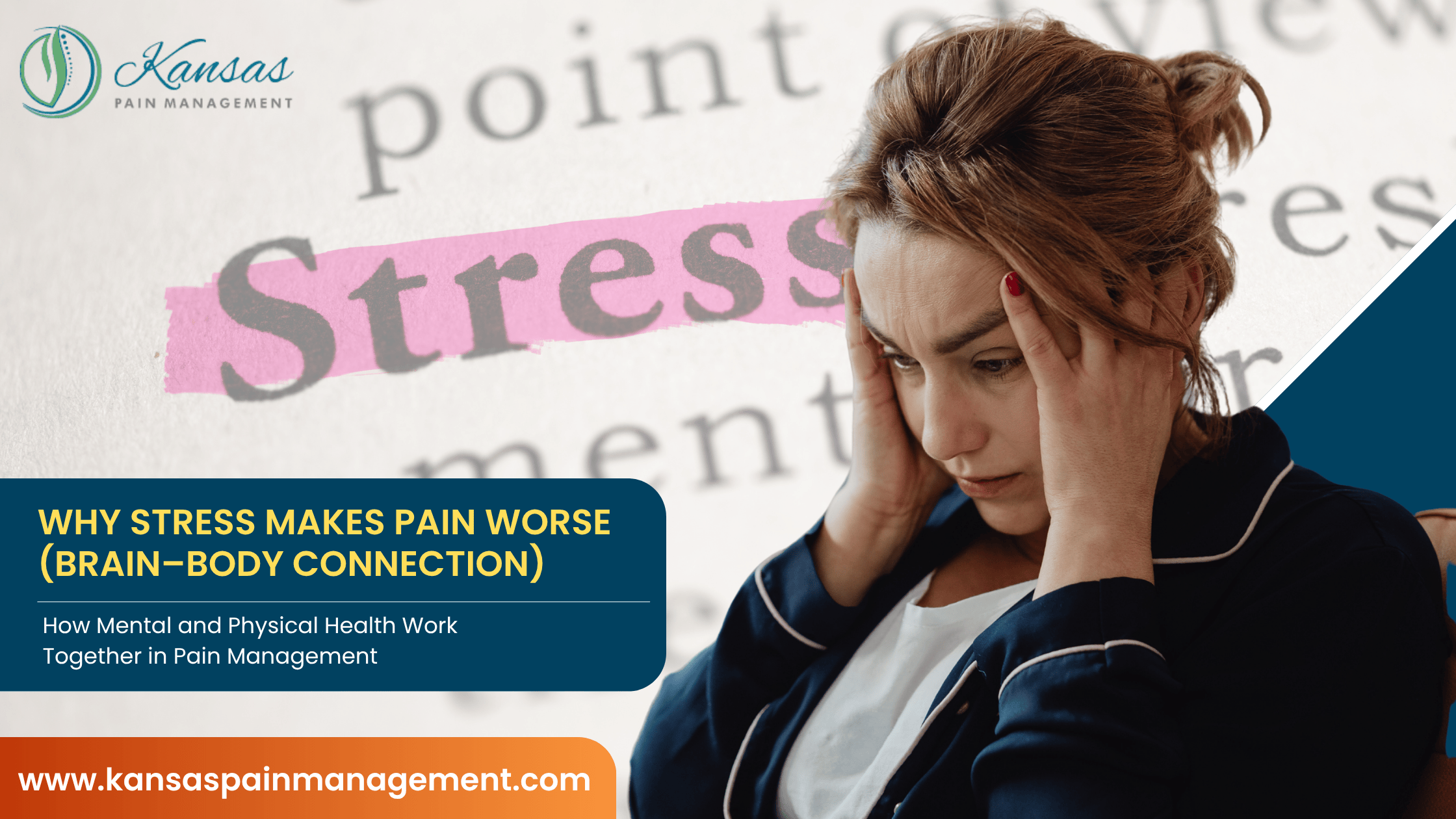
Chronic stress can cause muscle tension and increase pain sensitivity. Combined with inadequate sleep, this can:
- Slow healing
- Increase inflammation
- Worsen existing back pain
Mental health and physical pain are closely connected.
When Back Pain Becomes a Bigger Problem
Ignoring back pain can allow it to progress from a temporary issue to a chronic condition. Young adults who delay care may experience:
- Worsening pain over time
- Reduced mobility and activity levels
- Nerve-related symptoms such as tingling or numbness
Early evaluation by a pain specialist can help prevent long-term complications.
How Kansas Pain Management Helps Young Adults With Back Pain
At Kansas Pain Management, we focus on non-surgical, individualized treatment plans that address the root cause of pain. Depending on your condition, treatment may include:
- Image-guided injections
- Minimally invasive procedures
- Physical therapy coordination
- Lifestyle and posture education
Our goal is to relieve pain, restore function, and help patients stay active.
When Should Young Adults See a Pain Specialist?
You should consider seeing a pain management doctor if:
- Back pain lasts longer than a few weeks
- Pain interferes with work or sleep
- Pain radiates into the legs or arms
- Over-the-counter treatments are not helping
Early treatment can reduce the risk of chronic pain later in life.
Take Control of Back Pain Early
Back pain in young adults is becoming more common—but it doesn’t have to become permanent. Addressing pain early can protect your spine, improve your quality of life, and help you stay active for years to come.
Kansas Pain Management is here to provide expert, compassionate care for patients across Kansas.