Head pain can be debilitating, especially when it becomes frequent or severe. Two commonly confused causes of head pain are Occipital Neuralgia and Migraines. While they may share overlapping symptoms, they are very different conditions and require different treatment approaches. At Kansas Pain Management, accurate diagnosis is the first step toward effective, long-lasting relief.
What Is Occipital Neuralgia?
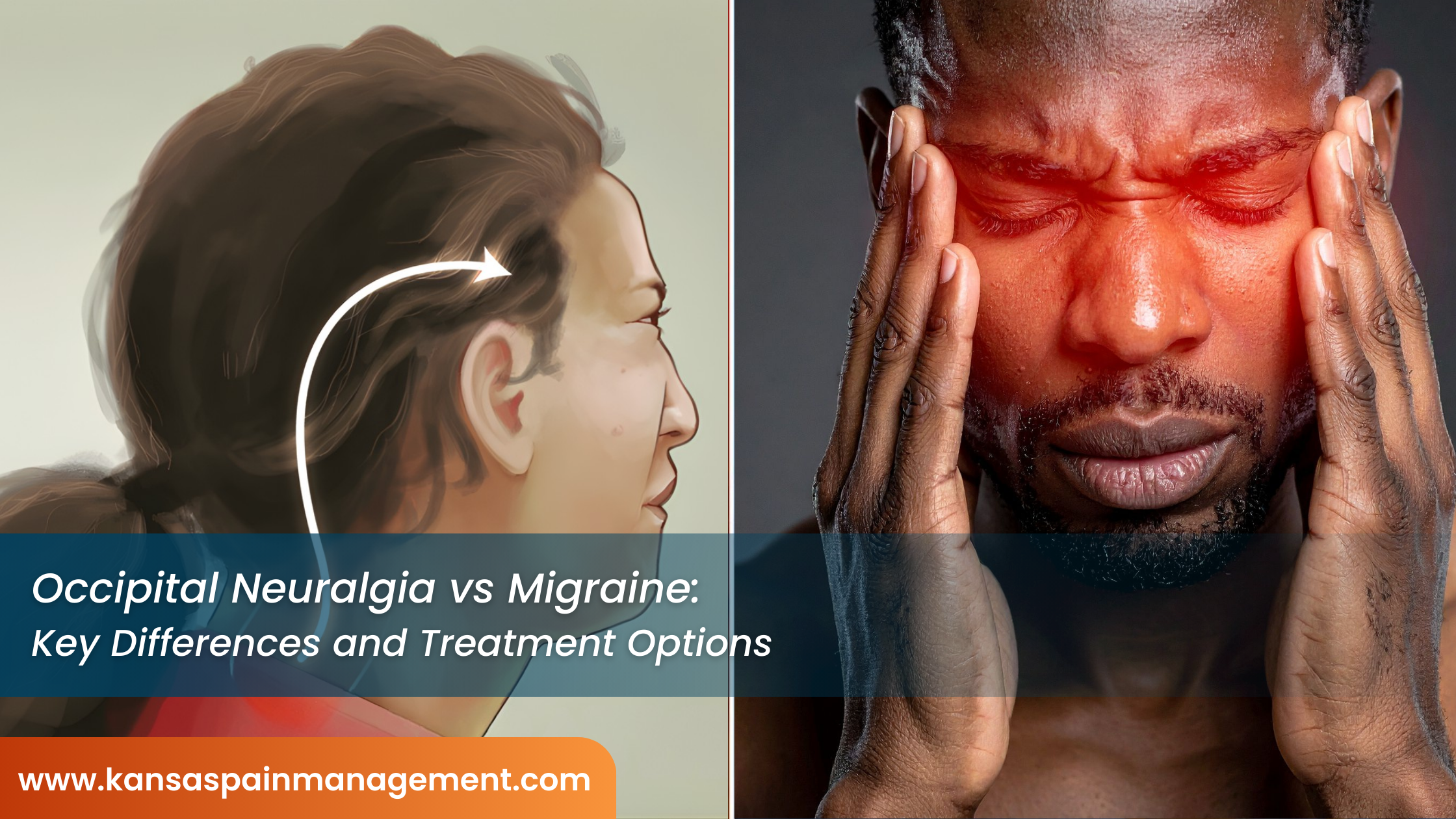
Occipital Neuralgia is a nerve-related condition caused by irritation or compression of the occipital nerves, which run from the upper spine through the scalp. When these nerves become inflamed, they can produce sharp, shooting pain in the back of the head and neck.
Common Symptoms of Occipital Neuralgia
- Sharp, stabbing, or electric-shock–like pain
- Pain starting at the base of the skull and radiating upward
- Pain on one or both sides of the head
- Tenderness over the scalp or neck
- Pain triggered by head movement or pressure
Occipital neuralgia pain is often intermittent but intense and may be mistaken for migraines or tension headaches.
What Is a Migraine?
A migraine is a neurological condition characterized by recurring headaches that can last hours to days. Migraines often involve complex brain activity and are frequently associated with triggers such as stress, hormonal changes, certain foods, or sleep disturbances.
Common Migraine Symptoms
- Throbbing or pulsating head pain
- Pain typically on one side of the head
- Sensitivity to light, sound, or smells
- Nausea or vomiting
- Visual disturbances (aura) in some patients
Unlike occipital neuralgia, migraines are not caused by nerve compression in the neck.
Occipital Neuralgia vs Migraine: Key Differences
| Feature | Occipital Neuralgia | Migraine |
| Pain Type | Sharp, shooting, electric | Throbbing or pulsating |
| Pain Location | Back of head, neck, scalp | Front or side of head |
| Triggers | Neck movement, pressure | Stress, food, hormones |
| Nausea | Rare | Common |
| Nerve Involvement | Yes | No |
Correctly identifying these differences is essential for choosing the right treatment.
How Are These Conditions Diagnosed?
At Kansas Pain Management, diagnosis begins with a detailed medical history and physical examination. Additional steps may include:
- Identifying pain patterns and triggers
- Imaging studies to rule out structural issues
- Diagnostic nerve blocks, which can confirm occipital neuralgia if pain improves after injection
Many patients suffer for years because their headaches are misdiagnosed.
Treatment Options for Occipital Neuralgia and Migraine
Occipital Neuralgia Treatment
Non-surgical treatments may include:
- Occipital nerve blocks
- Anti-inflammatory or nerve-stabilizing medications
- Physical therapy for neck-related causes
- Radiofrequency ablation (RFA) for longer-lasting relief
Migraine Treatment
Migraine management may involve:
- Preventive medications
- Acute migraine medications
- Lifestyle and trigger management
- Referral for neurological care when appropriate
Because treatment strategies differ significantly, self-treatment without proper diagnosis can delay relief.
Why Choose Kansas Pain Management?
At Kansas Pain Management, we specialize in diagnosing nerve-related and spine-related causes of head pain. Our personalized approach focuses on identifying the true source of pain and offering advanced, non-surgical solutions whenever possible.
When Should You See a Pain Specialist?
You should consider seeing a pain management specialist if:
- Head pain is recurring or worsening
- Headaches start in the neck or back of the head
- Medications are no longer effective
- Pain interferes with daily life or work
Early evaluation can prevent chronic headache progression.
Schedule a Consultation
If you’re unsure whether your head pain is due to occipital neuralgia or migraines, Kansas Pain Management can help. Contact us today to schedule a comprehensive evaluation and explore targeted treatment options.