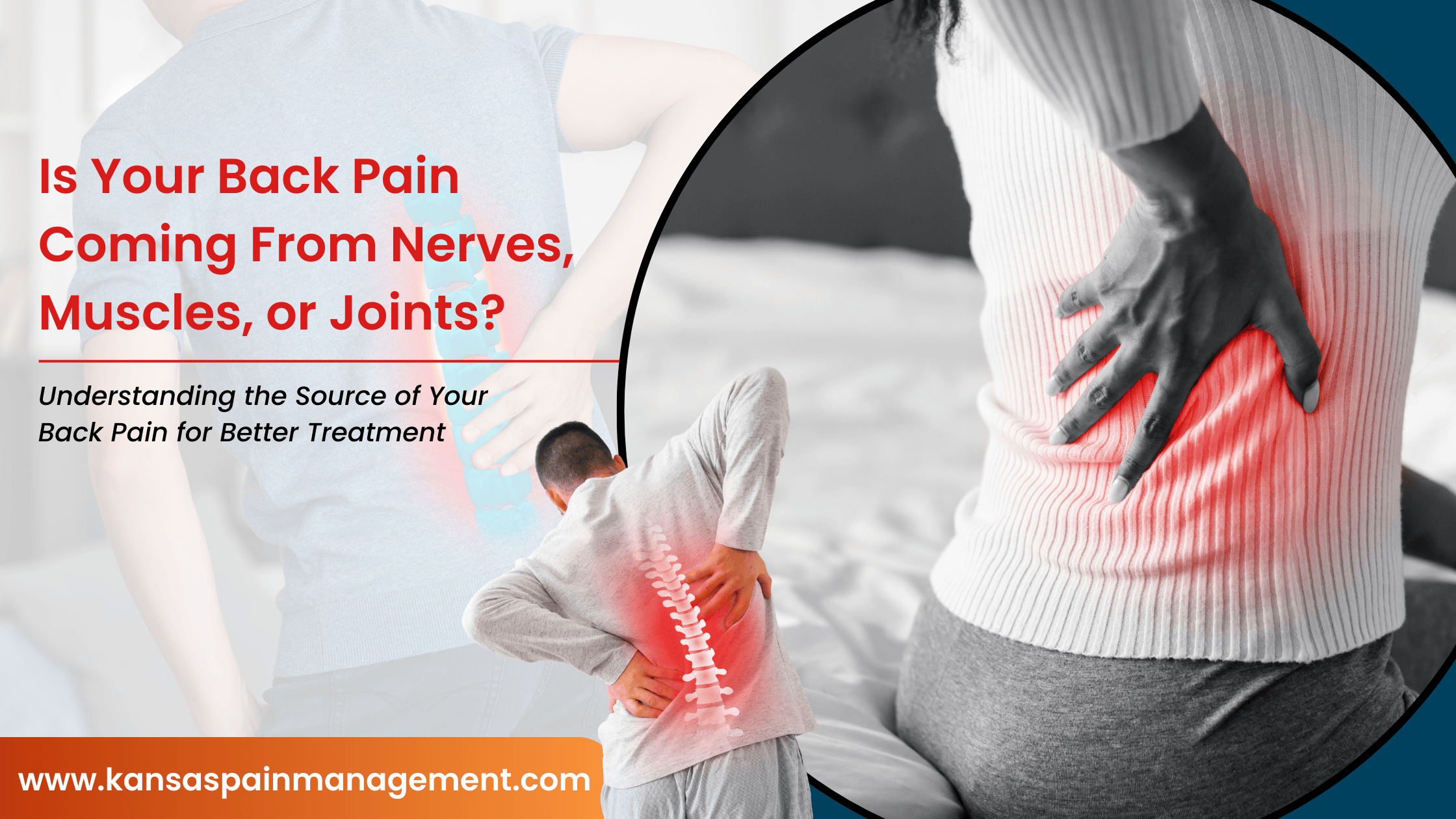
Back pain is one of the most common reasons people seek medical care—but not all back pain comes from the same source. Two of the most frequent causes are facet joint pain and disc-related pain. While symptoms may overlap, the treatments are very different. At Kansas Pain Management, identifying the true source of back pain is the key to effective, long-term relief.
Understanding the Difference Between Facet Joints and Discs
What Are Facet Joints?
Facet joints are small stabilizing joints located at the back of the spine. They allow controlled movement and provide spinal stability. When these joints become inflamed or arthritic, they can cause localized mechanical back pain.
What Are Spinal Discs?
Spinal discs act as shock absorbers between vertebrae. Disc problems—such as bulging, herniation, or degeneration—can irritate nearby nerves and cause radiating pain.
Because both structures are close together, pain can feel similar, making diagnosis challenging without expert evaluation.
Symptoms of Facet Joint–Related Back Pain
Facet joint pain often includes:
- Dull or aching pain near the spine
- Pain worse with bending backward or twisting
- Stiffness after inactivity or in the morning
- Pain that improves with rest
- Pain typically not associated with leg numbness or weakness
Facet pain is often described as mechanical, meaning it worsens with certain movements.
Symptoms of Disc-Related Back Pain
Disc-related pain may include:
- Sharp or burning pain
- Pain that radiates into the buttocks or legs (sciatica)
- Numbness or tingling
- Pain worsened by sitting, bending forward, or coughing
- Weakness in the legs in more severe cases
Disc pain often involves nerve compression, which leads to neurological symptoms.
Facet Joint Pain vs Disc Pain: Key Differences
| Feature | Facet Joint Pain | Disc Pain |
| Pain Location | Localized back pain | Back + leg pain |
| Movement Triggers | Extension, twisting | Bending forward, sitting |
| Numbness/Tingling | Rare | Common |
| Pain Type | Dull, aching | Sharp, burning |
| Nerve Involvement | Usually no | Often yes |
Understanding these patterns helps narrow down the pain source.
How Doctors Tell the Difference
At Kansas Pain Management, diagnosis goes beyond imaging alone.
1. Detailed Clinical Evaluation
We evaluate:
- Pain patterns and triggers
- Posture and movement
- Neurological symptoms
2. Imaging Studies
MRI or X-ray can show disc degeneration or arthritis, but imaging alone does not always explain pain.
3. Diagnostic Injections
Targeted injections are often the most reliable way to identify pain origin:
- Facet joint injections or medial branch blocks confirm facet-related pain
- Epidural steroid injections help identify disc-related nerve pain
If pain improves after a diagnostic injection, it confirms the source.
Why Accurate Diagnosis Matters
Treating the wrong structure can lead to:
- Ongoing pain
- Unnecessary procedures
- Delayed recovery
Facet joint pain and disc pain require different treatment strategies, so precise diagnosis is essential.
Non-Surgical Treatment Options
For Facet Joint Pain
- Anti-inflammatory medications
- Physical therapy
- Facet joint injections
- Medial branch nerve blocks
- Radiofrequency ablation (RFA) for long-term relief
For Disc-Related Pain
- Physical therapy
- Epidural steroid injections
- Activity modification
- Nerve-targeted medications
Most patients can avoid surgery with appropriate interventional care.
Why Choose Kansas Pain Management?
At Kansas Pain Management, we specialize in diagnosis-driven pain treatment. Our goal is to identify the true cause of pain and provide personalized, non-surgical solutions that help patients return to daily activities with less pain.
When Should You See a Pain Specialist?
Consider seeing a pain management specialist if:
- Back pain lasts longer than a few weeks
- Pain radiates into the legs
- Pain worsens with movement or posture
- Conservative care has not helped
Early evaluation can prevent chronic pain progression.
Schedule a Consultation
If you’re unsure whether your back pain is coming from facet joints or discs, Kansas Pain Management can help. Contact us today to schedule a comprehensive evaluation and get the right treatment plan for your condition.