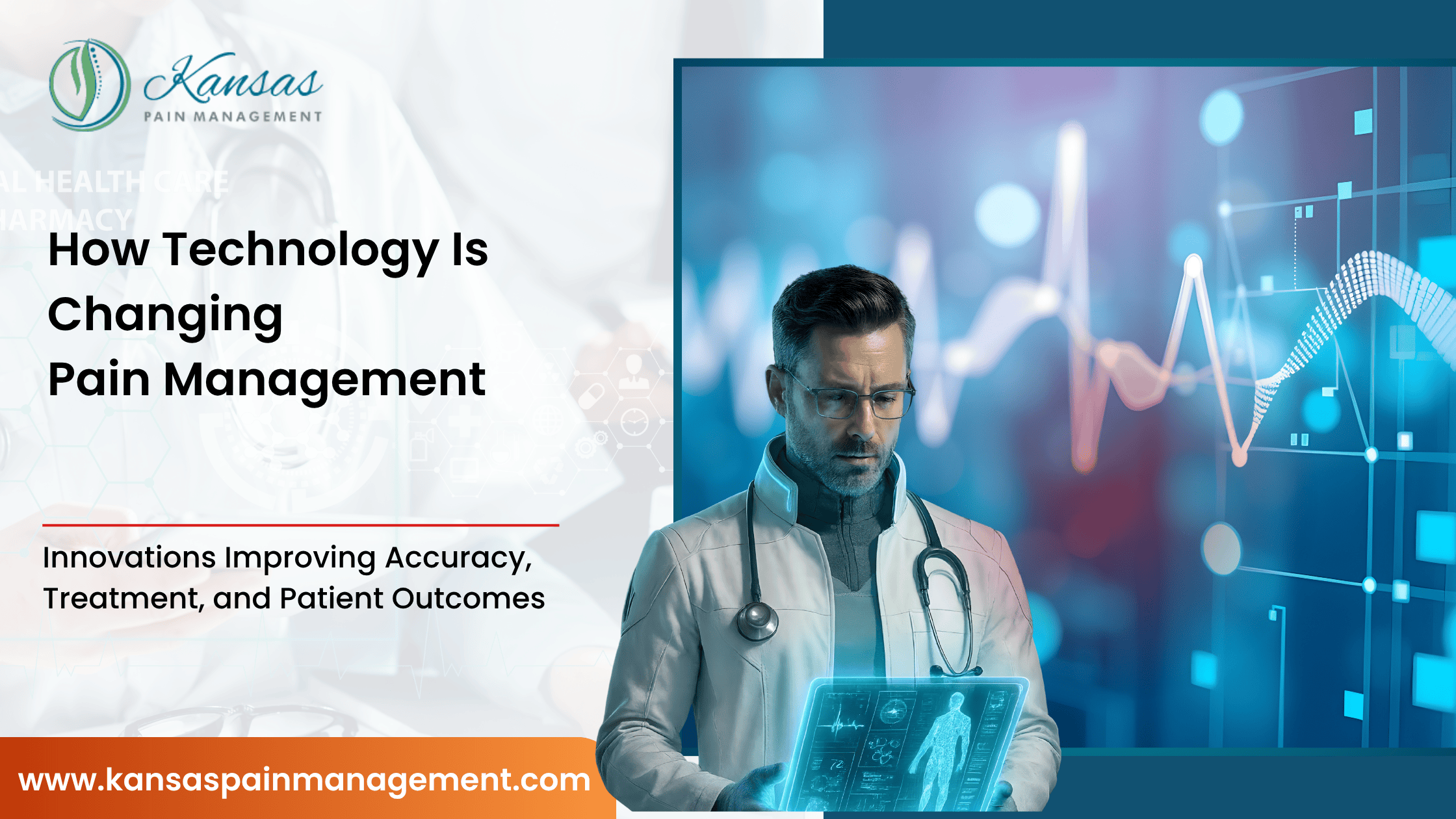
Pain management has evolved significantly over the past decade. Today, advancements in medical technology are transforming how chronic pain is diagnosed, monitored, and treated—making care more precise, personalized, and effective than ever before.
At Kansas Pain Management, modern technology plays a key role in helping patients find relief through minimally invasive, non-surgical treatments tailored to their specific condition.
Why Technology Matters in Pain Care
Traditional pain treatment often relied on generalized approaches such as medication or surgery. While these methods still have a role, technology now allows physicians to:
- Pinpoint the exact source of pain
- Deliver targeted treatments
- Monitor patient progress more accurately
- Reduce risks and recovery time
This shift has improved both outcomes and patient experience.
Advanced Imaging for Accurate Diagnosis
MRI and CT Scans
Modern imaging provides detailed views of the spine, joints, and nerves, helping identify conditions like:
- Herniated discs
- Spinal stenosis
- Degenerative changes
Fluoroscopy (Real-Time X-Ray Guidance)
Fluoroscopy allows physicians to guide injections in real time, ensuring medication is delivered precisely to the affected area.
This improves both safety and effectiveness of procedures.
Precision-Guided Minimally Invasive Treatments
Technology has made procedures more accurate and less invasive.
Image-Guided Injections
Epidural steroid injections, facet injections, and nerve blocks are performed with imaging guidance to target pain sources with high precision.
Radiofrequency Ablation (RFA)
RFA uses controlled heat to interrupt pain signals from specific nerves, offering longer-lasting relief for conditions like facet joint pain.
Advanced Nerve Blocks
Modern techniques allow for more precise diagnosis and treatment of nerve-related pain.
Personalized Treatment Plans
Technology helps move pain management toward personalized care.
Instead of a one-size-fits-all approach, treatment plans are based on:
- Individual anatomy
- Specific pain source
- Response to prior treatments
- Functional goals
This leads to more effective and targeted outcomes.
Digital Health and Patient Monitoring
Emerging technologies are improving how pain is tracked and managed over time.
Wearable Devices
Some patients use wearable technology to monitor:
- Activity levels
- Movement patterns
- Sleep quality
These insights help physicians adjust treatment plans based on real-world data.
Telemedicine
Virtual consultations make it easier for patients to:
- Follow up with their provider
- Discuss symptoms
- Adjust treatment plans without frequent in-person visits
Reduced Reliance on Opioids
One of the most important impacts of technology is the shift toward non-opioid pain management.
With better diagnostic tools and targeted treatments, patients can:
- Address the root cause of pain
- Reduce dependence on medications
- Achieve long-term relief more safely
What This Means for Patients
For patients, these advancements mean:
- Faster and more accurate diagnosis
- Less invasive treatments
- Shorter recovery times
- Better long-term outcomes
- Improved quality of life
Pain care is no longer just about managing symptoms—it’s about restoring function and preventing recurrence.
The Future of Pain Management
Pain management continues to evolve with innovations such as:
- AI-assisted diagnostics
- Regenerative therapies
- Advanced neuromodulation techniques
These developments are shaping a future where pain treatment is even more precise, proactive, and personalized.
How Kansas Pain Management Uses Technology
At Kansas Pain Management, advanced technology is integrated into every step of care—from diagnosis to treatment.
The focus is on:
- Accurate identification of pain sources
- Safe, image-guided procedures
- Minimally invasive solutions
- Patient-centered care
Schedule a Consultation
If chronic pain is affecting your life, modern technology offers more options than ever before.
Contact Kansas Pain Management to learn how advanced, non-surgical treatments can help you find lasting relief.