Radiofrequency Ablation (RFA) is one of the most effective non-surgical treatments for chronic spine pain. But one of the most common questions patients ask at Kansas Pain Management is:
“How long will the relief actually last?”
The answer depends on several factors — but for many patients, relief can last 6 months to 18 months, and sometimes even longer.
Let’s break it down clearly.
What Is Radiofrequency Ablation?
Radiofrequency Ablation is a minimally invasive procedure used to treat pain coming from:
- Facet joints (neck and lower back)
- Sacroiliac (SI) joints
- Certain nerve-related spine conditions
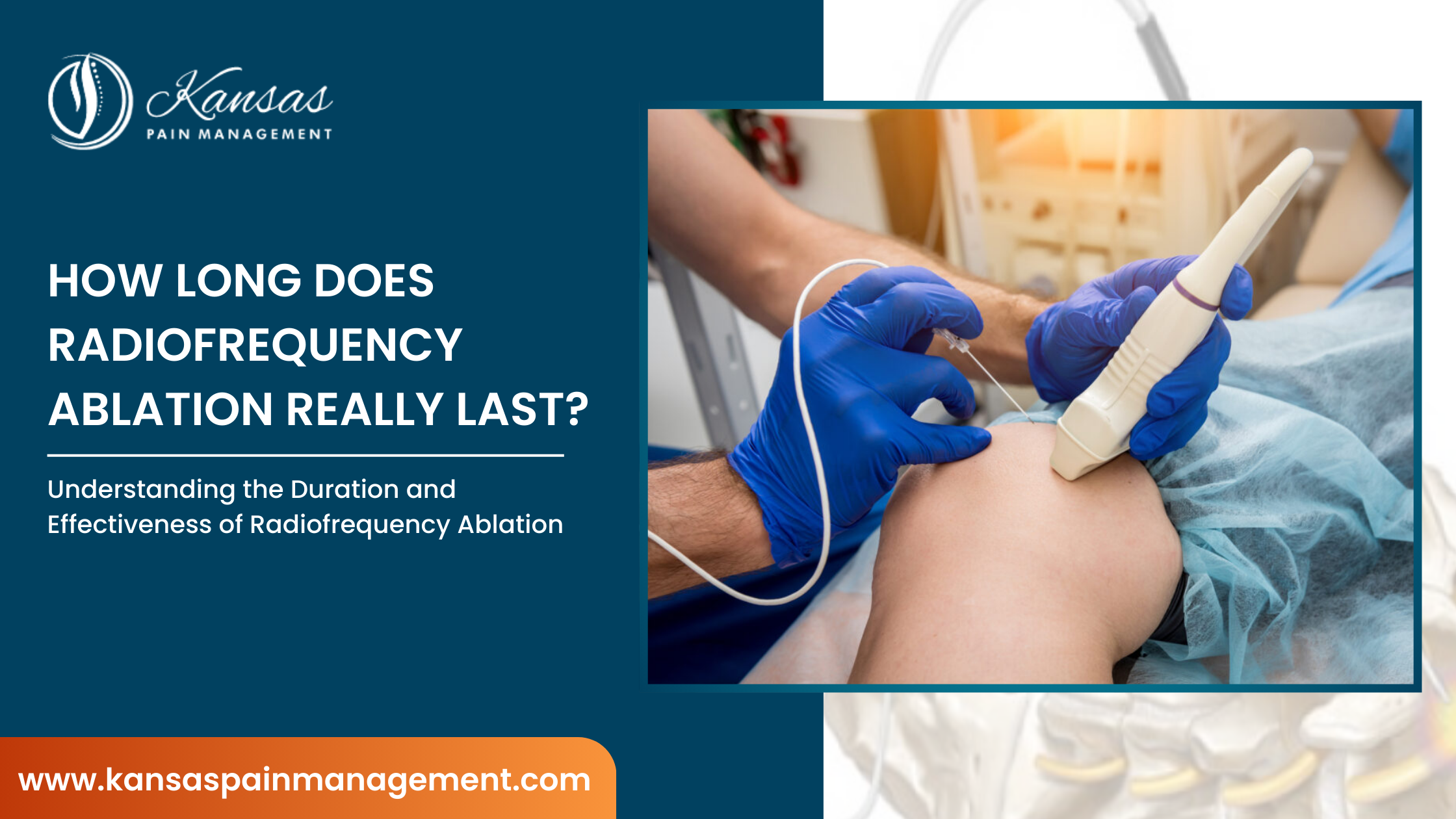
During the procedure, a specialized needle uses heat generated by radiofrequency energy to interrupt pain signals traveling through specific nerves.
It does not damage the spine. It simply disrupts the nerve’s ability to send pain signals.
So, How Long Does RFA Relief Last?
Average Duration:
Most patients experience relief for:
✅ 6–12 months
✅ Many report 12–18 months
✅ Some experience relief for 2 years or longer
The treated nerves typically regenerate over time, which is why pain may eventually return.
Why Results Vary Between Patients
Several factors influence how long relief lasts:
1. Accuracy of Diagnosis
RFA works best when pain has been confirmed through diagnostic medial branch blocks.
2. Type of Condition
Facet joint arthritis often responds very well to RFA.
3. Activity Level & Spine Health
Ongoing degeneration or heavy strain can shorten duration.
4. Individual Nerve Regeneration Speed
Some nerves regrow faster than others.
What Happens When the Pain Comes Back?
If pain returns, the procedure can often be safely repeated.
Many patients undergo repeat RFA treatments with similar success rates.
There is no strict lifetime limit, but treatment frequency depends on:
- Response to previous procedures
- Overall spine condition
- Physician evaluation
How Effective Is Radiofrequency Ablation?
Clinical studies and real-world experience show:
- 60–80% of properly selected patients experience significant relief
- Reduced need for opioid medications
- Improved function and mobility
- Delayed or avoided spine surgery
Proper patient selection is critical — which is why diagnostic injections are performed first.
Is Radiofrequency Ablation Safe?
RFA is considered a low-risk outpatient procedure.
Common temporary side effects may include:
- Mild soreness at injection site
- Temporary numbness
- Short-term increase in pain
Serious complications are rare when performed by experienced specialists.
Signs You May Be a Candidate for RFA
You may benefit from evaluation if:
- You have chronic neck or lower back pain
- Pain worsens with standing or extension
- Imaging shows facet arthritis
- Temporary relief occurred after diagnostic nerve blocks
- Physical therapy has not provided lasting relief
Why Choose Kansas Pain Management?
At Kansas Pain Management, interventional treatments like RFA are performed with:
- Fluoroscopic (X-ray) guidance for precision
- Careful diagnostic confirmation
- Customized treatment planning
- Focus on non-surgical solutions
The goal is long-term relief, not temporary masking of symptoms.
Schedule a Consultation
If chronic spine pain is limiting your life and conservative care hasn’t worked, Radiofrequency Ablation may offer meaningful, lasting relief.
Contact Kansas Pain Management to determine if RFA is right for you.