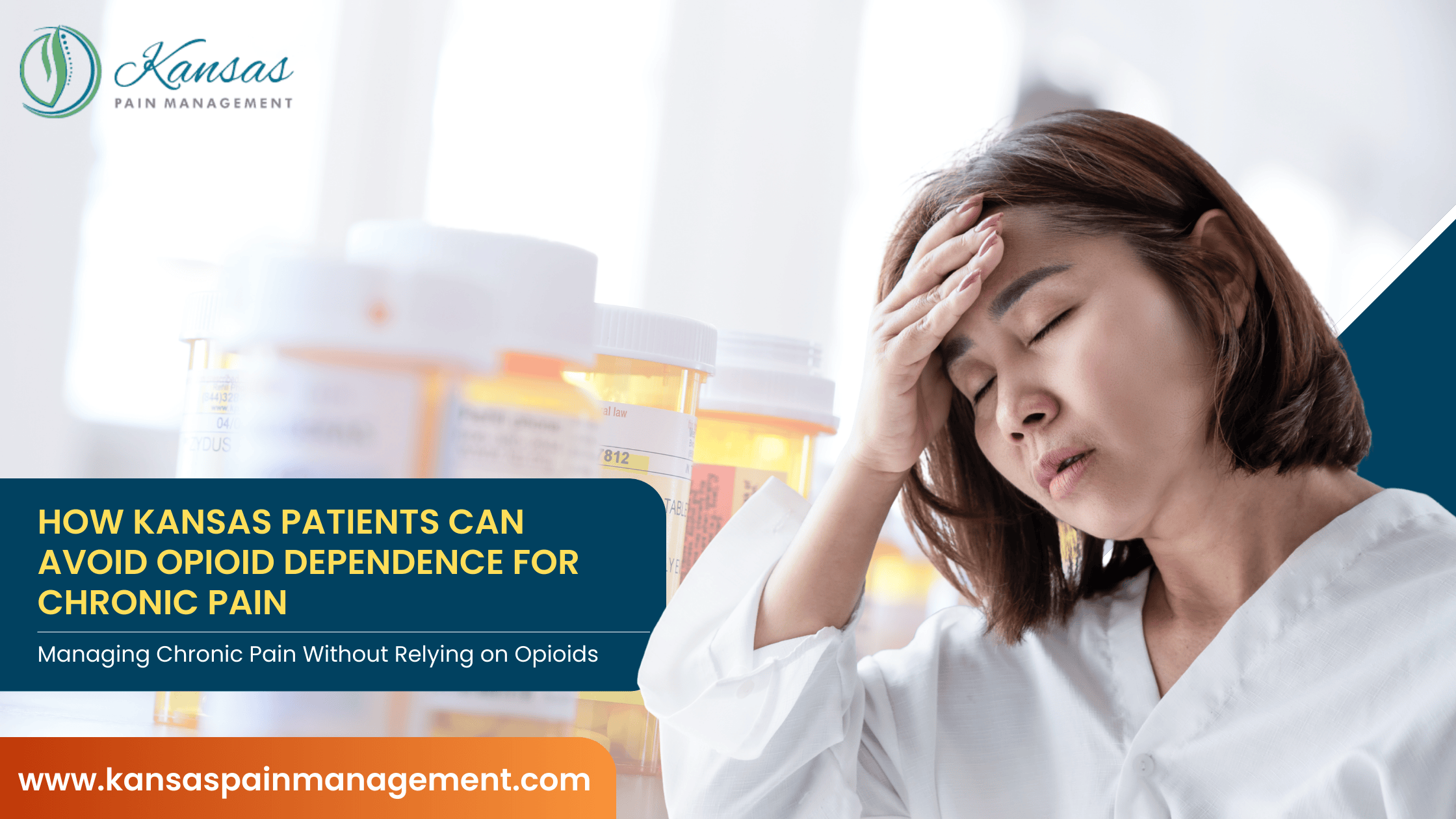
Chronic pain can affect every aspect of life — sleep, work, mood, and mobility. For years, opioid medications were commonly prescribed for long-term pain relief. Today, we understand that while opioids may help short-term acute pain, they carry significant risks when used long-term.
At Kansas Pain Management, the focus is on evidence-based, non-surgical treatments that reduce pain while minimizing the risk of opioid dependence.
If you are living with chronic pain in Kansas, here’s what you should know.
Understanding the Risk of Long-Term Opioid Use
Opioids may temporarily reduce pain signals, but over time they can:
- Lead to physical dependence
- Require increasing doses for the same effect (tolerance)
- Cause side effects like fatigue, constipation, and brain fog
- Increase sensitivity to pain (opioid-induced hyperalgesia)
For chronic spine and nerve conditions, opioids often do not address the underlying cause of pain.
What the CDC Recommends for Chronic Pain
Current guidelines recommend:
- Prioritizing non-opioid therapies
- Using the lowest effective dose if opioids are necessary
- Regularly reassessing benefits versus risks
- Focusing on functional improvement, not just pain scores
This shift emphasizes long-term solutions over temporary masking of symptoms.
Effective Non-Opioid Pain Management Options
Many chronic pain conditions respond well to targeted, minimally invasive treatments.
1. Epidural Steroid Injections
Reduce inflammation around irritated spinal nerves.
2. Facet Joint Injections
Relieve pain caused by arthritic or injured spine joints.
3. Medial Branch Blocks & Radiofrequency Ablation
Provide longer-lasting relief for confirmed facet-related pain.
4. Nerve Blocks
Help diagnose and treat specific nerve pain sources.
5. Guided Physical Therapy & Movement Strategies
Strengthen supportive muscles and improve biomechanics.
These approaches treat the source of pain, not just the symptom.
Conditions Commonly Managed Without Opioids
- Chronic lower back pain
- Neck pain
- Sciatica
- Herniated discs
- Spinal stenosis
- Facet joint syndrome
- Occipital neuralgia
With proper diagnosis, many patients experience meaningful improvement without long-term opioid reliance.
When Are Opioids Appropriate?
Opioids may be considered in:
- Acute injury
- Post-surgical recovery
- Severe short-term flare-ups
However, they are rarely the first-line solution for chronic pain.
At Kansas Pain Management, medication decisions are individualized and carefully monitored.
Signs You May Need a Different Pain Strategy
Consider evaluation if:
- You rely on pain medication daily
- Pain returns as soon as medication wears off
- Dosages have increased over time
- You feel dependent on medication to function
There are often safer, more effective alternatives available.
A Smarter Approach to Chronic Pain
Avoiding opioid dependence doesn’t mean living in pain. It means:
- Identifying the true pain generator
- Using precision-based treatments
- Supporting long-term function
- Reducing risk
Interventional pain management offers solutions that focus on restoration — not reliance.
Schedule an Evaluation in Kansas
If chronic pain is affecting your life and you want alternatives to long-term opioid use, Kansas Pain Management offers comprehensive evaluation and non-surgical treatment options tailored to your condition.
Early intervention leads to better long-term outcomes.