If you’ve been living with chronic back pain, nerve pain, or pain that hasn’t improved with other treatments, your doctor may have mentioned a spinal cord stimulator trial.
For many patients, hearing the word “stimulator” can feel intimidating. However, a spinal cord stimulator (SCS) trial is actually designed to help determine whether this advanced therapy may provide meaningful pain relief before any long-term device is considered.
At Kansas Pain Management, we help patients throughout Kansas City, Overland Park, and Lawrence explore advanced treatment options when conservative therapies and medications have not provided sufficient relief.
Here’s what patients should know about the spinal cord stimulator trial process.
What Is a Spinal Cord Stimulator?
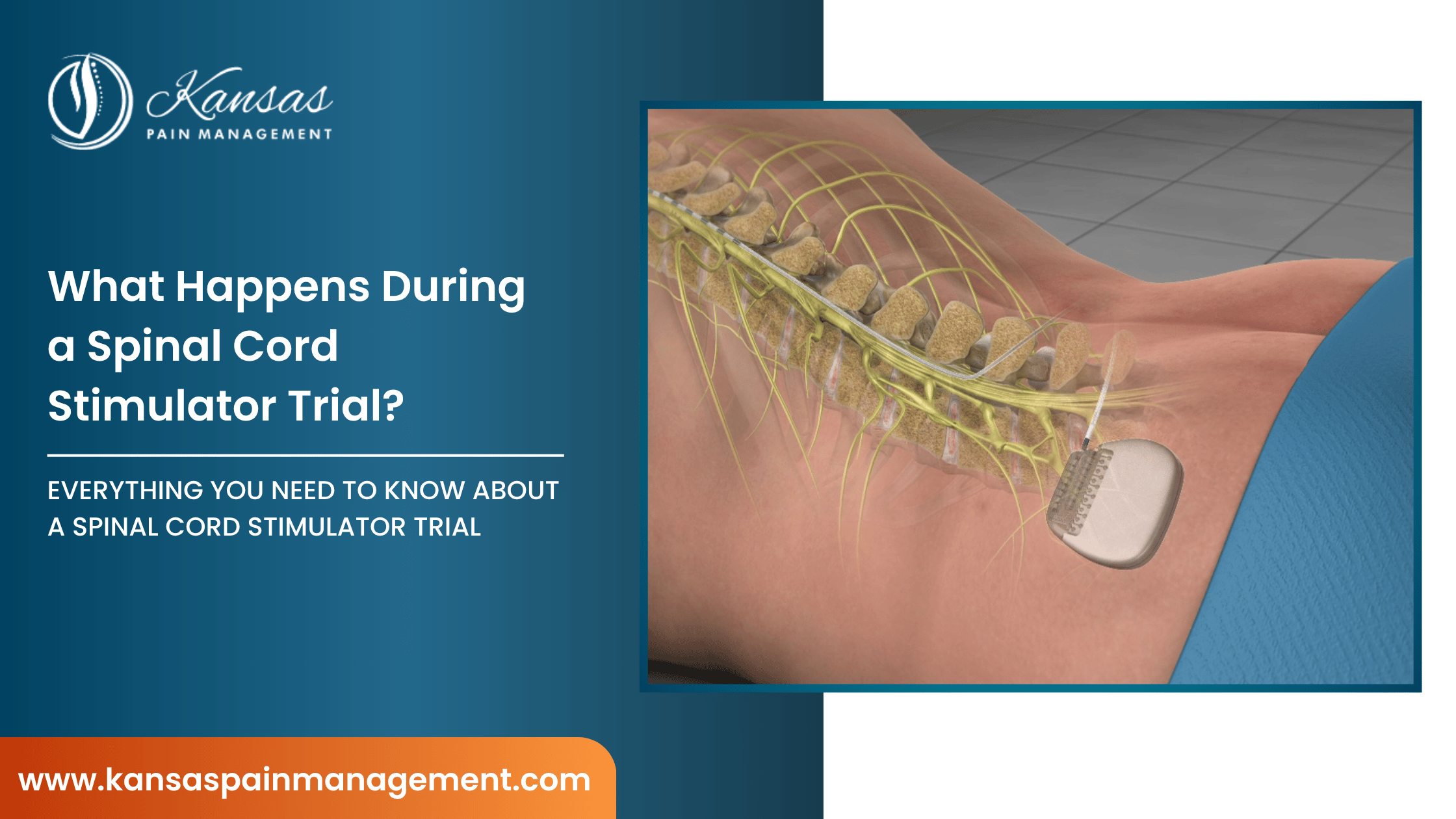
A spinal cord stimulator is a medical device that uses mild electrical signals to modify pain signals before they reach the brain.
The goal is not to cure the underlying condition but to help reduce the perception of chronic pain and improve daily function.
Modern spinal cord stimulation systems are commonly used to treat:
- Chronic back pain
- Failed back surgery syndrome (Post-Laminectomy Syndrome)
- Chronic leg pain
- Sciatica
- Neuropathic pain
- Complex Regional Pain Syndrome (CRPS)
- Painful Diabetic Neuropathy
- Certain chronic nerve pain conditions
For many patients, spinal cord stimulation may help reduce pain and improve quality of life when other treatments have been unsuccessful.
Why Is a Trial Necessary?
Unlike many treatments, spinal cord stimulation offers a unique advantage.
Patients can “test drive” the therapy before committing to permanent implantation.
The trial allows both the patient and physician to determine:
- Whether pain improves
- Whether daily function improves
- Whether the therapy feels comfortable
- Whether the patient is satisfied with the results
This temporary evaluation helps ensure the treatment is appropriate before moving forward.
Who May Be a Candidate for a Trial?
A spinal cord stimulator trial may be considered for patients who:
- Have chronic pain lasting several months or longer
- Have nerve-related pain symptoms
- Have not achieved adequate relief from conservative treatments
- Want to reduce reliance on pain medications
- Continue experiencing pain after spine surgery
- Have chronic back and leg pain affecting daily activities
A comprehensive evaluation is necessary to determine whether spinal cord stimulation is appropriate.
What Happens Before the Procedure?
Before the trial, patients typically undergo:
- Medical history review
- Physical examination
- Review of imaging studies
- Discussion of treatment goals
- Explanation of risks and benefits
The purpose is to ensure that spinal cord stimulation aligns with the patient’s condition and expectations.
How Is the Trial Performed?
The trial procedure is minimally invasive and usually performed on an outpatient basis.
During the procedure:
- The skin is cleaned and numbed.
- Thin wires called leads are placed near the spinal cord using imaging guidance.
- The leads are connected to a temporary external device.
- The physician tests the system to ensure proper placement.
The procedure generally does not require major surgery.
Most patients go home the same day.
What Does the Trial Feel Like?
Modern spinal cord stimulation technology has evolved significantly.
Depending on the system used, patients may experience:
- Mild tingling sensations
- Subtle stimulation
- No noticeable sensation at all
The goal is to reduce pain while allowing patients to continue normal daily activities during the trial period.
How Long Does the Trial Last?
Most spinal cord stimulator trials last approximately 5 to 7 days.
During this time, patients are encouraged to:
- Perform normal daily activities
- Track pain levels
- Monitor improvements in function
- Evaluate overall comfort
This real-world testing period provides valuable information about how well the therapy works.
What Should Patients Pay Attention To?
During the trial, patients often assess:
Pain Relief
Has pain improved compared to before the trial?
Activity Levels
Are daily activities easier to perform?
Sleep Quality
Has pain-related sleep disruption improved?
Medication Use
Has there been a reduction in the need for pain medications?
Overall Function
Has quality of life improved?
The goal is not necessarily complete pain elimination but meaningful improvement.
What Happens After the Trial?
Once the trial period ends:
- The temporary leads are removed.
- The physician reviews the results.
- The patient discusses their experience.
If significant improvement is achieved, the patient may choose to proceed with permanent implantation.
If the therapy does not provide sufficient benefit, the leads are simply removed and other treatment options can be considered.
One of the biggest advantages of the trial is that it allows patients to evaluate the therapy before making a long-term decision.
Is the Trial Safe?
Like any medical procedure, spinal cord stimulation carries risks.
However, the trial is generally considered minimally invasive and is routinely performed by experienced pain management specialists.
Your physician will discuss:
- Potential risks
- Benefits
- Expected outcomes
- Post-procedure instructions
before moving forward.
Benefits of a Successful Trial
For appropriate candidates, spinal cord stimulation may help:
- Reduce chronic pain
- Improve mobility
- Improve sleep
- Increase activity levels
- Enhance quality of life
- Reduce dependence on pain medications
Many patients who have struggled with chronic pain for years find that spinal cord stimulation becomes an important part of their treatment plan.
Advanced Neuromodulation Options in Kansas
At Kansas Pain Management, our board-certified pain specialists offer advanced interventional pain management solutions, including spinal cord stimulation for qualifying patients with chronic pain conditions.
We proudly serve patients throughout Kansas City, Overland Park, Lawrence, and surrounding Kansas communities with personalized treatment plans designed to restore function and improve quality of life.
If chronic nerve pain, back pain, or post-surgical pain continues to affect your daily activities, a spinal cord stimulator trial may be worth discussing with your pain management specialist.