
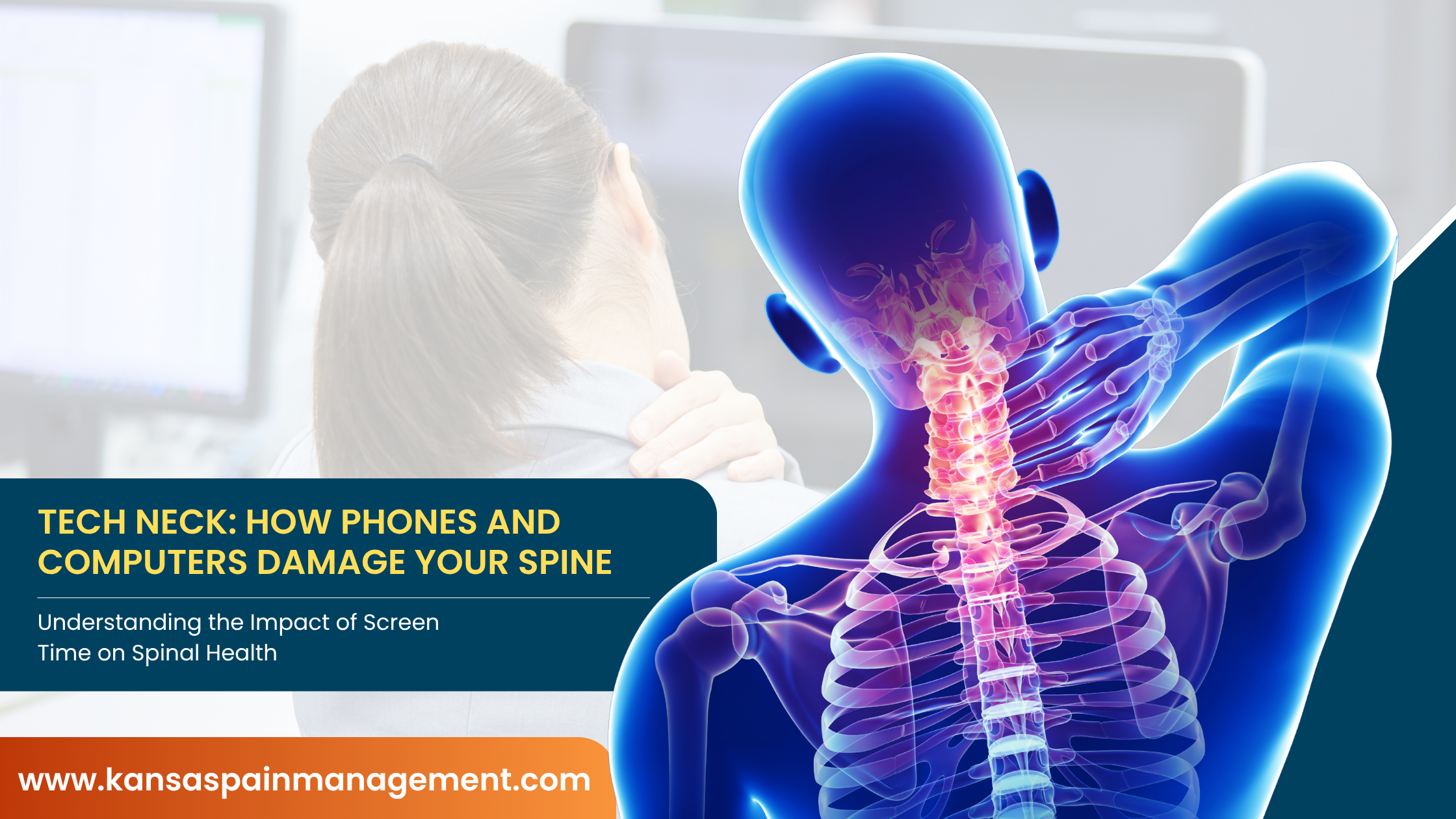
Smartphones, laptops, and computers have become part of everyday life. Unfortunately, spending hours looking down at screens can place significant stress on the neck and spine.
At Kansas Pain Management, we frequently treat patients throughout Kansas City, Overland Park, and Lawrence experiencing chronic neck pain, headaches, shoulder tension, and upper back discomfort caused by poor posture and prolonged screen use — commonly known as “tech neck.”
As technology use continues to increase, more adults and even teenagers are developing spine-related pain much earlier in life.
What Is Tech Neck?
Tech neck refers to neck and upper spine strain caused by repeatedly looking down at phones, tablets, laptops, or computer screens for long periods.
The human head weighs approximately 10–12 pounds in a neutral position. However, as the head tilts forward, the pressure placed on the cervical spine increases dramatically.
Over time, this extra strain can lead to:
- Neck pain
- Muscle tension
- Headaches
- Shoulder tightness
- Upper back pain
- Spinal stress
- Reduced mobility
Repeated poor posture can gradually affect spinal alignment and muscle balance.
How Phones and Computers Affect the Spine
Modern technology habits often place the body in unhealthy positions for extended periods.
Common posture problems include:
- Looking down at phones
- Leaning toward computer screens
- Rounded shoulders
- Slouching while sitting
- Poor workstation setup
- Sitting for long periods without movement
These positions place continuous stress on the muscles, joints, discs, and nerves of the cervical spine.
Symptoms of Tech Neck
Symptoms often develop gradually and worsen over time.
Common symptoms include:
- Chronic neck pain
- Stiffness in the neck and shoulders
- Headaches starting from the neck
- Burning pain between the shoulder blades
- Reduced range of motion
- Muscle tightness
- Upper back discomfort
- Tingling or numbness in the arms or hands
Some patients also experience worsening pain after work, studying, gaming, or prolonged phone use.
Why Tech Neck Is Becoming More Common
Tech neck is increasingly common because modern lifestyles involve prolonged screen exposure.
Many people spend:
- Hours working at computers
- Long periods using smartphones
- Time gaming or streaming
- Extended sitting during work or school
Reduced physical activity and poor posture habits further increase spinal stress.
Patients across Kansas City, Overland Park, and Lawrence are developing chronic neck and back problems earlier than previous generations.
Can Tech Neck Cause Long-Term Problems?
Yes. If left untreated, chronic posture strain may contribute to:
- Disc degeneration
- Chronic neck pain
- Cervical arthritis
- Pinched nerves
- Tension headaches
- Muscle imbalance
- Reduced spinal mobility
Over time, the nervous system and muscles may become increasingly sensitive to stress and inflammation.
Tech Neck and Headaches
Many patients do not realize their headaches may actually begin in the neck.
Poor posture and muscle tension can irritate nerves and joints within the cervical spine, leading to:
- Tension headaches
- Cervicogenic headaches
- Pain radiating from the neck into the head
- Tightness around the shoulders and scalp
Headaches that worsen after screen use may be related to posture and spinal strain.
How to Reduce Tech Neck Symptoms
Small daily changes can significantly reduce strain on the spine.
Helpful strategies include:
Keep Screens at Eye Level
Avoid constantly looking downward at devices.
Improve Posture
Sit with shoulders relaxed and back supported.
Take Frequent Breaks
Standing, stretching, and moving every 30–60 minutes can reduce muscle tension.
Strengthen Supporting Muscles
Core, upper back, and neck strengthening exercises may improve posture support.
Limit Prolonged Phone Use
Holding phones lower than eye level increases neck strain.
Use Ergonomic Workstations
Proper desk and monitor positioning can help reduce spinal stress.
When to See a Pain Management Specialist
You should consider medical evaluation if you experience:
- Persistent neck pain
- Frequent headaches
- Pain radiating into the shoulders or arms
- Numbness or tingling
- Reduced neck mobility
- Symptoms interfering with work or sleep
- Chronic pain lasting several weeks or longer
Early treatment may help prevent worsening spinal problems.
Treatment Options for Tech Neck and Chronic Neck Pain
At Kansas Pain Management, our board-certified specialists provide personalized treatment plans for chronic neck and spine pain.
Treatment options may include:
Improves posture, flexibility, strength, and movement patterns.
Can help relieve painful muscle tension and knots.
Cervical Epidural Steroid Injections
May reduce inflammation around irritated nerves.
Provides longer-lasting relief for chronic facet joint-related neck pain.
Lifestyle and Ergonomic Guidance
Daily habit changes often play an important role in long-term recovery.
Protecting Your Spine in a Digital World
Technology is now part of everyday life, but poor posture and prolonged screen use can gradually damage spinal health if ignored.
Making small posture corrections and seeking early treatment for persistent symptoms may help prevent long-term complications.
If neck pain, headaches, or upper back discomfort are affecting your daily life, the specialists at Kansas Pain Management can help identify the cause and develop a personalized treatment plan.
Our clinics proudly serve patients throughout Kansas City, Overland Park, Lawrence, and surrounding Kansas communities.