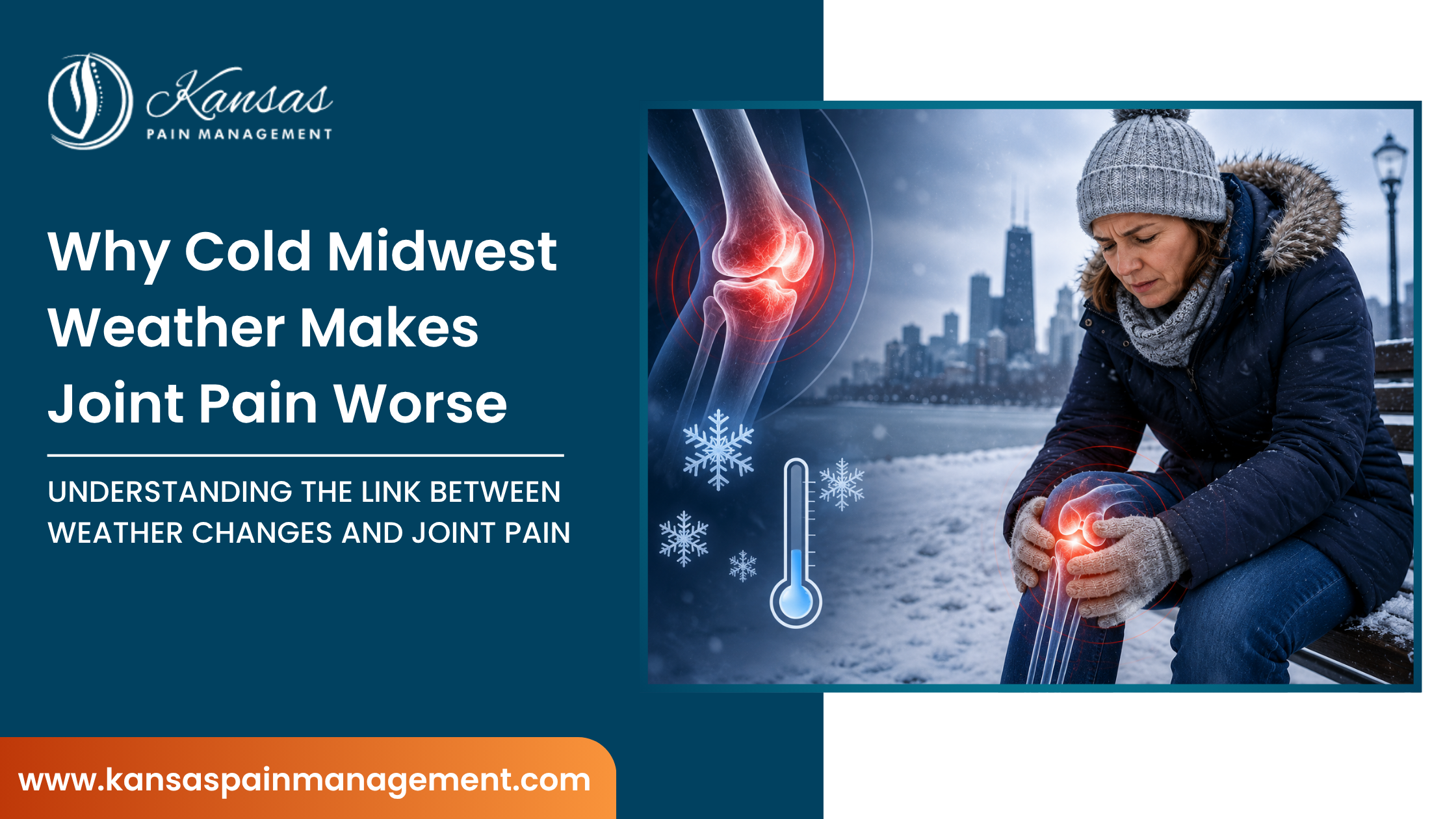
Winter in Kansas can be tough on the body — especially for people living with chronic joint pain. Many patients in Kansas City, Overland Park, and Lawrence notice their pain becomes worse during cold Midwest weather, even when there hasn’t been a new injury.
At Kansas Pain Management, we frequently hear patients say their knees, hips, back, or shoulders ache more when temperatures drop. While cold weather may not directly cause arthritis or chronic pain conditions, it can absolutely make symptoms feel more intense.
Understanding why this happens can help you better manage pain during the colder months.
Why Does Cold Weather Affect Joint Pain?
There are several reasons why winter weather may worsen joint discomfort and stiffness.
Changes in Barometric Pressure
One of the biggest reasons people experience increased pain during cold weather is changes in barometric pressure.
As atmospheric pressure drops before cold fronts or storms, tissues surrounding the joints may expand slightly. This can place additional pressure on nerves and inflamed joints, leading to increased pain and stiffness.
Patients with conditions such as osteoarthritis, spinal arthritis, and chronic back pain are especially sensitive to these changes.
Cold Temperatures Can Tighten Muscles and Joints
Cold weather often causes muscles, tendons, and ligaments to tighten naturally.
arthrWhen muscles become less flexible:
- Joint movement becomes more restricted
- Stiffness increases
- Existing inflammation may feel worse
- Pain during movement becomes more noticeable
Many people also become less physically active during winter, which can further worsen stiffness and reduce mobility.
Arthritis Symptoms Often Flare During Winter
Patients with arthritis commonly report worsening symptoms during Midwest winters.
Common winter arthritis symptoms include:
- Joint stiffness in the morning
- Increased knee pain
- Swelling in fingers or hands
- Hip discomfort
- Shoulder stiffness
- Lower back pain
Cold weather may not damage the joints directly, but it can amplify existing inflammation and sensitivity.
Chronic Pain Conditions That Often Worsen in Winter
At Kansas Pain Management, we commonly see winter flare-ups in patients with:
- Osteoarthritis
- Degenerative disc disease
- Facet joint syndrome
- Sciatica
- Rheumatoid arthritis
- Fibromyalgia
- Neuropathic pain
- Chronic neck and back pain
- Sacroiliac (SI) joint dysfunction
Patients across Kansas City, Overland Park, and Lawrence often notice symptoms become more severe during prolonged cold spells.
Reduced Activity Can Make Pain Worse
During winter, many people spend more time indoors and become less active.
Unfortunately, inactivity can:
- Weaken supporting muscles
- Increase joint stiffness
- Reduce circulation
- Worsen chronic inflammation
- Increase pain sensitivity
Even light daily movement plays an important role in maintaining joint health.
Tips to Reduce Joint Pain During Cold Weather
There are several ways to help minimize winter pain flare-ups.
Stay Warm
Keeping joints and muscles warm can help reduce stiffness and improve circulation.
Keep Moving
Gentle movement and stretching can help maintain flexibility and reduce inflammation.
Maintain Good Posture
Poor posture while sitting indoors for long periods may worsen neck, shoulder, and back pain.
Stay Hydrated
Dehydration can contribute to muscle tightness and joint discomfort.
Continue Physical Therapy Exercises
Regular strengthening and mobility exercises often help patients maintain better function during colder months.
When to See a Pain Management Specialist
If your joint pain becomes severe, persistent, or interferes with daily activities, it may be time to seek professional care.
You should consider evaluation if you experience:
- Increasing stiffness
- Difficulty walking
- Pain that interrupts sleep
- Reduced mobility
- Pain radiating into the arms or legs
- Chronic inflammation
- Symptoms not improving with home care
Ignoring chronic pain may lead to worsening function and reduced quality of life over time.
Treatment Options for Chronic Joint Pain
At Kansas Pain Management, our board-certified pain specialists provide advanced, minimally invasive treatments for chronic joint and spine pain.
Depending on the condition, treatment may include:
Improves flexibility, posture, and joint support.
Joint Injections
Targeted injections may help reduce inflammation and improve movement.
RFA can provide longer-lasting relief for chronic facet joint or arthritis-related pain.
Epidural Steroid Injections
Often used for spinal inflammation, nerve irritation, and sciatica.
Personalized Pain Management Plans
Every patient receives individualized care based on symptoms, imaging, and functional goals.
Don’t Let Winter Pain Control Your Life
Many people assume worsening joint pain during cold weather is something they simply have to tolerate. However, modern pain management treatments can help reduce discomfort and improve daily function.
If cold Midwest weather is making your joint pain worse, the specialists at Kansas Pain Management can help identify the cause and develop a personalized treatment plan.
Our clinics proudly serve patients throughout Kansas City, Overland Park, Lawrence, and surrounding Kansas communities.