
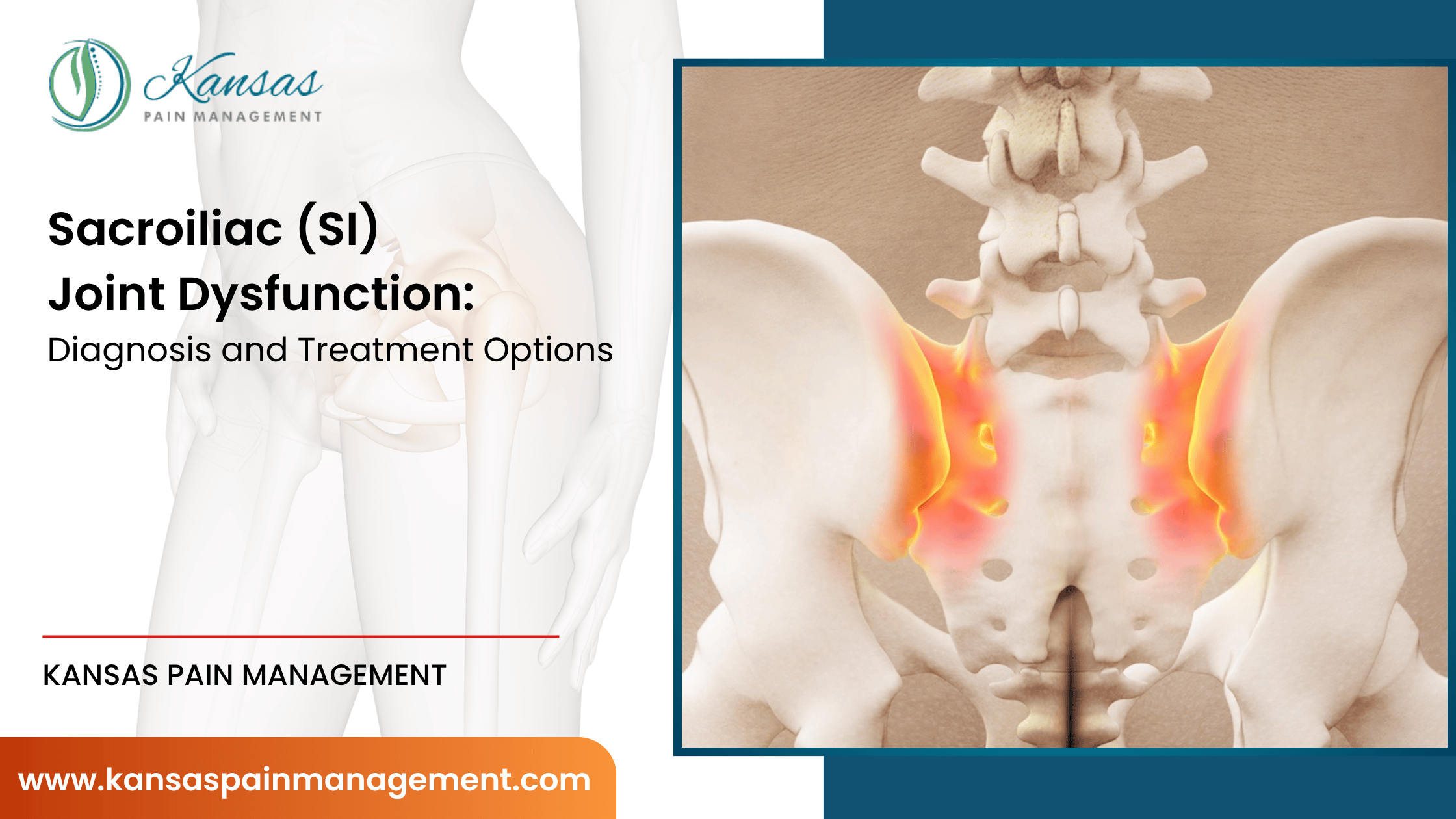
Lower back pain isn’t always caused by a disc or nerve issue. In many patients, the source of pain is the sacroiliac (SI) joint—a joint that connects the spine to the pelvis.
SI joint dysfunction is a commonly overlooked cause of lower back and buttock pain, and without proper diagnosis, it can be mistaken for other conditions like sciatica or lumbar spine problems.
At Kansas Pain Management, identifying SI joint pain accurately allows for targeted, non-surgical treatment and better long-term outcomes.
What Is the Sacroiliac (SI) Joint?
The SI joints are located on both sides of the lower spine, where the sacrum meets the pelvis.
Their main function is to:
- Transfer weight between the upper body and legs
- Provide stability while allowing limited movement
When these joints become inflamed or dysfunctional, they can cause significant pain.
What Is SI Joint Dysfunction?
SI joint dysfunction occurs when the joint becomes:
- Inflamed
- Irritated
- Too stiff or too mobile
This leads to pain in the lower back, buttock, and sometimes the leg.
Common Causes of SI Joint Pain
- Injury or trauma (falls, accidents)
- Repetitive stress
- Pregnancy-related changes
- Arthritis or degeneration
- Previous spine surgery
- Uneven movement patterns or posture
Symptoms of SI Joint Dysfunction
- Pain in the lower back or buttock
- Pain on one side (more common)
- Pain that may radiate into the thigh or leg
- Discomfort when sitting for long periods
- Pain when standing up from sitting
- Increased pain with walking, climbing stairs, or turning
👉 SI joint pain is often mistaken for sciatica, but the source is different.
How SI Joint Pain Is Different From Sciatica
| Feature | SI Joint Pain | Sciatica |
| Origin | SI joint (pelvis) | Spine (nerve root) |
| Pain Location | Buttock, lower back | Back → leg |
| Radiation | Usually upper leg | Often below the knee |
| Numbness/Tingling | Less common | More common |
How Doctors Diagnose SI Joint Dysfunction
Diagnosing SI joint pain can be challenging because it doesn’t always show clearly on imaging.
At Kansas Pain Management, diagnosis includes:
1. Physical Examination
- Specific movement tests
- Identifying pain patterns
2. Imaging (if needed)
- MRI or X-rays to rule out other causes
3. Diagnostic SI Joint Injection
👉 This is the most accurate method
- A small amount of anesthetic is injected into the SI joint
- If pain improves, it confirms the SI joint as the source
Treatment Options for SI Joint Dysfunction
Treatment focuses on reducing inflammation and restoring function.
Conservative Treatments
- Physical therapy (stability and strengthening exercises)
- Activity modification
- Anti-inflammatory medications
Minimally Invasive Treatments
1. SI Joint Injections
- Reduce inflammation
- Provide pain relief
- Help confirm diagnosis
2. Radiofrequency Ablation (RFA)
- Targets nerves supplying the SI joint
- Provides longer-lasting relief
3. Nerve Blocks
- Used for both diagnosis and symptom relief
Advanced Options
In select cases, minimally invasive procedures may be recommended for long-term stability.
When Should You See a Pain Specialist?
You should consider evaluation if:
- Pain is located in the lower back or buttock
- Pain is on one side
- Sitting or standing worsens symptoms
- Pain persists despite therapy or medications
- You’ve been treated for sciatica but didn’t improve
Why Accurate Diagnosis Matters
SI joint dysfunction is often misdiagnosed, leading to ineffective treatment.
👉 Treating the wrong condition can:
- Delay recovery
- Prolong pain
- Increase frustration
At Kansas Pain Management, diagnostic precision ensures the right treatment is used for the right source of pain.
Find the Real Source of Your Pain
If your lower back or buttock pain hasn’t improved with standard treatments, the SI joint may be the missing piece.
With proper diagnosis and targeted care, most patients can achieve significant relief without surgery.
Schedule a Consultation
If you suspect SI joint pain or have ongoing lower back discomfort, Kansas Pain Management can help identify the cause and create a personalized treatment plan.