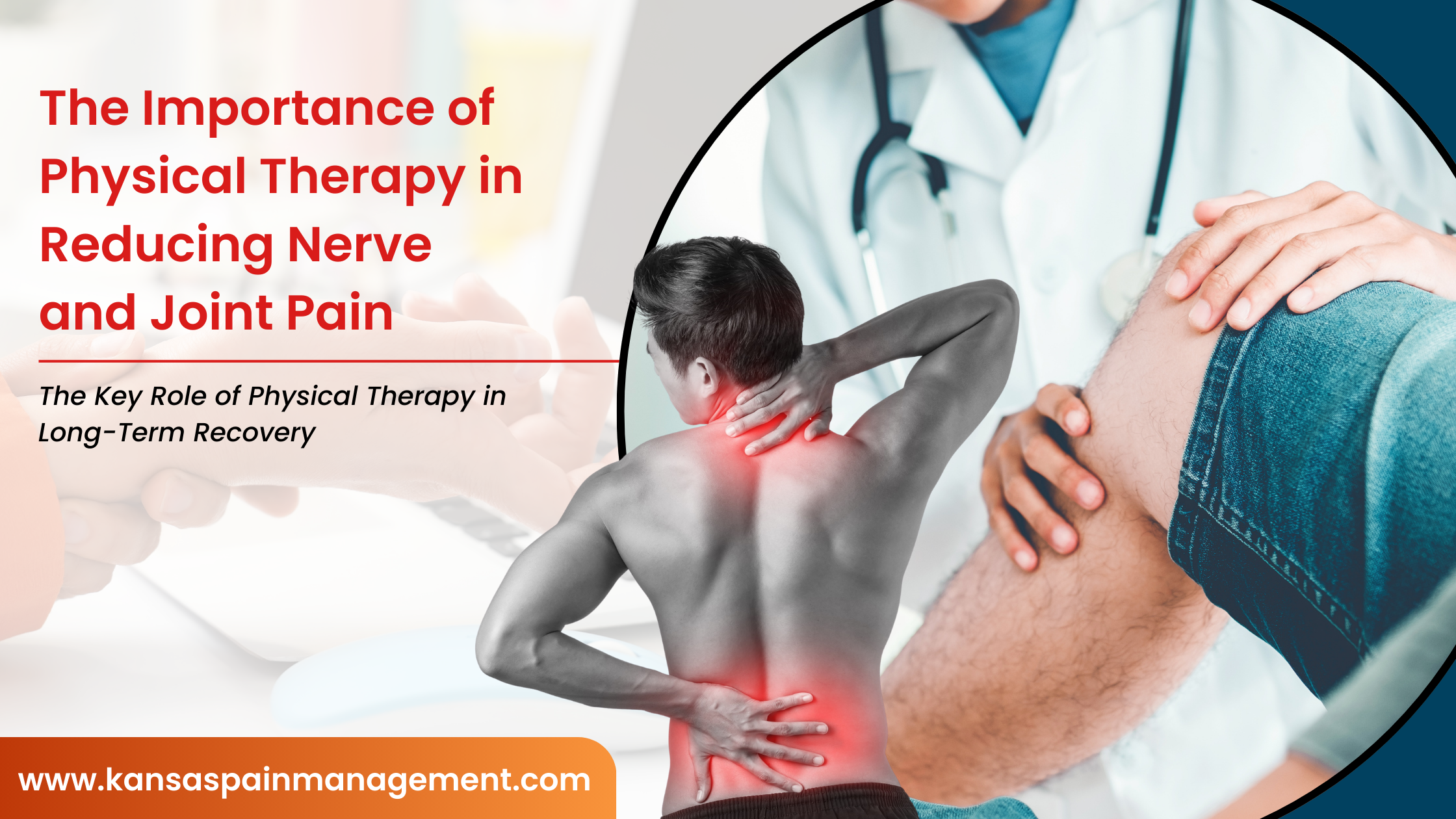
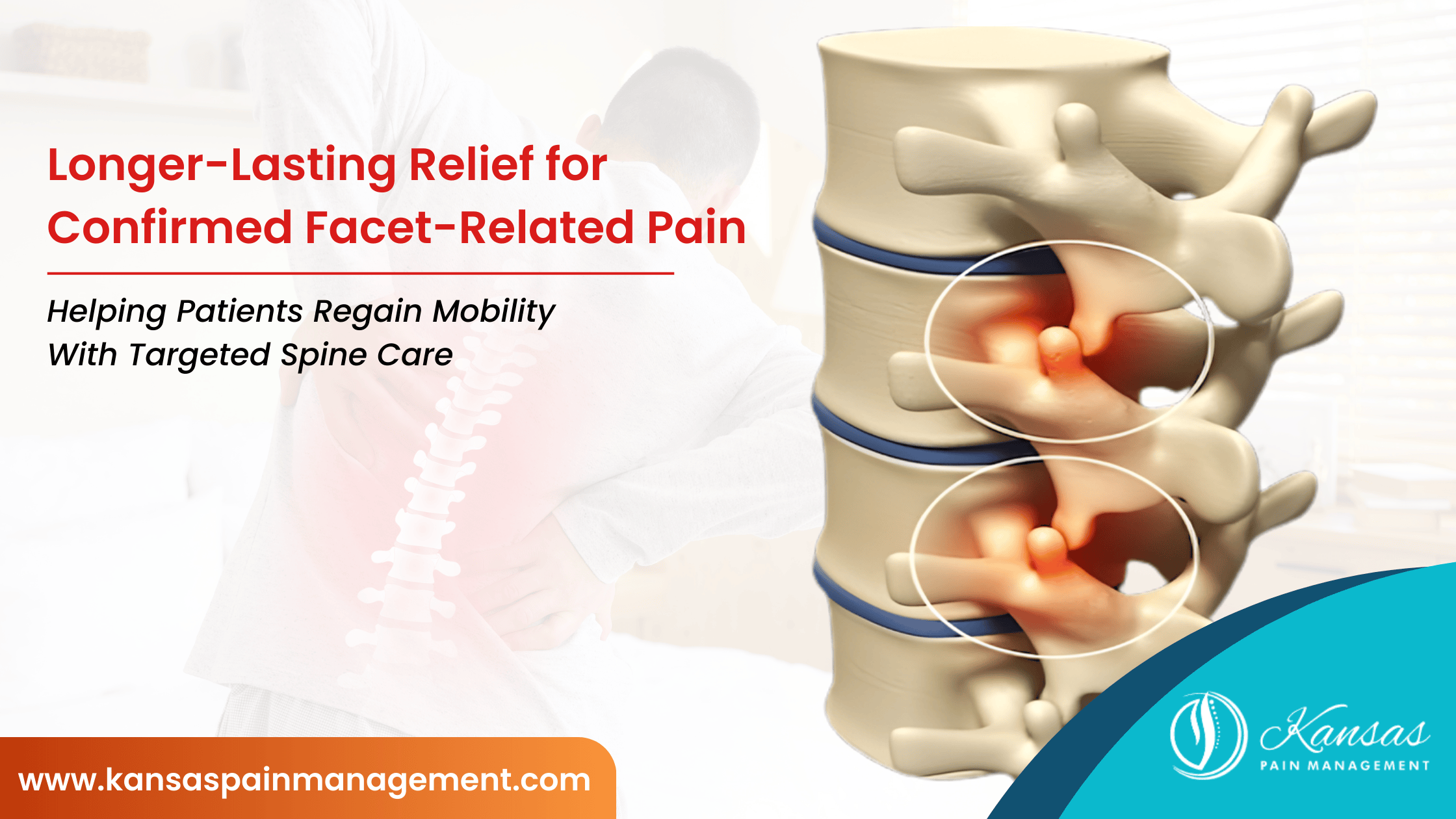
Chronic back or neck pain can significantly affect daily life, especially when the source of the pain is the facet joints in the spine. These small joints connect the vertebrae and help stabilize the spine while allowing movement such as bending and twisting. When these joints become inflamed or arthritic, they can cause persistent pain that may not respond to basic treatments.
At Kansas Pain Management, patients with confirmed facet-related pain often benefit from targeted treatments designed to provide longer-lasting relief without surgery.
Understanding Facet Joint Pain
Facet joints are located along the back of the spine and play a key role in controlling movement. Over time, wear and tear, injury, or degenerative changes can lead to irritation of these joints.
Common causes include:
- Age-related arthritis
- Repetitive strain or overuse
- Poor posture
- Previous spine injuries
- Degenerative disc disease
Facet joint pain can occur in the neck (cervical spine), mid-back (thoracic spine), or lower back (lumbar spine).
Common Symptoms of Facet-Related Pain
Facet joint pain can present in several ways, including:
- Localized pain in the neck or lower back
- Pain that worsens with standing or arching the back
- Stiffness after periods of rest
- Limited range of motion
- Pain that improves when sitting or leaning forward
Because these symptoms can overlap with other spine conditions, accurate diagnosis is essential.
How Doctors Confirm Facet Joint Pain
At Kansas Pain Management, physicians use a combination of clinical evaluation and diagnostic procedures to determine whether facet joints are the source of pain.
Diagnosis may include:
- Detailed physical examination
- Imaging studies such as MRI or CT scans
- Diagnostic medial branch nerve blocks
Medial branch blocks involve injecting a small amount of anesthetic near the nerves that supply the facet joints. If the pain improves significantly after the injection, it confirms that the facet joints are likely the pain source.\
Treatment Options for Facet Joint Pain
Once facet-related pain is confirmed, several non-surgical treatments can help relieve symptoms.
Facet Joint Injections
These injections deliver anti-inflammatory medication directly into the affected joint to reduce irritation and improve mobility.
Physical Therapy
Targeted exercises help strengthen the muscles supporting the spine and improve movement patterns.
Lifestyle and Activity Modifications
Improving posture, modifying repetitive movements, and maintaining core strength can reduce stress on the facet joints.
Radiofrequency Ablation: Longer-Lasting Relief
For patients who respond well to diagnostic nerve blocks but need longer-lasting relief, radiofrequency ablation (RFA) may be recommended.
This minimally invasive procedure uses controlled heat to interrupt pain signals carried by the medial branch nerves that supply the facet joints.
Benefits of RFA include:
- Relief that often lasts 6 to 18 months or longer
- Minimally invasive outpatient procedure
- Reduced need for pain medications
- Improved ability to perform daily activities
Because the treated nerves can regenerate over time, the procedure can often be repeated if symptoms return.
When to See a Pain Specialist
You may benefit from evaluation if you experience:
- Persistent neck or back pain lasting more than several weeks
- Pain that worsens with standing, twisting, or extension
- Limited improvement with physical therapy or medications
- Imaging showing degenerative spine changes
A pain specialist can help identify the exact source of symptoms and recommend appropriate treatment.
Finding Relief at Kansas Pain Management
Facet joint pain is a common but treatable cause of chronic spine pain. With accurate diagnosis and targeted treatment, many patients experience significant relief without the need for surgery.
At Kansas Pain Management, the focus is on identifying the true pain source and providing evidence-based, minimally invasive treatments that restore function and improve quality of life.
If chronic neck or back pain is affecting your daily activities, a comprehensive evaluation can help determine whether facet joints are contributing to your symptoms.