
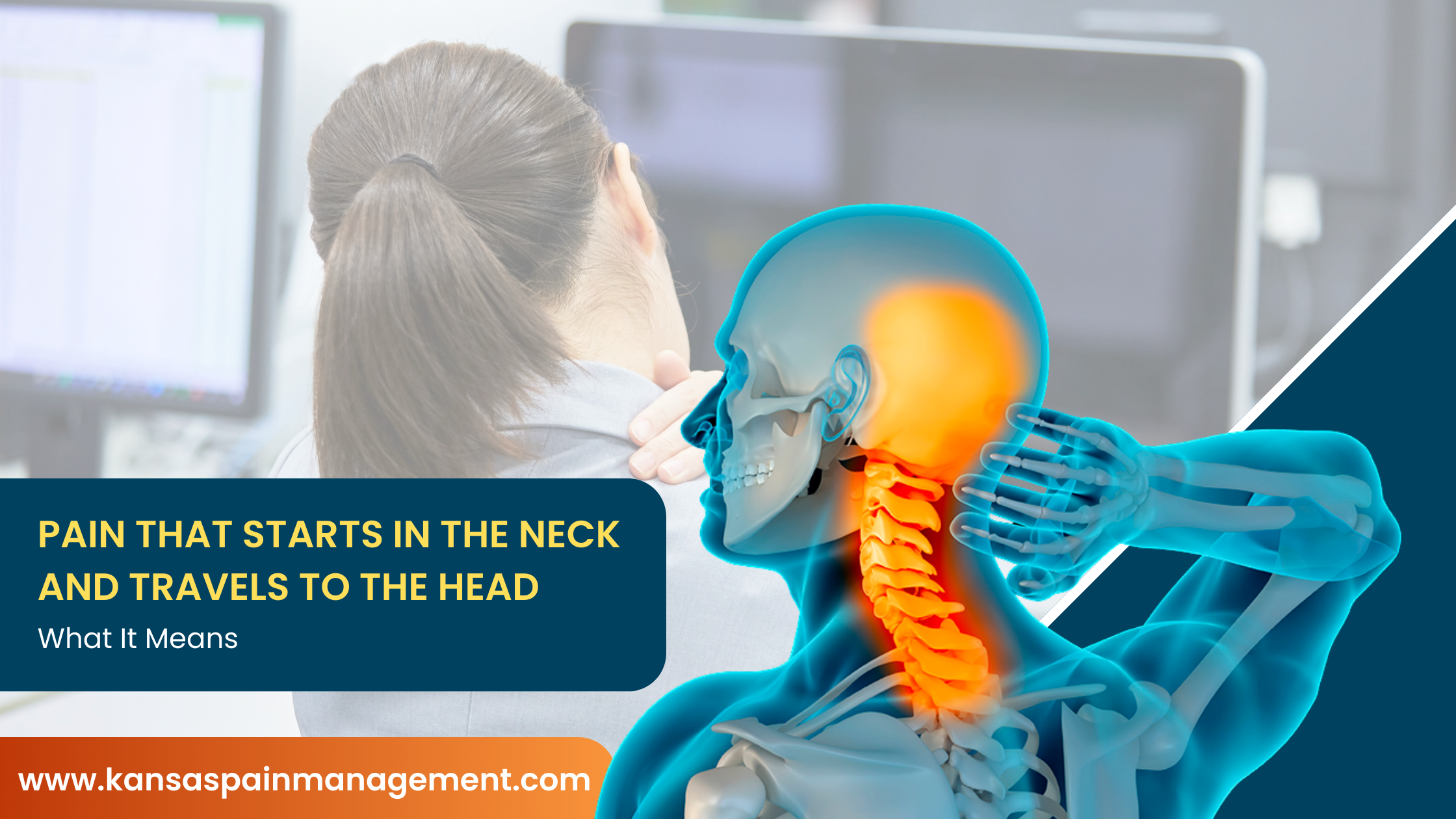
Head pain that begins in the neck and spreads upward is often misunderstood and misdiagnosed. Many patients assume they are dealing with migraines, but in reality, the source of the pain may be the neck itself. At Kansas Pain Management, we frequently see patients whose headaches originate from cervical spine or nerve-related issues. Understanding the cause is the first step toward effective, long-lasting relief.
Why Neck Problems Can Cause Head Pain
The upper cervical spine is closely connected to nerves that supply sensation to the head and scalp. When structures in the neck become irritated—such as joints, muscles, or nerves—pain signals can travel upward, creating what feels like a headache.
This type of pain is often secondary, meaning the problem starts elsewhere and radiates to the head.
Common Causes of Neck-Related Head Pain
1. Cervicogenic Headaches
Cervicogenic headaches originate from the cervical spine. They are often caused by:
- Degenerative changes in the neck
- Poor posture or prolonged screen use
- Previous neck injuries
Symptoms typically worsen with neck movement or prolonged positioning.
2. Occipital Neuralgia
Occipital neuralgia occurs when the occipital nerves become irritated or compressed. This can cause:
- Sharp, shooting, or electric pain
- Pain starting at the base of the skull
- Scalp tenderness or sensitivity
Pain often radiates upward toward the top or side of the head.
3. Cervical Facet Joint Pain
Facet joints in the upper neck help control movement. When inflamed or arthritic, they can refer pain into the head, causing:
- Dull, aching neck pain
- Head pain aggravated by neck extension or rotation
- Stiffness and limited range of motion
4. Muscle Tension and Postural Strain
Tight neck and shoulder muscles can also contribute to head pain, especially in patients who:
- Work at a desk for long hours
- Use smartphones frequently
- Have poor ergonomic posture
How Neck-Related Head Pain Differs From Migraines
While symptoms may overlap, neck-originating head pain often:
- Starts in the neck or base of the skull
- Worsens with neck movement or posture
- Improves with targeted neck treatment
- Lacks classic migraine symptoms like nausea or visual aura
Accurate diagnosis is essential for choosing the right treatment.
How Is the Cause Diagnosed?
At Kansas Pain Management, diagnosis involves:
- Detailed medical history and physical exam
- Evaluation of neck movement and posture
- Imaging studies when needed
- Diagnostic injections or nerve blocks to confirm the pain source
These steps help pinpoint whether pain is coming from joints, nerves, or muscles.
Treatment Options for Neck-Related Head Pain
Non-Surgical Pain Relief Options
Depending on the cause, treatment may include:
- Physical therapy focused on neck stability
- Anti-inflammatory or nerve-targeting medications
- Occipital nerve blocks
- Cervical facet joint injections
- Radiofrequency ablation (RFA) for longer-lasting relief
Treatment is always tailored to the individual patient.
Why Choose Kansas Pain Management?
At Kansas Pain Management, we specialize in identifying spine- and nerve-related causes of head pain. Our personalized approach focuses on treating the root cause—not just masking symptoms—so patients can return to daily activities with improved comfort and function.
When Should You See a Pain Specialist?
You should consider a pain management evaluation if:
- Head pain consistently starts in the neck
- Headaches worsen with neck movement
- Medications provide limited relief
- Pain affects work, sleep, or quality of life
Early treatment can prevent symptoms from becoming chronic.
Schedule a Consultation
If you’re experiencing pain that starts in your neck and travels to your head, Kansas Pain Management can help determine the cause and provide targeted, non-surgical treatment options. Contact our office today to schedule an evaluation.


