
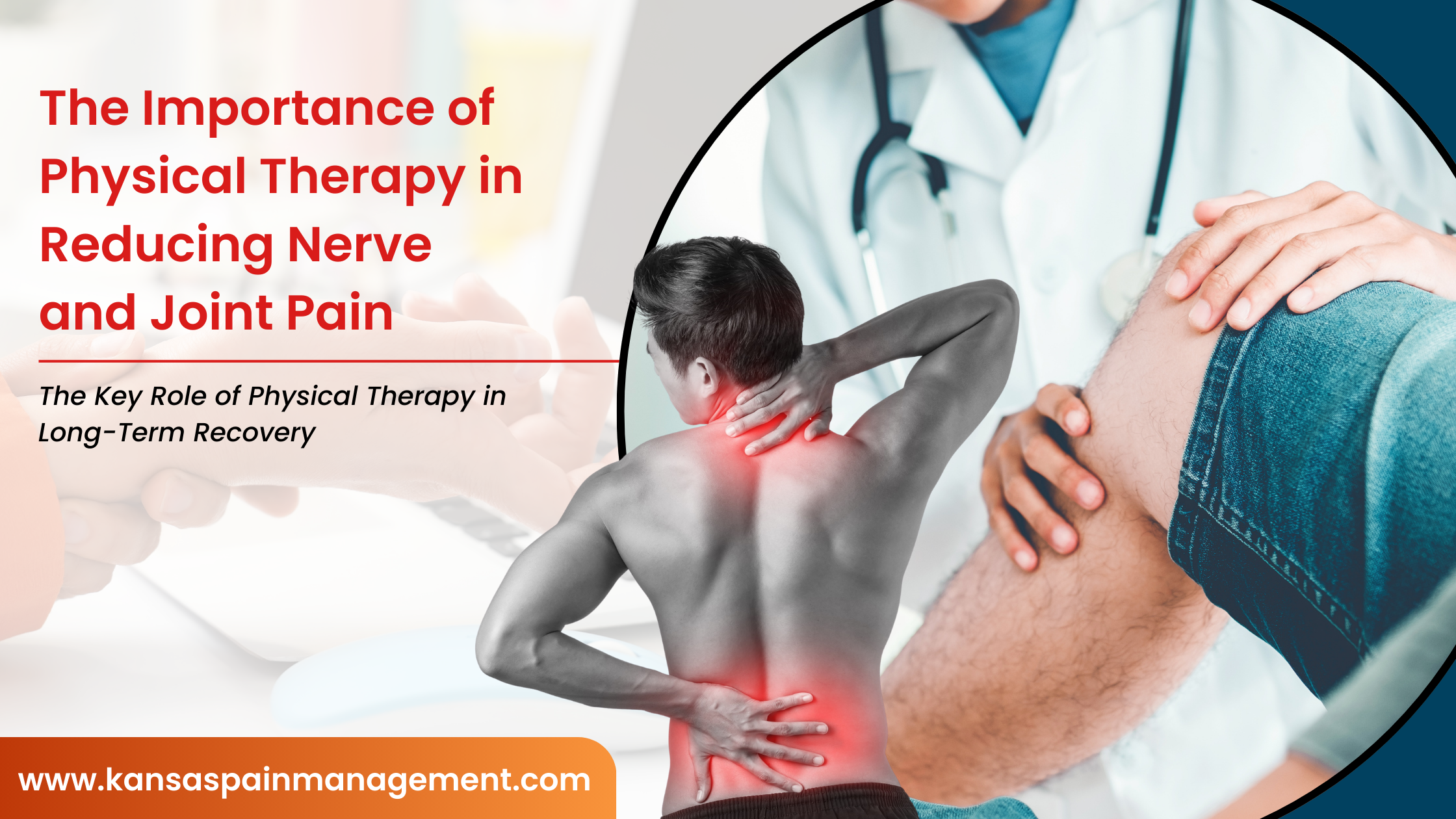
Chronic nerve and joint pain can make activities—like walking and lifting working and sleeping—feel really hard. Even though medicines and pain procedures are important for treatment physical therapy is one of the long-term ways to reduce pain get back mobility and stop future problems from coming back.
At Kansas Pain Management physical therapy is often suggested as part of a treatment plan to help patients get back to normal and feel better overall.
How Physical Therapy Helps With Nerve Pain
Nerve pain can feel sharp, burning, shooting, or tingling. It may be caused by:
- Herniated or bulging discs
- Sciatica
- Diabetic neuropathy
- Nerve compression
- Post-surgical irritation
- Trauma or repetitive strain
Physical therapy helps by:
1. Reducing Nerve Compression
Special stretches and fixing posture take pressure off nerves especially when someone has sciatica or neck pain.
2. Improving Blood Flow
Exercises that’re part of therapy help blood move better. This helps nerves heal and lowers swelling.
3. Restoring Proper Movement Patterns
Poor mechanics can strain nerves. PT retrains muscles and joints to move correctly, reducing irritation.
4. Strengthening Supporting Muscles
Weak core or back muscles often contribute to nerve-related back and neck pain. PT builds stability and reduces stress on the spine.
How Physical Therapy Helps With Joint Pain
Pain can come from things like arthritis, injuries, swelling or getting older. Physical therapy helps by fixing the cause not just the pain.
1. Improving Joint Mobility
Therapy and special exercises help joints move better making them less stiff and more comfortable.
2. Strengthening Surrounding Muscles
Stronger muscles protect joints, reduce pressure, and prevent further damage.
3. Correcting Imbalances
Overuse or compensation patterns can overload certain joints. PT helps normalize movement to reduce pain.
4. Enhancing Flexibility
A flexible joint moves more efficiently, reducing inflammation and pain flare-ups.
Combined Treatment Works Best
Many patients benefit from a combination of interventional procedures and physical therapy, including:
- Epidural steroid injections
- Nerve blocks
- Radiofrequency ablation
- Joint injections
- Trigger point injections
These treatments reduce inflammation and pain, while PT helps strengthen and stabilize the body for long-term relief.
At Kansas Pain Management, a personalized plan ensures every patient receives the right balance of medical and rehabilitative care.
Benefits Patients Notice With Physical Therapy
✔ Less pain and inflammation
✔ Better posture and alignment
✔ Enhanced flexibility and strength
✔ Improved ability to perform daily tasks
✔ Lower risk of re-injury
✔ Longer-lasting pain relief
When to Consider Physical Therapy
You may benefit from PT if you experience:
- Back or neck pain
- Sciatica
- Joint stiffness or arthritis
- Tingling or numbness in arms or legs
- Pain after an injury
- Trouble walking, bending, or lifting
- Pain that worsens with activity
The earlier therapy starts the faster people usually get better.
Physical Therapy as Part of a Comprehensive Plan
At Kansas Pain Management we work with the physical therapists in the area to make sure our patients have:
- Exercises that are proven to work
- Treatment plans made just for them
- One-on-one help
- Tracking progress
- Care to stop problems from coming
Our goal is to help patients regain control, improve mobility, and live pain-free for the long term.
Take the First Step Toward Relief
If nerve or joint pain is limiting your life, physical therapy—combined with targeted pain management—may be the solution you need.
Kansas Pain Management provides patient-focused care meant to help people feel better for a long time.
Schedule an appointment today to learn how PT can fit into your customized pain management plan.


